The Enigmatic Faces: Unveiling Gerard David’s Study of Four Heads
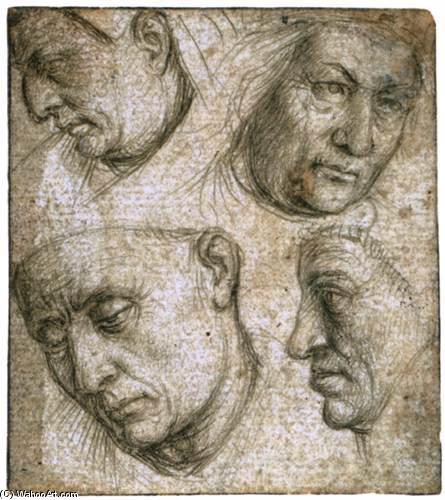
Gerard David's Study of Four Heads, a masterpiece crafted in 1500, isn’t merely a portrait; it’s an intimate exploration of the human condition. Housed within the National Gallery of Canada, this oil painting transcends its simple subject matter to become a profound meditation on emotion, perspective, and the burgeoning humanist ideals of the Northern Renaissance. David, a master of his craft and shrouded in intriguing historical mystery – a figure whose life remains largely undocumented yet whose art speaks volumes – employed a technique that’s both meticulously detailed and remarkably expressive. The painting's power lies not just in its technical brilliance but in its ability to evoke a spectrum of feelings through the subtle shifts in each head’s countenance.

A Symphony of Line and Light: The Artist’s Signature Style
David's distinctive style is immediately recognizable. He was a master of intricate line work, meticulously rendering the textures of skin, hair, and clothing with an almost obsessive attention to detail. His use of shading creates a remarkable sense of depth and volume, lending each head a tangible presence within the frame. The painting’s palette is restrained – primarily dark browns, ochres, and creams – which allows David's masterful manipulation of light and shadow to truly shine. Notice how he uses highlights to accentuate the contours of the faces, drawing the viewer’s eye to the most expressive features. This careful control over line and light is a hallmark of the Early Netherlandish tradition, and David was undoubtedly one of its foremost practitioners.
Deconstructing Emotion: A Study in Contrasts
The genius of Study of Four Heads lies in its ability to convey a range of emotions through subtle variations in expression. The first head, presented in profile, exudes an intensity born from a focused gaze and a strong jawline – a sense of unwavering determination. In stark contrast, the second head, also in profile but facing left, possesses a more contemplative demeanor, with softer features and a gentle expression that suggests serenity. The third head, depicted in a three-quarter view, embodies a heightened state of emotion, marked by furrowed brows and a direct, almost challenging gaze. Finally, the fourth head, shown in a three-quarter view facing right, offers a moment of quiet repose, with closed eyes and a relaxed facial structure – a palpable sense of tranquility. David doesn’t simply depict faces; he captures fleeting moments of human experience, inviting us to contemplate the complexities of emotion.
Historical Context: Bridging Tradition and Renaissance Humanism
Created in 1500, this painting reflects the dynamic artistic landscape of the Northern Renaissance. Gerard David was a pivotal figure who skillfully blended late medieval traditions with the emerging principles of Renaissance humanism. The meticulous detail and realistic portrayal of the heads are reminiscent of earlier Flemish portraiture, while the emphasis on capturing individual expression aligns with the humanist focus on the dignity and complexity of the human being. The painting’s origins – a study for a larger work, likely a panel or altarpiece – further illuminate its significance within the context of Renaissance artistic practice, where preparatory drawings were considered essential tools for artists.
ArtsDot.com offers a stunning handmade oil painting reproduction of Study of Four Heads, allowing art lovers to own a piece of this remarkable historical and artistic achievement. For more information on Gerard David and his works, please visit our online gallery or explore the resources at Wikipedia.