The Mystical Depths of Jan Des Trompes
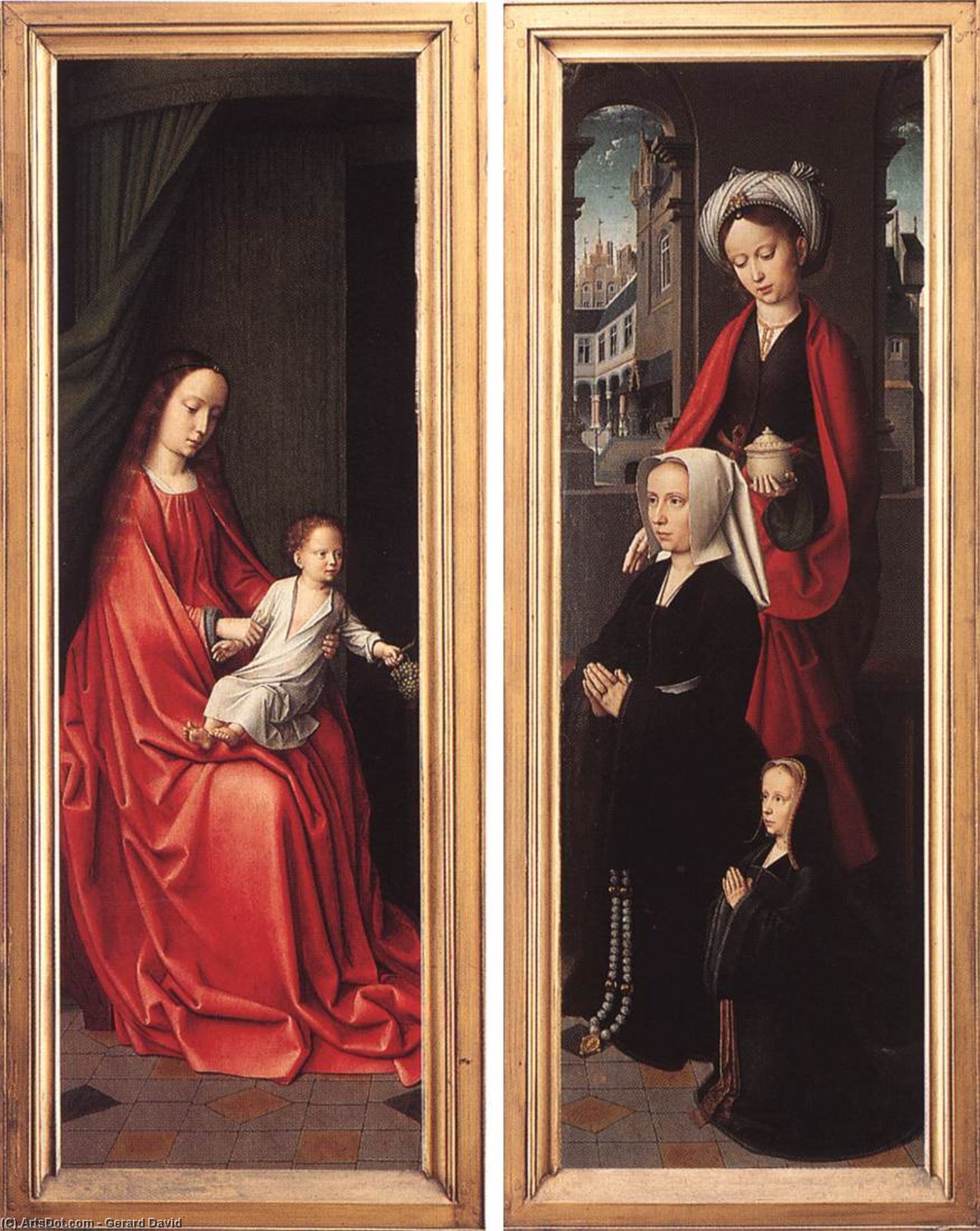
The “Triptych of Jan Des Trompes (rear of the wings)” – a masterpiece by Gerard David, painted in 1505 – isn’t merely a religious depiction; it's an invitation into a realm of quiet contemplation and subtle symbolism. Created during a pivotal moment in the burgeoning Renaissance, this work transcends its immediate subject matter to offer a profound meditation on faith, family, and the unseen forces that shape human experience. David, a master of Flemish light and a figure shrouded in intriguing historical mystery, crafted an image that resonates with both serene beauty and a palpable sense of depth.
The triptych’s core narrative centers around the Virgin Mary cradling the infant Jesus, a scene instantly recognizable yet imbued with David's distinctive artistic sensibility. However, it is in the meticulous detail of the surrounding figures – the kneeling donors, the architectural backdrop – that the painting truly reveals its complexity. The rear panels, often overlooked, are particularly compelling. They depict not grand processions or triumphant victories, but rather intimate portraits of Mary’s family: her husband, Joseph, and their two children, John and Mary. These aren't idealized representations; they possess a quiet realism, hinting at the everyday lives and emotional connections that underpinned the sacred narrative.
A Symphony of Color and Light
David’s technical prowess is immediately apparent in his masterful manipulation of color and light. He employs a technique known as “tenebrism,” subtly layering dark hues to create an atmosphere of profound depth and mystery. The muted greens, browns, and golds dominate the palette, evoking a sense of timelessness and spiritual solemnity. Light isn’t used to simply illuminate; it's strategically deployed to draw the viewer’s eye to key elements – the Virgin’s face, the infant Jesus’s serene expression, and the delicate folds of Mary’s garments. This careful orchestration of light and shadow contributes significantly to the painting’s emotional impact, creating a sense of intimacy and reverence.
The artist's use of oil paint allows for incredible detail and luminosity – a hallmark of Flemish art at the time. Notice how David renders the textures of the fabrics, the smoothness of the stone, and the delicate sheen on Mary’s face. He achieves this through meticulous layering and glazing techniques, building up color gradually to create a rich, vibrant surface. The attention to detail is not merely decorative; it serves to heighten the sense of realism and draw the viewer into the scene.
Symbolism and Context
Beyond its immediate religious subject matter, the “Triptych of Jan Des Trompes” is laden with symbolic meaning. The architectural setting – a richly decorated chamber reminiscent of a medieval chapel – suggests a space of sacred contemplation. The inclusion of the family portraits underscores the importance of lineage and familial piety within Christian belief. Furthermore, the placement of the figures within this enclosed space can be interpreted as a metaphor for the soul’s journey towards salvation.
Painted in Bruges during a period of significant artistic innovation, the triptych reflects the evolving trends of the Early Netherlandish Renaissance. David was influenced by artists like Hans Memling and Jan van Eyck, but he developed his own distinctive style characterized by its emotional depth, psychological realism, and masterful use of color. The work’s creation coincided with a period of intense religious fervor and social upheaval in Europe, reflecting the anxieties and aspirations of the time.
A Timeless Legacy
The “Triptych of Jan Des Trompes” remains a powerful testament to Gerard David's artistic genius. Its enduring appeal lies not only in its technical brilliance but also in its profound emotional resonance. It invites viewers to contemplate the mysteries of faith, family, and the human condition – offering a glimpse into a world where beauty and spirituality converge. Reproductions of this iconic work capture much of its original power, providing an accessible way to experience David’s masterful vision for generations to come.