A Symphony in Venetian Light: Tiepolo’s ‘The Virgin with Six Saints’
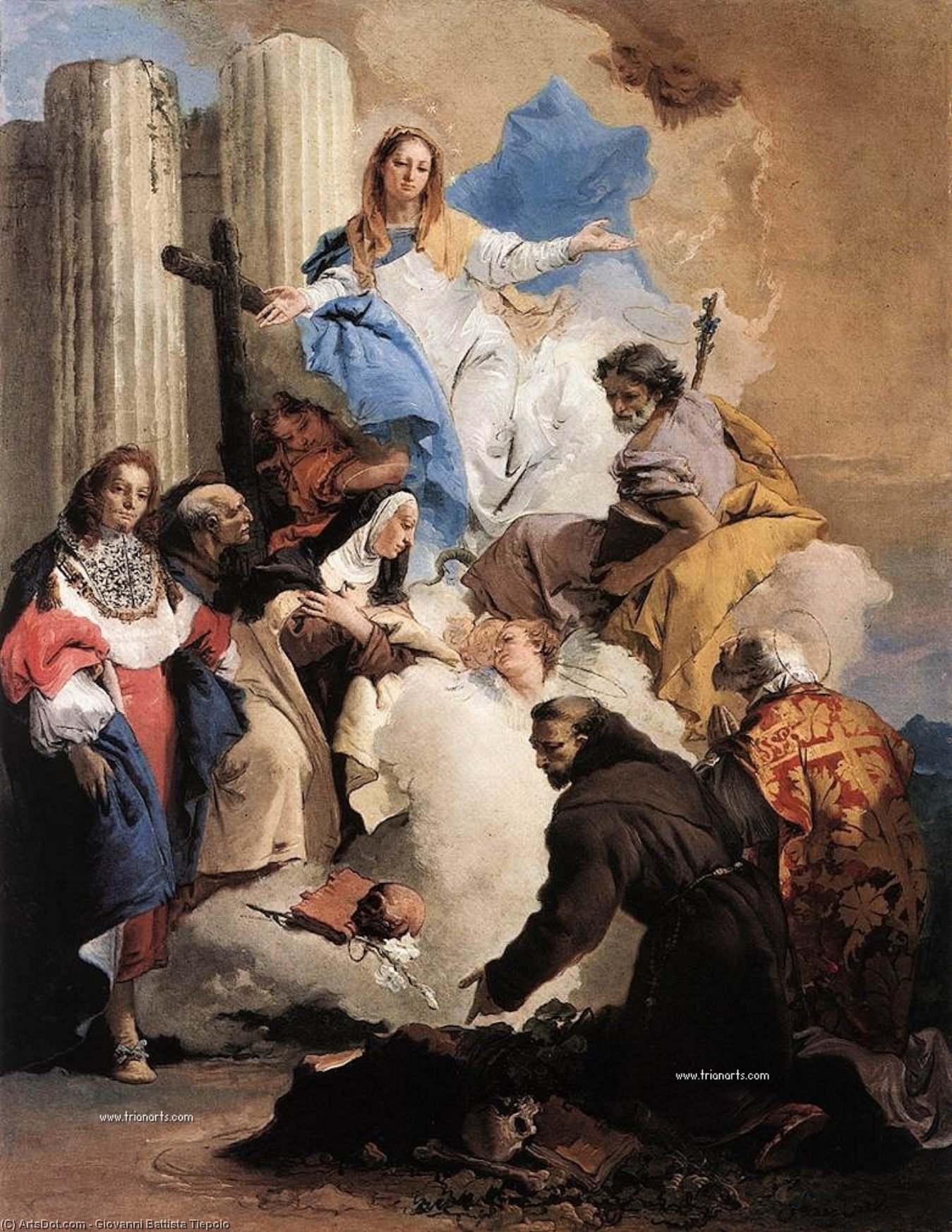
Giambattista Tiepolo's “The Virgin with Six Saints,” painted in 1737, is more than a religious depiction; it’s an immersive experience of light and emotion, a testament to the artist’s mastery of Baroque principles. Measuring 72 x 56 cm, this intimate canvas radiates the grandeur and theatricality that defined Tiepolo's monumental works, particularly his frescoes adorning palaces and churches across Venice and beyond. The painting captures a pivotal moment – the Virgin Mary surrounded by six saints – rendered with an almost palpable sense of reverence and divine presence. The meticulous detail in each figure’s drapery, combined with the masterful use of chiaroscuro, creates a dramatic interplay of light and shadow that draws the viewer into the heart of the scene.
Baroque Grandeur and Venetian Innovation
Born in Venice in 1696, Tiepolo was a pivotal figure in the transition from Rococo to Baroque. His work embodies the Venetian tradition’s emphasis on color, illusionism, and dynamic composition. Unlike earlier depictions of religious scenes that often prioritized strict realism, Tiepolo embraced a more expressive style, prioritizing emotional impact over photographic accuracy. Notice how he employs swirling drapery, vibrant colors – rich reds, blues, and golds – and a sense of movement to convey the spiritual energy of the moment. The painting’s scale, though relatively small, is treated with the same monumental ambition as Tiepolo's larger frescoes, reflecting his belief in the power of art to transform space and inspire awe.
Symbolism and Composition
The composition itself is carefully constructed to guide the viewer’s eye. The Virgin Mary occupies the central position, radiating authority and compassion, while the six saints are arranged around her in a dynamic yet harmonious manner. Each saint possesses distinct characteristics – some standing tall, others kneeling in prayer or seated with an air of contemplation – contributing to the overall sense of depth and complexity. The cross on the left side serves as a potent symbol of faith and sacrifice, while the book near the bottom right corner subtly reinforces the theme of learning and divine wisdom. The use of pyramidal composition is a key element of Baroque art, creating stability and balance within the dynamic scene.
A Window into 18th-Century Venetian Art
"The Virgin with Six Saints" offers a captivating glimpse into the artistic landscape of 18th-century Venice. Painted during Tiepolo’s most prolific period, it showcases his signature style – characterized by its dramatic lighting, vibrant colors, and illusionistic effects. The painting's creation reflects the patronage system that fueled Venetian art, commissioned by wealthy families and religious institutions seeking to demonstrate their piety and status. This particular work exemplifies Tiepolo’s ability to seamlessly blend religious iconography with artistic innovation, solidifying his legacy as ‘The Architect of Venetian Light.’