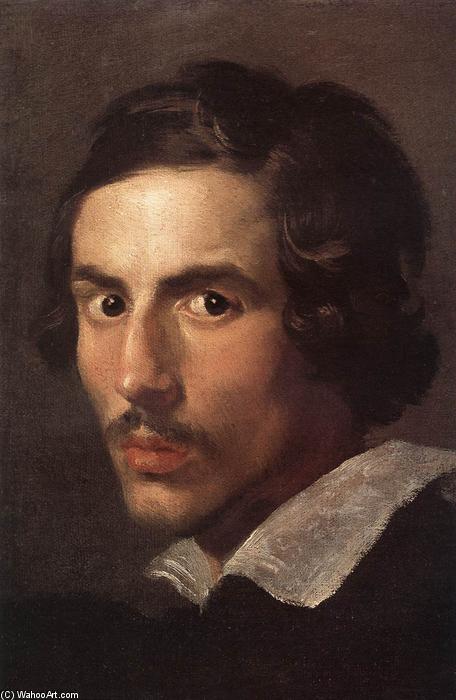
A Glimpse of Youth and Genius: Exploring Bernini’s Self-Portrait
Gian Lorenzo Bernini's “Self-Portrait as a Young Man,” painted in 1623, isn’t merely a likeness; it’s a carefully constructed declaration of artistic ambition and nascent genius. Captured during a pivotal period of his career – just twenty-five years old when he undertook the commission – the painting offers an intimate window into the mind of a sculptor destined to reshape the very language of Baroque art. It's a study in controlled intensity, a subtle display of confidence that belies the turbulent creative journey ahead. The portrait isn’t overtly flamboyant; instead, it favors restraint and a profound understanding of light and shadow – hallmarks of Bernini’s developing style.

Baroque Drama and the Language of Gesture
Bernini’s mastery is immediately evident in his command of Baroque technique. The painting exemplifies the style's dramatic use of chiaroscuro – the stark contrast between light and dark – to sculpt volume and create a sense of three-dimensionality. Notice how the folds of his clothing seem to ripple with an inner life, and how the subtle blush on his cheeks hints at both vitality and introspection. The composition itself is carefully balanced; the young Bernini stands slightly off-center, drawing the viewer’s eye directly into his gaze. This directness, combined with the slight tilt of his head, conveys a sense of engagement and intellectual curiosity – qualities that would become central to his artistic vision.
- The Dark Background: Serves to heighten the luminosity of Bernini’s face and clothing, emphasizing his presence.
- The White Collar: A symbol of status and perhaps a subtle nod to his noble background, hinting at the patronage that fueled his career.
- Intense Gaze: Captures the artist's focused attention and intellectual curiosity – key elements of his creative process.
Symbolism and the Artist’s Identity
Beyond a simple portrait, “Self-Portrait as a Young Man” is a statement about Bernini’s artistic identity. The painting reflects his burgeoning confidence as a sculptor, foreshadowing his later monumental works like "David" and "Ecstasy of Saint Teresa." The young man's contemplative expression suggests an artist deeply engaged with the world around him, seeking to capture its beauty and emotion through his art. Some scholars believe the subtle suggestion of a dragon in the background – barely perceptible yet undeniably present – alludes to Bernini’s ambition to transform ordinary materials into extraordinary works of art, mirroring the mythical creature's ability to breathe life into inanimate objects.
A Legacy Forged in Rome
Created during a period of immense artistic and political upheaval in Rome, this self-portrait offers a glimpse into the heart of the Baroque era. Bernini’s work was deeply intertwined with the papacy, serving as both an artist and a courtier. His ability to seamlessly blend technical skill with emotional depth – qualities brilliantly displayed in this intimate portrait – cemented his place as one of the most influential artists of all time. Reproductions of “Self-Portrait as a Young Man” allow us to appreciate not only Bernini’s extraordinary talent but also the vibrant cultural landscape that shaped his genius. It remains a powerful testament to the enduring legacy of a true Renaissance man.