Explore the surreal world of Giorgio de Chirico (1888-1978), founder of Metaphysical art. Discover dreamlike cityscapes, philosophical themes & iconic mannequins. Influential to Surrealism.
A Fragment of Dreamlike Reality: Exploring Giorgio de Chirico’s Lucrecia
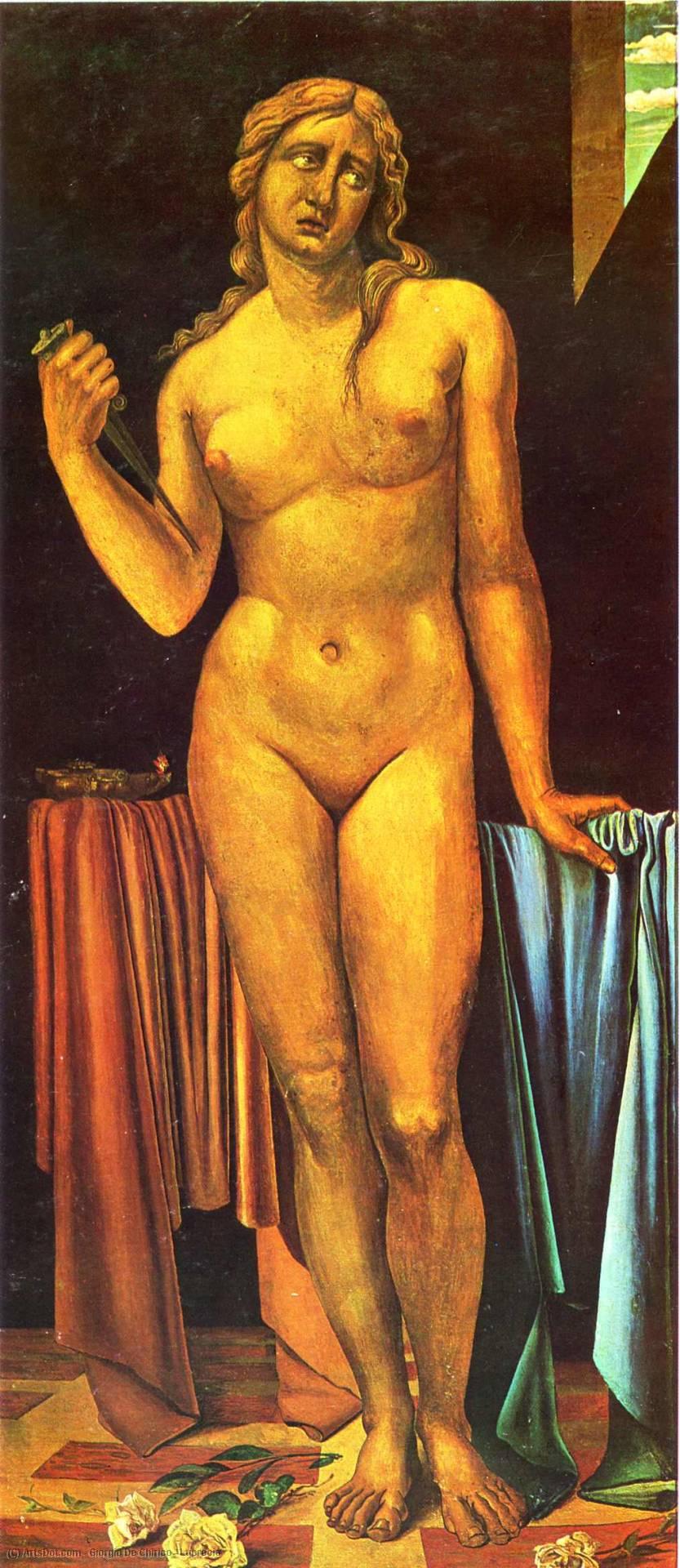
The painting “Lucrecia,” created in 1922 by Giorgio de Chirico, stands as a quintessential example of Neo-Baroque art—a style that paradoxically sought to recapture the grandeur and emotional intensity of Baroque aesthetics while simultaneously confronting the anxieties of the burgeoning modernist era. Measuring 174 x 76 cm, this artwork isn’t merely a depiction of a woman; it's an invitation into a meticulously crafted psychological landscape, mirroring the artist’s own preoccupation with themes of isolation and subconscious exploration.
- Subject Matter: The central figure is a nude woman positioned before a curtain—a motif recurrent in de Chirico’s oeuvre—suggesting vulnerability and concealment alongside an unspoken gaze directed towards something beyond the viewer's immediate perception. This deliberate ambiguity invites contemplation about desires, fears, and hidden truths.
- Style: De Chirico’s Neo-Baroque style distinguishes itself from its predecessors through a disconcerting juxtaposition of classical elements—particularly architectural forms—with unsettling distortions and dreamlike atmosphere. It abandons the polished surfaces and idealized beauty favored by earlier Baroque painters in favor of a deliberately jarring visual experience.
- Technique: Executed with oil paint on canvas, “Lucrecia” demonstrates de Chirico’s masterful command of chiaroscuro—the dramatic interplay of light and shadow—creating an illusionistic depth that enhances the painting's unsettling mood. Precise brushstrokes contribute to a textured surface that captures both solidity and ethereal quality simultaneously.
Historical Context: Nietzschean Shadows Over Turin
De Chirico’s artistic vision was profoundly shaped by the intellectual climate of Turin during the early 1920s—a city grappling with the aftermath of World War I and increasingly influenced by the philosophical ideas of Friedrich Nietzsche. Nietzsche's proclamation that “God is dead” resonated deeply within de Chirico, fueling his exploration of existential anxieties and questioning established moral frameworks. This preoccupation finds expression in “Lucrecia,” where the woman’s gaze embodies a yearning for transcendence amidst an oppressive stillness—a visual manifestation of Nietzsche’s concept of nihilism.
Symbolic Resonance: Curtain Walls and Hidden Desire
The curtain itself serves as more than just a backdrop; it functions as a potent symbol representing barriers to perception and the subconscious mind. Classical architectural elements, subtly incorporated into the composition—such as the arched doorway—further reinforce this connection to antiquity, hinting at hidden knowledge and repressed emotions. The woman’s hand holding an unidentified object adds another layer of intrigue, symbolizing potential action or contemplation—a silent promise of revelation concealed beneath a veneer of composure.
Emotional Impact: A Portrait of Disquiet
“Lucrecia” evokes a palpable sense of unease and melancholy—a feeling deliberately cultivated by de Chirico to provoke introspection in the viewer. The painting’s unsettling stillness contrasts sharply with the implied dynamism of the woman's gaze, creating a psychological tension that lingers long after viewing. It is precisely this emotional resonance—this ability to capture the complexities of human experience—that secures “Lucrecia”’s place as a landmark achievement of Neo-Baroque art and a testament to de Chirico’s enduring fascination with the subconscious realm.