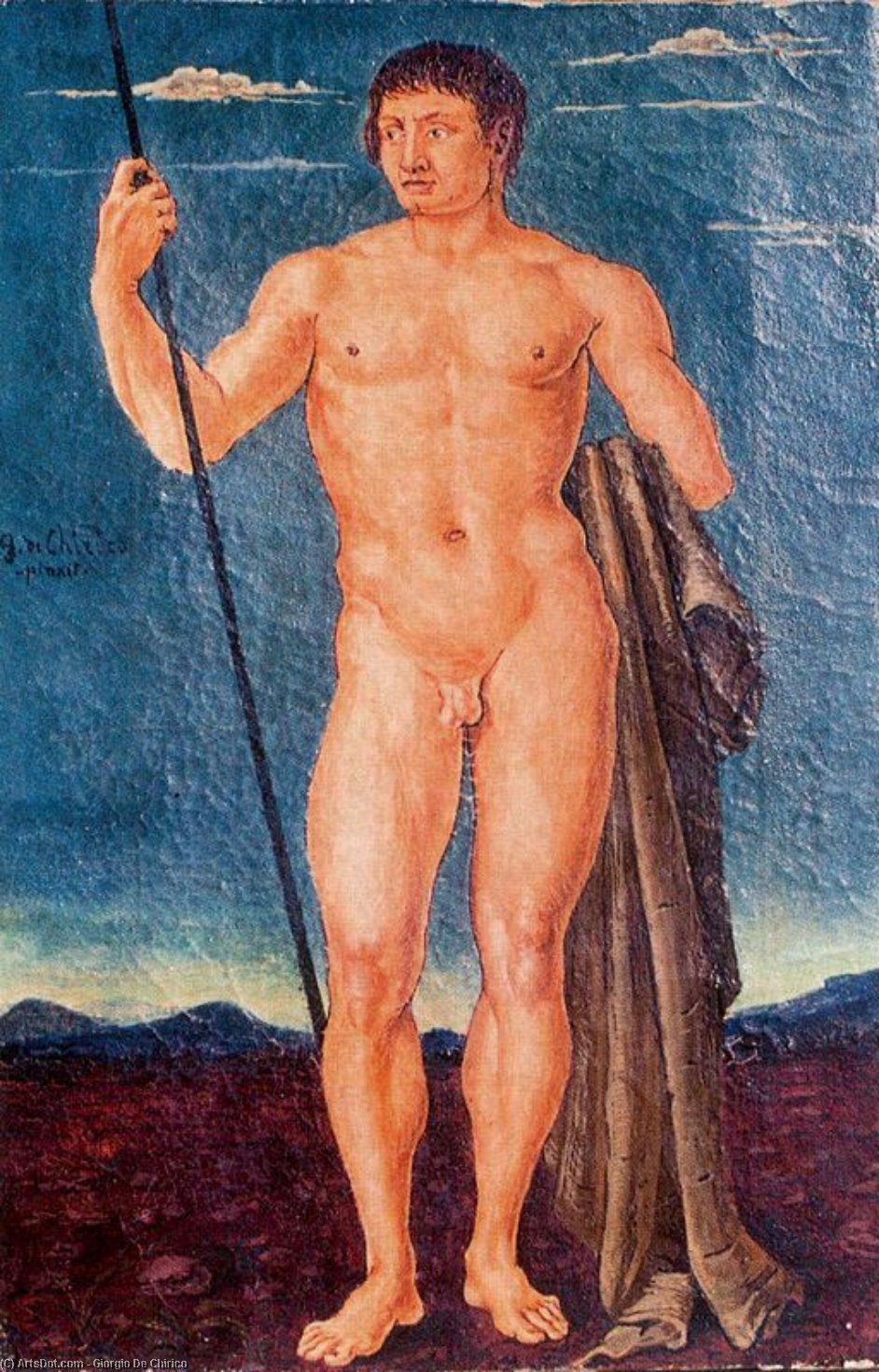
Giorgio de Chirico’s enigmatic "St. George" presents a striking nude figure amidst a dreamlike landscape, embodying the artist's unique metaphysical style and pre-war European anxieties. Explore this captivating oil on canvas reproduction and bring a touch of surrealism into your space.
A Silent Echo of Existential Dread: De Chirico’s “St. George”
Giorgio de Chirico's "St. George" is not merely a depiction of a mythological figure; it’s a meticulously crafted portal into the unsettling landscape of the subconscious. Painted with an almost unnerving stillness, the artwork embodies the core tenets of de Chirico’s metaphysical painting – a genre he pioneered to explore the anxieties and alienation of modern life. The solitary male figure, stripped bare and posed with a stark staff, immediately evokes a sense of vulnerability and isolation, amplified by the desolate, mountainous backdrop that seems to press in on him from all sides. This isn't a heroic narrative; it’s an interrogation of the human condition, rendered with unsettling precision.
- Subject Matter: The painting centers around the iconic figure of St. George, slayer of the dragon, yet de Chirico subverts traditional heroism. The nakedness emphasizes vulnerability and removes any sense of martial prowess, transforming him into a symbol of existential questioning rather than triumphant action.
- Style & Technique: De Chirico’s style is instantly recognizable – a potent blend of classical influences with a distinctly modern sensibility. The oil on canvas technique allows for rich color saturation and meticulous detail, creating an almost hyperreal effect that simultaneously draws the viewer in and distances them from the scene.
The Philosophical Roots: Nietzschean Echoes
To fully appreciate “St. George,” one must understand the intellectual currents that shaped de Chirico’s vision. Heavily influenced by philosophers like Friedrich Nietzsche, Arthur Schopenhauer, and Otto Weininger, de Chirico sought to capture the irrationality of human desire and the subjective nature of reality. The painting's starkness and ambiguity mirror these philosophical concerns – a rejection of comforting narratives in favor of confronting the unsettling truths about existence. The composition itself feels deliberately disjointed, reflecting the fragmented worldview championed by thinkers who questioned established moral codes and religious dogma. The figure’s isolation speaks to the individual’s struggle for meaning in a world devoid of inherent purpose.
Symbolism and the Dreamscape
The setting within “St. George” is crucial to its interpretation. The barren landscape, reminiscent of Arnold Böcklin's haunting landscapes, contributes to the overall atmosphere of unease and disorientation. Mountains, traditionally symbols of strength and permanence, here appear menacing and oppressive, suggesting a crumbling foundation for human aspirations. The cloth draped around the figure could represent both protection and vulnerability – a futile attempt to shield oneself from an unknowable dread. De Chirico masterfully employs these symbolic elements to create a dreamscape, blurring the lines between reality and illusion, conscious thought and unconscious desire.
Emotional Impact & Artistic Legacy
"St. George" is profoundly unsettling, yet undeniably captivating. It’s a painting that lingers in the mind long after viewing, prompting reflection on themes of isolation, mortality, and the search for meaning. De Chirico's work paved the way for Surrealism and other movements exploring the subconscious, solidifying his place as one of the most important figures in 20th-century art. A hand-painted reproduction offers a tangible connection to this seminal artwork, allowing you to experience its power and complexity firsthand.