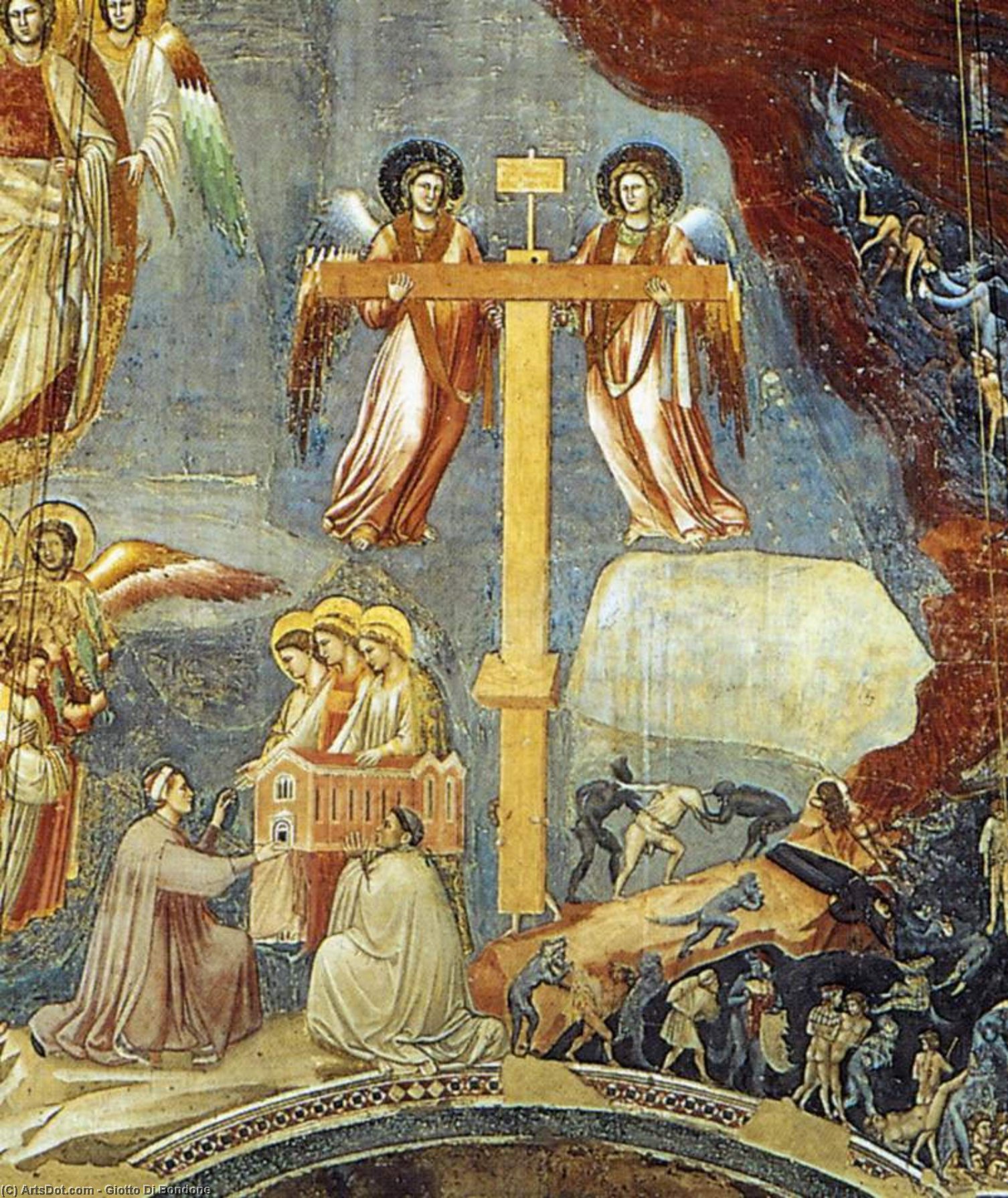
Last Judgment (detail) (26): A Revolutionary Vision of Faith
Giotto di Bondone’s
Last Judgment (detail) (26) stands as a cornerstone of Renaissance art and a testament to Giotto’s unparalleled ability to convey profound emotion through visual storytelling. Created in 1306 for the Cappella Scrovegni in Padua, Italy—a commission that profoundly shaped his artistic trajectory—this fresco transcends mere depiction; it embodies a radical reimagining of religious iconography and foreshadows the humanist spirit of the era.
The Artistic Context: Breaking Free From Byzantium
Before Giotto’s arrival on the Florentine art scene, Byzantine painting dominated Italy, characterized by flattened figures, shimmering gold backgrounds, and stylized representations prioritizing spiritual solemnity over naturalistic accuracy. Giotto decisively rejected these conventions, drawing inspiration from Roman sculpture—particularly funerary monuments—and embracing a more human-centered approach. This shift wasn’t merely stylistic; it reflected a burgeoning interest in observing the natural world and portraying human emotions with unprecedented realism. Cimabue, Giotto's teacher, championed this humanist impulse, fostering an environment where artistic innovation flourished.
A Composition Steeped in Depth and Drama
The fresco’s central scene depicts Jesus Christ crucified on the cross, surrounded by angels and a multitude of figures engaged in various actions—the resurrected saints, weeping mourners, and souls ascending to heaven or descending into hell. Giotto masterfully employs spatial perspective, creating an illusion of depth that draws viewers into the narrative. The inclusion of a horse—a symbol of divine majesty—adds dynamism to the composition, emphasizing the grandeur of God’s judgment. Giotto's meticulous attention to detail—from the expressive faces of the figures to the subtle drapery folds—elevates the artwork beyond mere representation, imbuing it with palpable emotion and spiritual significance.
Symbolism: Echoes of Roman Sculpture and Medieval Theology
Giotto’s artistic vision is deeply rooted in both Roman sculptural traditions and medieval theological thought. Like Roman funerary monuments, the fresco utilizes pyramidal composition to convey stability and solemnity—a deliberate choice reflecting the belief that God reigns supreme over all creation. The figures are rendered with anatomical accuracy, mirroring the humanist fascination with studying human anatomy—a departure from Byzantine art’s idealized representations. Furthermore, Giotto incorporates symbolic gestures and expressions that communicate theological concepts: Christ's outstretched hand symbolizes divine compassion, while the angels’ wings represent heavenly grace.
Legacy and Enduring Relevance
The
Cappella Scrovegni (Padua, Italy)—recognized as a UNESCO World Heritage Site—serves as an invaluable repository of artistic history. Its preservation ensures that future generations can experience the transformative power of Giotto’s masterpiece. Today, reproductions of
Last Judgment (detail) (26) continue to inspire artists and art enthusiasts alike—a testament to Giotto’s enduring influence on Western artistic tradition.