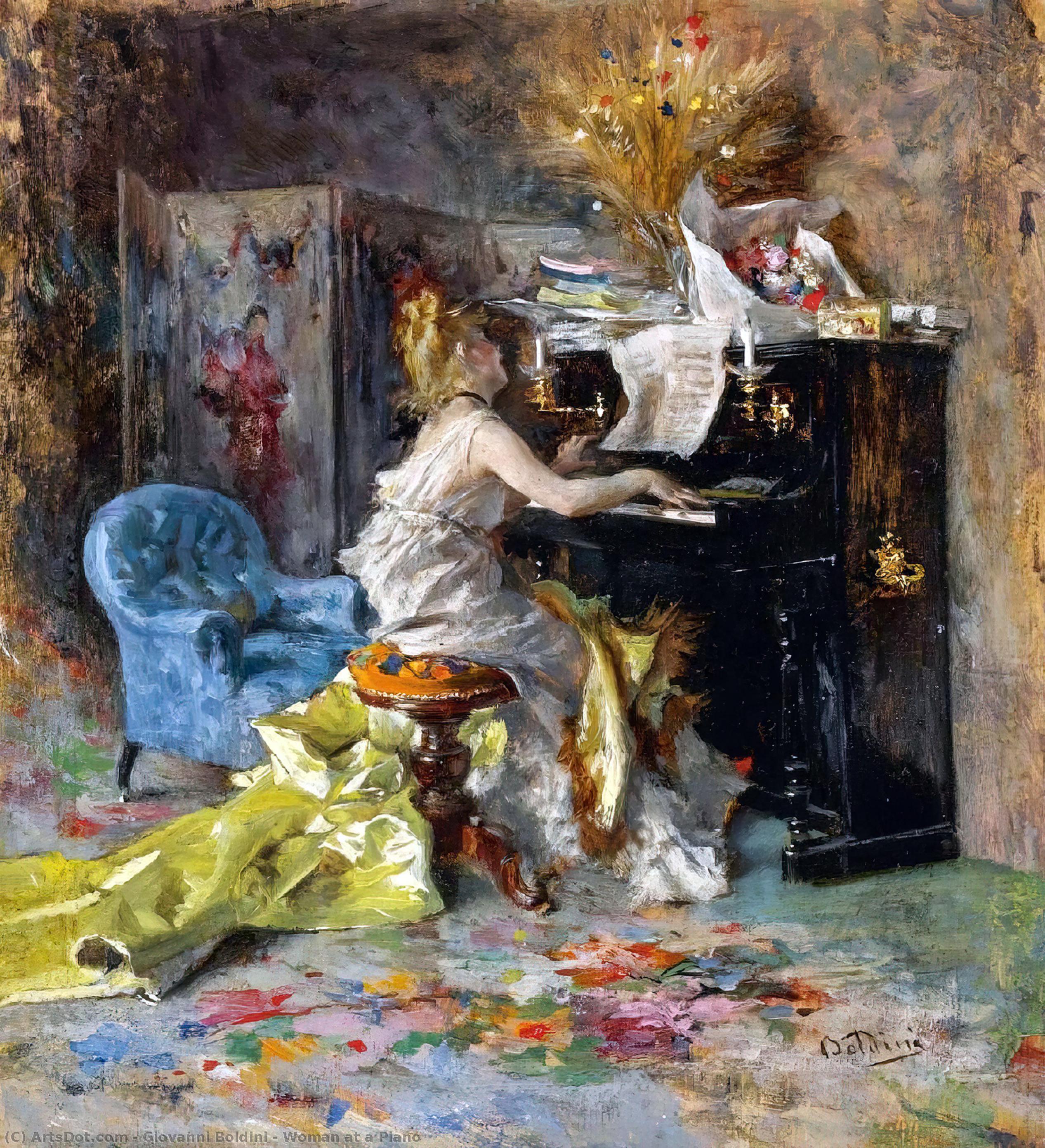
Giovanni Boldini's "Woman at a Piano": A Glimpse of Belle Époque Elegance
- Title: Woman at a Piano
- Artist: Giovanni Boldini
- Date: c.1879
- Style: Realism, Impressionistic elements
- Medium: Oil on panel
- Dimensions: 15 x 13 cm
Subject and Composition
Giovanni Boldini's "Woman at a Piano" offers an intimate portrayal of a woman engrossed in playing the piano within her home. The scene is bathed in soft, diffused light, creating a serene and inviting atmosphere. The composition centers on the pianist, with the grand piano taking prominence. A comfortable couch sits to the left, while a chair rests near the right edge, suggesting a lived-in space. Decorative elements such as a vase, books, and a potted plant add depth and character to the room. Boldini masterfully captures the woman's focus and skill, conveying a sense of quiet contemplation.
Artistic Technique and Style
Boldini’s style blends Realism with Impressionistic sensibilities. While grounded in realistic depiction, his technique emphasizes capturing light and atmosphere through loose brushstrokes and layered colors. The visible brushwork creates a textured surface, contributing to the painting's dynamic energy. He was known as the "Master of Swish" for his fluid and elegant style. This particular work showcases Boldini’s ability to portray everyday life with both precision and an emotional resonance characteristic of the Belle Époque.
Historical Context and Symbolism
Created around 1879, “Woman at a Piano” reflects the artistic climate of late 19th-century Paris. Boldini was influenced by artists like Edgar Degas and Ernest Meissonier, incorporating elements of their styles into his own unique approach. The piano itself symbolizes artistry, expression, and refinement—hallmarks of the era's cultural values. The domestic setting suggests a private moment of artistic pursuit, offering a glimpse into the life of an educated woman during this period. Boldini’s work was highly sought after by Parisian society, reflecting his ability to capture the elegance and sophistication of the Belle Époque.
Emotional Impact and Legacy
The painting evokes feelings of peacefulness, solitude, and artistic passion. The warm color palette and soft lighting contribute to a sense of intimacy and tranquility. Boldini’s "Woman at a Piano" remains a testament to his skill in capturing the essence of everyday life with elegance and precision. It is a valuable piece for art enthusiasts seeking high-quality reproductions that bring the beauty of this artwork into their homes, offering a window into a bygone era of artistic expression and refined living.