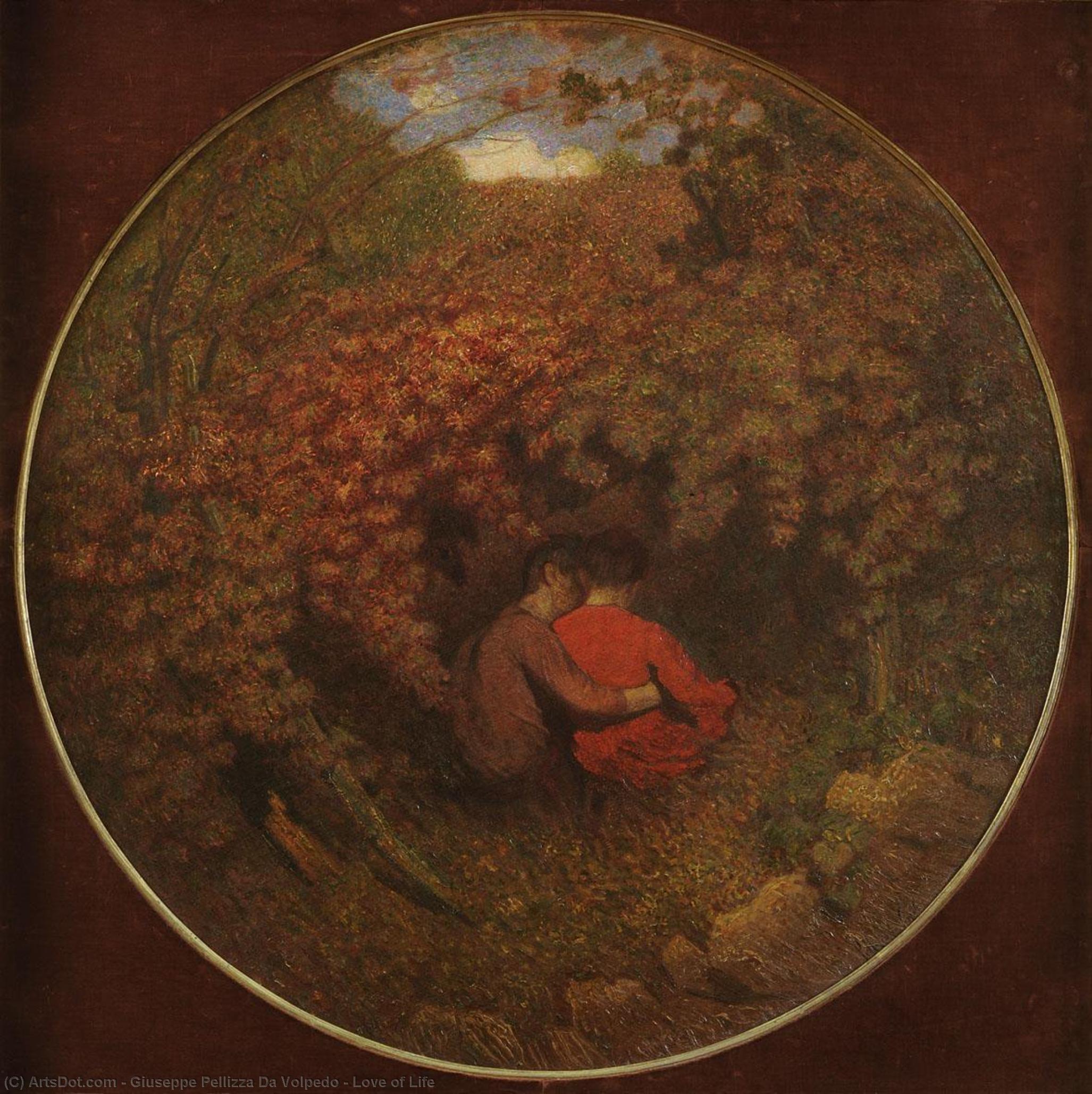
Discover "Love of Life" by Giuseppe Pellizza da Volpedo – a stunning circular oil painting capturing intimacy & passion in an autumnal forest. Impressionistic beauty, rich colors, and timeless appeal.
A Moment of Intimate Connection: Exploring Giuseppe Pellizza da Volpedo’s “Love of Life”
Giuseppe Pellizza da Volpedo's "Love of Life," painted around 1900, is a profoundly moving work that transcends mere representation to capture a universal human experience – the tender embrace of two souls amidst the poignant beauty of nature. This circular oil painting, dominated by warm autumnal hues and rendered with Pellizza’s signature divisionist technique, invites viewers into a world of quiet intimacy and emotional depth. The artwork's power lies not just in its subject matter but also in the masterful execution of its style and the rich symbolism embedded within its composition.
- Divisionism: A Revolutionary Approach – Pellizza was a key figure in the Italian divisionist movement, pioneered by Giovanni Segantini. This technique involved applying paint in small, distinct brushstrokes of pure color, allowing the viewer’s eye to blend them optically rather than relying on traditional mixing on the palette. This created a shimmering effect and heightened the sense of light and atmosphere, central to Pellizza's artistic vision.
- The Forest as Metaphor – The dense autumnal forest surrounding the couple is more than just a backdrop; it’s a potent symbol. Autumn represents transition, decline, and the fleeting nature of beauty—themes that resonate deeply within the painting’s emotional core. The trees, with their gnarled branches and vibrant foliage, evoke a sense of both melancholy and resilience.
- Impressionistic Influence – While firmly rooted in divisionism, Pellizza's work also displays clear influences from Impressionism, particularly in his focus on capturing the effects of light and atmosphere. The diffused lighting, soft gradations of tone, and flattened perspective contribute to a dreamlike quality, prioritizing emotional impact over strict realism.
Technique and Materials: Building Layers of Emotion
Pellizza’s meticulous technique is immediately apparent in the layering of oil paints on canvas. He built up texture and color through multiple applications, creating an impasto-like surface that adds depth and visual interest to the foliage. The loose brushwork, characteristic of divisionism, allows light to dance across the scene, enhancing the sense of movement and atmosphere. The artist’s careful attention to detail—particularly in rendering the textures of the leaves and branches—contributes significantly to the painting's overall realism despite its stylistic approach. The use of primarily oil paint on canvas speaks to a commitment to traditional materials and techniques, ensuring the longevity and rich color saturation of this remarkable artwork.
Historical Context and Social Consciousness
Created around 1900, “Love of Life” reflects the broader artistic and intellectual currents of the late 19th century. Pellizza’s work aligns with a growing interest in portraying everyday life and human emotion, moving away from the grand historical narratives favored by earlier generations. Furthermore, Pellizza's personal struggles—including his tragic suicide at a young age—infuse the painting with a sense of melancholy and introspection. His commitment to social realism extended beyond his art; he was a vocal advocate for progressive ideals and sought to capture the dignity and humanity of ordinary people.
Symbolism and Emotional Impact
"Love of Life" is ultimately a powerful meditation on human connection, vulnerability, and the beauty of fleeting moments. The embrace of the couple symbolizes not just romantic love but also a deeper bond—a shared experience of joy, sorrow, and acceptance. The painting’s warm color palette evokes feelings of passion, nostalgia, and perhaps even melancholy, creating an emotional resonance that lingers long after viewing. This artwork is more than simply a depiction; it's an invitation to contemplate the profound beauty and fragility of life itself.