A Moment Frozen in Harlem’s Soul
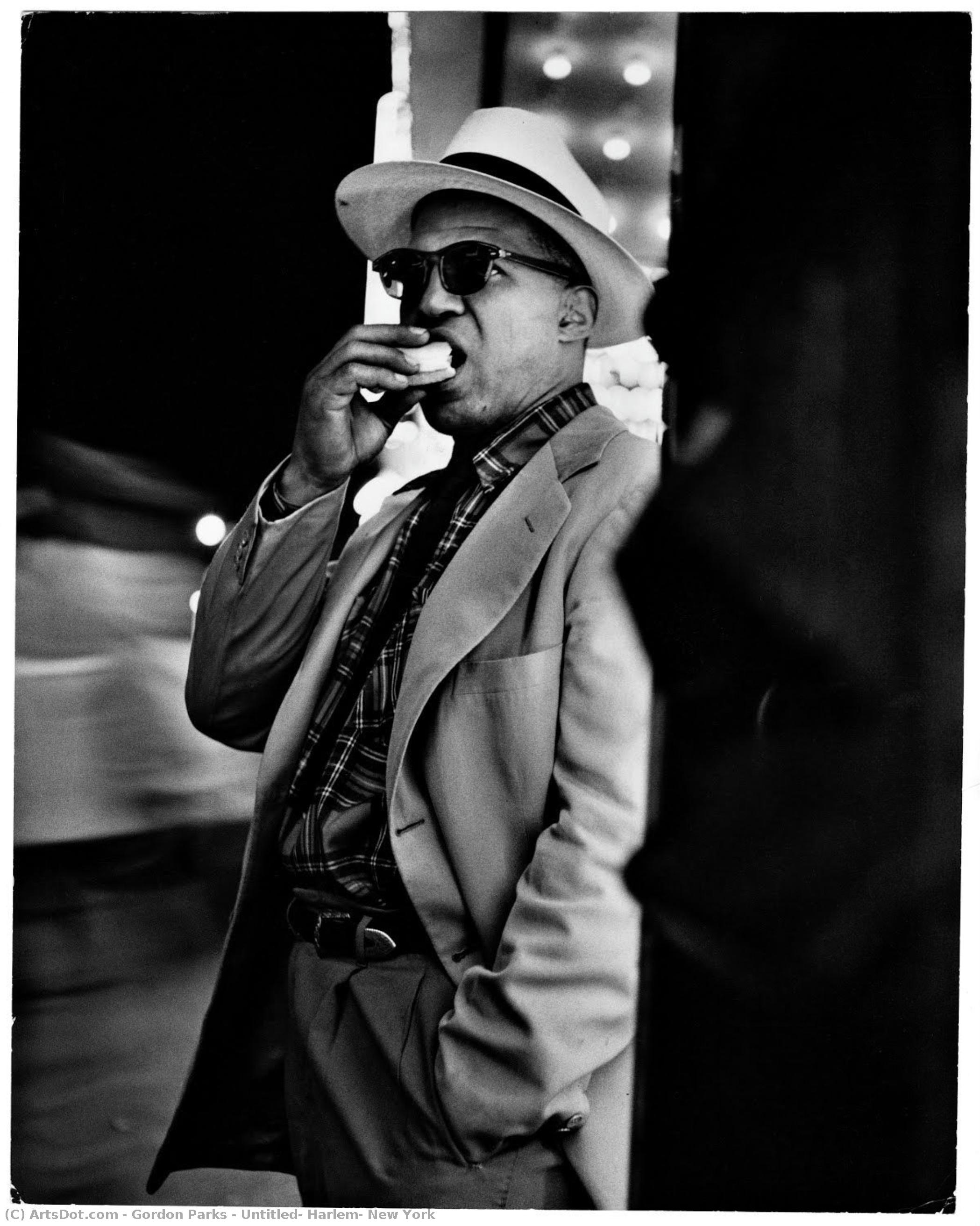
Gordon Parks' "Untitled, Harlem, New York," captured in 1952, isn’t merely a photograph; it’s a distilled essence of urban life—a quiet observation brimming with unspoken stories. The image presents a seemingly simple scene: a man, partially obscured by shadow and the suggestion of a bustling street, engaged in a private conversation held within the confines of his phone. Yet, within this unassuming tableau lies a potent commentary on identity, connection, and the complexities of navigating an American city. Parks’ masterful use of black-and-white photography immediately establishes a timeless quality, transporting us to a specific moment in history while simultaneously resonating with universal human experiences.
The photograph's strength resides not just in its subject matter but also in Parks’ deliberate artistic choices. He employs a tight, almost claustrophobic composition, centering the man’s upper body and face—a direct invitation for the viewer to become intimately involved in his private world. The blurred background, rendered in deep shades of gray, serves to heighten the sense of intimacy and isolation, drawing our attention entirely to the figure before us. The diagonal lines created by his posture subtly guide the eye through the frame, adding a dynamic element to what could have easily been a static portrait. Parks’ use of strong lines—particularly those defined by the man's suit jacket and the brim of his hat—provides structure and visual interest, anchoring the image while simultaneously hinting at an underlying tension.
The Documentary Lens and Social Commentary
Parks was a pioneer in documentary photography, working for Life magazine during a period of profound social change. His early work documenting poverty and racial segregation in America offered a starkly honest portrayal of marginalized communities—a radical departure from the idealized images often presented in mainstream media. “Untitled, Harlem, New York” embodies this commitment to truthfulness. The grainy texture of the black-and-white film adds another layer of authenticity, evoking the feel of a captured moment rather than a carefully staged scene. The image’s starkness—the absence of color and the emphasis on tonal variations—forces us to confront the subject matter with unflinching directness.
Interestingly, this photograph emerged from Parks' "A Man Becomes Invisible" series, a project designed to explore the invisibility experienced by African Americans in post-war America. The man’s sunglasses, partially obscuring his face, can be interpreted as a symbol of privacy and protection—a shield against the often-harsh realities of racial prejudice. Simultaneously, they suggest a degree of detachment, hinting at a life lived on the periphery of mainstream society. The phone conversation itself speaks to a desire for connection, a yearning to bridge distances and maintain relationships in a world that frequently sought to exclude.
Symbolism and Emotional Resonance
Beyond its technical merits, “Untitled, Harlem, New York” possesses a quiet emotional power. The photograph doesn’t offer easy answers or grand pronouncements; instead, it invites contemplation. The man's posture—relaxed yet alert—suggests resilience and an acceptance of his circumstances. He is not defined by poverty or hardship but rather by his ability to find moments of peace amidst the urban chaos. The image evokes a sense of quiet dignity, reminding us that even in the most challenging environments, humanity persists.
Considering Parks’ broader career, this photograph aligns with his commitment to using photography as a tool for social commentary and personal expression. It's a testament to his ability to capture not just images but also the spirit of an era—a poignant reminder of the complexities of American identity and the enduring power of human connection. Reproductions of this iconic image offer a valuable opportunity to bring Parks’ insightful vision into any space, fostering dialogue and prompting reflection on themes of race, class, and the search for belonging.
Technical Details & Historical Context
Created in 1952, "Untitled, Harlem, New York" is a prime example of Gordon Parks' documentary style. He utilized a handheld camera to capture the scene naturally, relying on available light rather than artificial illumination. The shallow depth of field—achieved through careful focus—draws attention to the subject while subtly blurring the background, creating a sense of intimacy and immediacy. The photograph’s date – 1952 – places it within a period of significant social upheaval in America, marked by the rise of the Civil Rights Movement and growing awareness of racial inequality. Parks' work during this time served as a vital record of these struggles and a powerful voice for those often marginalized.