A Divine Encounter in Gold and Shadow
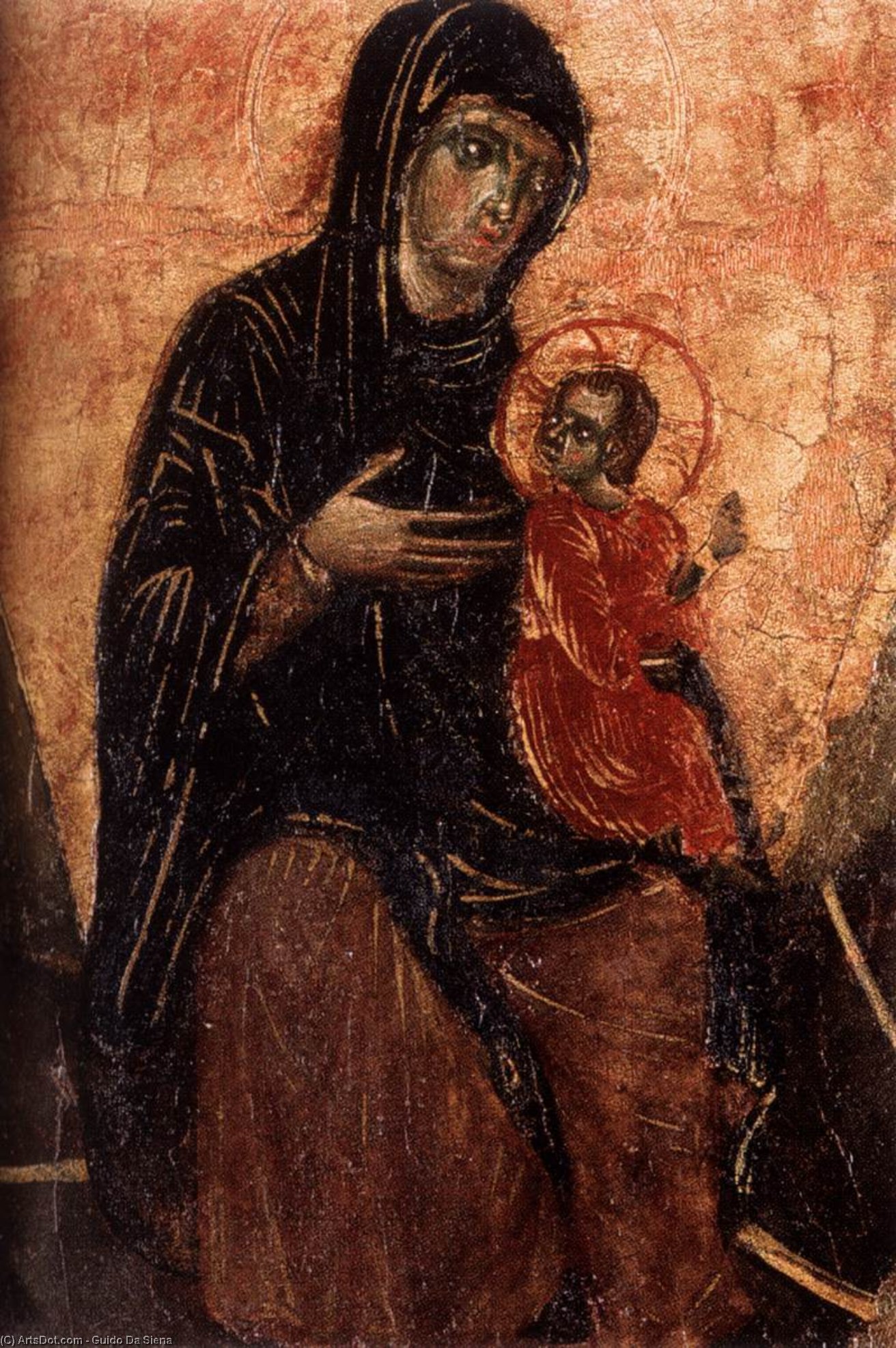
In the quiet, hallowed corridors of art history, few images possess the immediate, spiritual gravity of Guido da Siena’s Flight into Egypt (detail). This exquisite fragment of a larger narrative serves as a profound window into the late 13th century, a period where the boundaries between the earthly and the divine were rendered through the luminous language of Byzantine-influenced Italian art. The composition centers on the intimate, sacred bond between the Virgin Mary and the Christ Child, captured not with the anatomical realism of later eras, but with a stylized, iconic intensity that demands contemplation. As one gazes upon the dark, soulful tones of Mary’s robes, there is an immediate sense of the weight of her journey—a flight born of necessity and protected by faith.
The technique employed in this masterpiece reflects the meticulous discipline of the medieval workshop. Executed in tempera on panel, the artwork utilizes a layered application of pigments that creates a rich, tactile surface. The artist’s hand is evident in the bold, somewhat angular lines that define the drapery, lending a rhythmic, geometric quality to the figures. This method allows for a dramatic interplay of light and shadow; deep blacks and earthy browns are punctuated by sudden, radiant bursts of reddish-orange and shimmering gold. Such high contrast does more than just create depth—it directs the viewer's eye toward the divine presence, making the Christ Child appear as a source of light within the darkness.
Symbolism and the Language of Icons
Every element within this detail is steeped in symbolic significance, designed to communicate theological truths to a largely illiterate medieval audience. The halo surrounding the Christ Child is not merely a decorative ornament but a celestial marker of his divinity, cutting through the somber palette with an unmistakable brilliance. Mary’s gesture—often depicted as one of both protection and presentation—invites the viewer into the sacred circle, transforming the painting from a mere depiction into a devotional tool. The use of gold and warm, ochre tones evokes a sense of the eternal, suggesting that while the scene depicts a historical flight, its spiritual implications are timeless.
For the discerning collector or interior designer, this piece offers more than just aesthetic beauty; it provides a focal point of profound character. The flattened perspective and stylized features characteristic of the Sienese school allow the artwork to transcend the constraints of realistic space, making it an ideal centerpiece for spaces that value historical depth and contemplative atmosphere. Whether placed in a curated gallery setting or as a soulful accent in a sophisticated study, this reproduction of Guido da Siena’s work brings with it the quiet majesty of the Middle Ages, inviting anyone who encounters it to pause and reflect on the enduring power of sacred art.