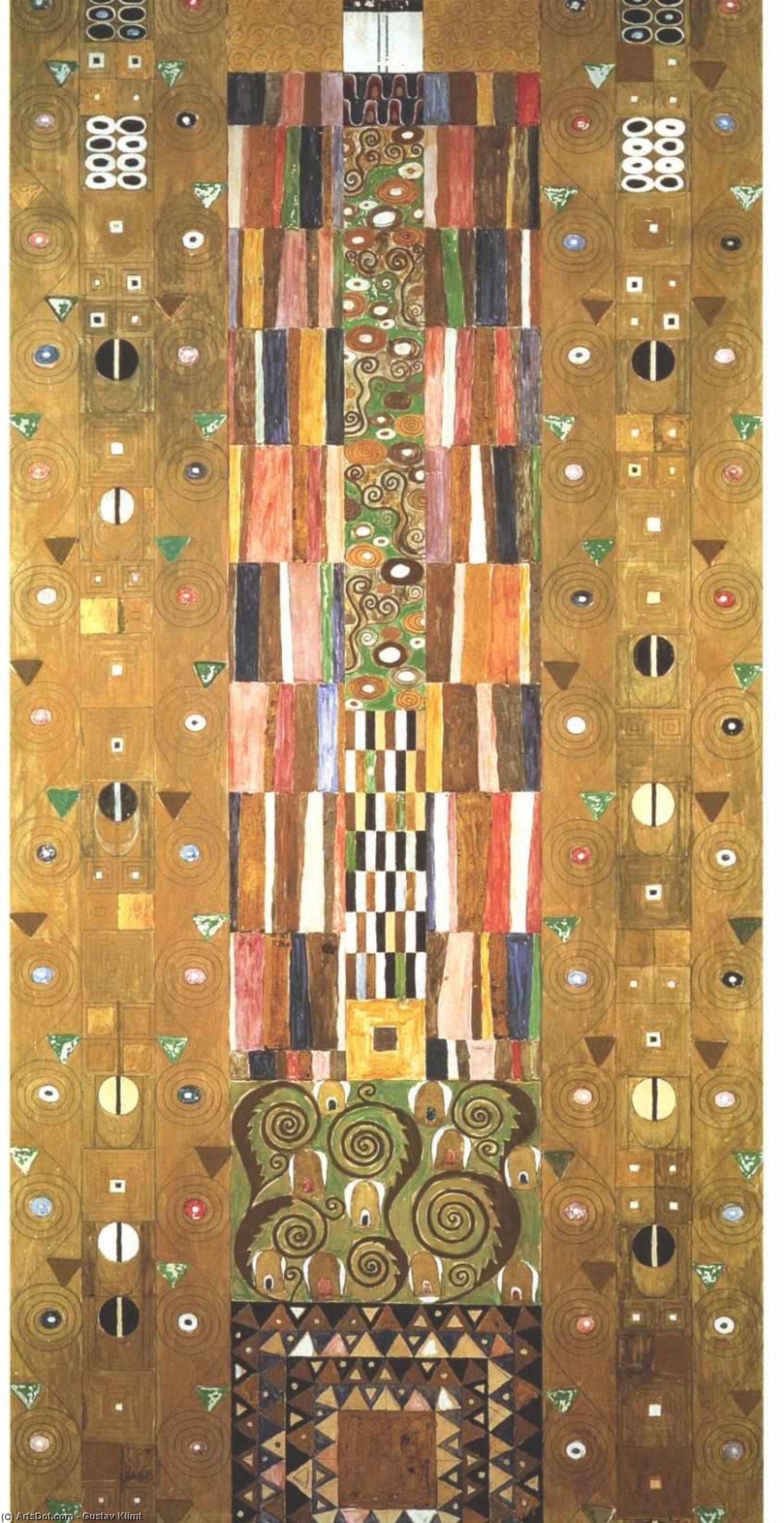
Explore Gustav Klimt's mesmerizing 'Design for the Stoclet Fries,' a vibrant mosaic masterpiece featuring gold leaf and intricate geometric patterns—a testament to Art Nouveau elegance.
グスタフ・クリムト(1862-1918)は、象徴主義とアールヌーヴォーの巨匠。代表作『接吻』や官能的な肖像画で知られ、ウィーン分離派を牽引しました。金箔を多用した装飾性と、愛と死をテーマにした作品が魅力です。
A Symphony of Gold and Geometric Precision: Exploring Klimt’s Design for the Stoclet Fries
Gustav Klimt's "Design for the Stoclet Fries" isn’t merely a decorative panel; it’s a crystallized embodiment of Art Nouveau’s opulent aesthetic and a testament to Klimt’s masterful manipulation of color, texture, and geometric form. Commissioned for the Stoclet Palace in Brussels—a monumental undertaking by Baron Philippe Stoclet—this artwork represents a pivotal moment in Klimt's career and solidified his reputation as one of Austria’s most celebrated artists. The commission itself speaks volumes about the era’s fascination with grandeur, luxury, and the fusion of art and architecture.
The Style of Geometric Ornamentation
At its core lies Art Nouveau’s distinctive style—characterized by flowing organic lines intertwined with stylized floral motifs. However, Klimt transcends mere imitation; he elevates these elements into a rigorously structured geometric framework. The dominant visual language is triangular, creating a dynamic interplay between stability and movement. These triangles aren't simply decorative shapes; they are meticulously arranged to guide the eye across the surface of the mosaic, establishing a harmonious balance that reflects the palace’s architectural ambition. Notice how Klimt utilizes repetition—the consistent recurrence of triangles—to reinforce visual rhythm and contribute to the overall sense of grandeur.
Technique: The Alchemy of Gold Leaf
Klimt's technique is arguably what distinguishes “Design for the Stoclet Fries” from countless other Art Nouveau pieces. He employed gold leaf, a painstaking process involving applying thin sheets of hammered gold onto a substrate—typically gesso—before layering subsequent colors over it. This wasn’t merely about embellishment; it was an integral part of Klimt's artistic vision. Gold leaf symbolizes wealth, divinity, and immortality – concepts deeply rooted in Byzantine iconography and reflecting the aristocratic patronage that fueled Klimt’s endeavors. The shimmering gold surface captures light exquisitely, transforming the mosaic into a radiant spectacle that embodies the spirit of its time. It demanded immense patience and skill from Klimt's assistants, highlighting the dedication required to achieve such breathtaking results.
Symbolism Beyond Decoration
Beyond its formal beauty, “Design for the Stoclet Fries” is laden with symbolic meaning. The interwoven patterns represent fertility and renewal—themes prevalent in Art Nouveau’s preoccupation with nature and femininity. Klimt's use of vibrant hues – reds, blues, greens, yellows, oranges – isn’t arbitrary; each color contributes to a carefully calibrated emotional palette. Red evokes passion and vitality, while blue conveys serenity and contemplation. The interplay between these colors creates a visual dialogue that engages the viewer on an intuitive level.
Emotional Resonance: Capturing Majesty
Ultimately, Klimt's masterpiece succeeds in conveying a profound sense of majesty—a feeling mirrored in the scale of Stoclet Palace itself. It’s more than just aesthetically pleasing; it aspires to inspire awe and wonder. The shimmering gold leaf, combined with the intricate geometric design, transports us back to an era defined by aristocratic ambition and artistic innovation. Reproductions of “Design for the Stoclet Fries” offer a chance to bring this extraordinary vision into any interior space—a reminder that true beauty resides not only in form but also in technique and enduring symbolism.