A Moment Frozen in Gold Leaf: Exploring Klimt’s Study for ‘Portrait of Adele Bloch-Bauer I’
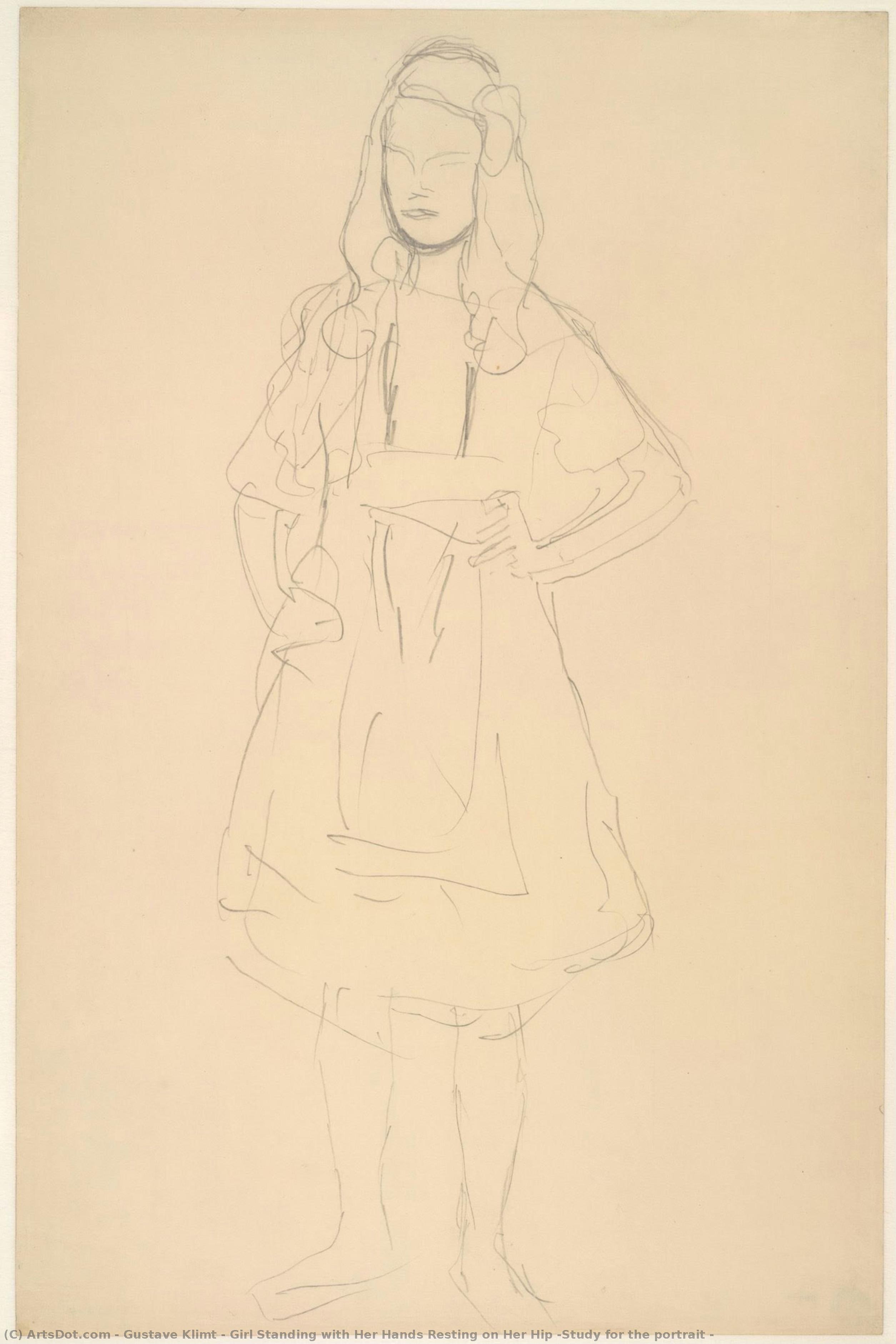
Gustav Klimt's "Girl Standing with Her Hands Resting on Her Hip," created in 1913, isn’t merely a preparatory sketch; it’s a microcosm of Klimt’s artistic vision and a tantalizing glimpse into the genesis of his monumental masterpiece, “Portrait of Adele Bloch-Bauer I.” This unassuming drawing offers invaluable insight into Klimt's meticulous process—a testament to his dedication to capturing not just likeness but also essence. Produced during Klimt’s Golden Phase, this artwork embodies the opulent aesthetic that would define his most celebrated works and solidify his place as one of Austria’s foremost artists of the Belle Époque.
- Subject Matter: The drawing depicts a young woman—likely Adele Bloch-Bauer I herself—a figure who would later become Klimt's muse and subject for arguably his most iconic portrait. Her posture exudes confidence, subtly conveying her presence as she stands poised with hands resting on her hips.
- Style: Characteristic of Klimt’s distinctive style is the fusion of Art Nouveau and Symbolism. The drawing utilizes flowing lines and organic forms—elements typical of Art Nouveau—to create a sense of movement and grace, mirroring the decorative sensibilities of the era. However, beneath this surface elegance lies a deeper symbolic resonance rooted in Jungian psychology.
Technique & Material Considerations
Klimt’s masterful execution is evident in the pencil drawing itself—a deceptively simple medium that belies the artist's profound understanding of tonal gradation and textural nuance. The delicate lines capture the contours of the woman’s figure with remarkable precision, highlighting the subtle musculature beneath her dress. Crucially, this sketch served as a crucial springboard for Klimt’s larger canvas, informing decisions about color palettes and decorative motifs. It foreshadowed the lavish application of gold leaf—a hallmark of “Portrait of Adele Bloch-Bauer I”—demonstrating Klimt's commitment to translating his conceptual ideas into tangible artistic expression.
Historical Context: The Belle Époque & Artistic Innovation
“Girl Standing with Her Hands Resting on Her Hip” emerged from the vibrant cultural landscape of Vienna during the Belle Époque—a period marked by unprecedented economic prosperity, social reform, and artistic experimentation. Klimt’s work stood apart from prevailing academic traditions, championing a bold embrace of decorative art and psychological exploration. He drew inspiration from mythology and psychoanalysis, reflecting anxieties about societal change and delving into the subconscious mind.
Symbolism & Emotional Resonance
Beyond its formal beauty, the drawing is laden with symbolic significance. The woman’s stance embodies strength and composure—a deliberate contrast to the perceived fragility of femininity during this era. Klimt utilized geometric patterns and floral ornamentation—elements common in Symbolist art—to convey ideas of fertility and regeneration. Ultimately, “Girl Standing with Her Hands Resting on Her Hip” encapsulates Klimt's desire to portray not just a portrait but also an inner landscape—a reflection of Adele Bloch- Bauer’s psychological complexity and Klimt’s own artistic ambition.