A Symphony of Gold and Shadow: Ode To Klimt
Gustav Klimt’s “Ode To Klimt” isn't merely a painting; it’s an immersion into the heart of Symbolism and the audacious spirit of Vienna Secession. Born in Baumgarten, Austria, in 1862, Klimt emerged from a family grappling with artistic ambition alongside financial constraints—a formative experience that instilled within him a meticulous eye for detail and an unwavering fascination with opulent materials like gold leaf. His early training at the Kunstgewerbeschule honed his technical skills while exposing him to the prevailing academic styles of his time – styles he swiftly rejected in favor of forging his own distinctive path.
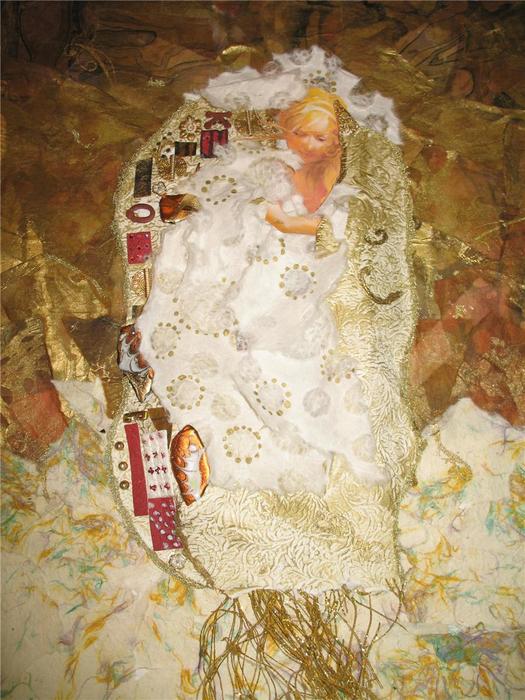
- Subject Matter: The artwork centers around a solitary female figure, positioned prominently within an amorphous form reminiscent of an egg or cocoon. This deliberate asymmetry speaks volumes about Klimt’s intention to portray vulnerability and transformation—themes central to Symbolist art's exploration of the subconscious mind.
- Style & Technique: “Ode To Klimt” exemplifies Klimt’s signature mixed media collage technique, blending fabric scraps, paper, and meticulously applied gold leaf onto a textured surface. This layering creates depth and visual complexity, prioritizing tactile experience over traditional perspective.
The Vienna Secession & Its Artistic Vision
Klimt’s artistic trajectory coincided with the emergence of the Vienna Secession in 1907—a revolutionary movement that challenged the conservative artistic conventions of the Austro-Hungarian Empire. Rejecting academic realism, Secession artists championed Symbolism and Expressionism, prioritizing emotional resonance over literal representation. Klimt's embrace of Japanese aesthetics profoundly influenced his visual vocabulary, fostering a fascination with decorative patterns and stylized forms. This stylistic rebellion aimed to liberate art from societal constraints and explore universal human experiences.
- Color Palette: The artwork’s dominant hues—warm browns, shimmering golds, and creamy whites—evoke an earthy yet ethereal atmosphere. Strategic splashes of red and burgundy inject a vibrant counterpoint, symbolizing passion and perhaps hinting at hidden anxieties.
- Symbolism: The egg-like form serves as a potent symbol of rebirth, protection, and incubation – concepts frequently explored in Symbolist art to represent spiritual awakening and the cyclical nature of life.
A Masterpiece of Texture & Light
The artist’s masterful manipulation of texture is paramount to conveying “Ode To Klimt’s” emotional impact. Rough paper fragments juxtaposed with smooth fabric create a dynamic surface interplay, mirroring the internal turmoil and beauty inherent in human experience. Diffused lighting casts a gentle glow across the composition, enhancing the dreamlike quality and fostering contemplation. Depth isn't achieved through conventional perspective but rather through careful layering of materials and variations in texture—a deliberate choice that underscores Klimt’s commitment to conveying feeling above all else.
Bringing Klimt’s Vision Home
A high-quality reproduction of “Ode To Klimt” allows you to experience the grandeur and intricacy of this iconic artwork firsthand. Explore its captivating symbolism, immerse yourself in its rich color palette, and appreciate the unparalleled artistry of Gustav Klimt—a true pioneer of Symbolism and a cornerstone of Viennese art history. Visit ArtsDot.com today to discover exceptional reproductions that capture the essence of Klimt’s masterpiece!