A Stage Afloat: Gustave Courbet’s ‘Louis Gueymard as Robert le Diable’
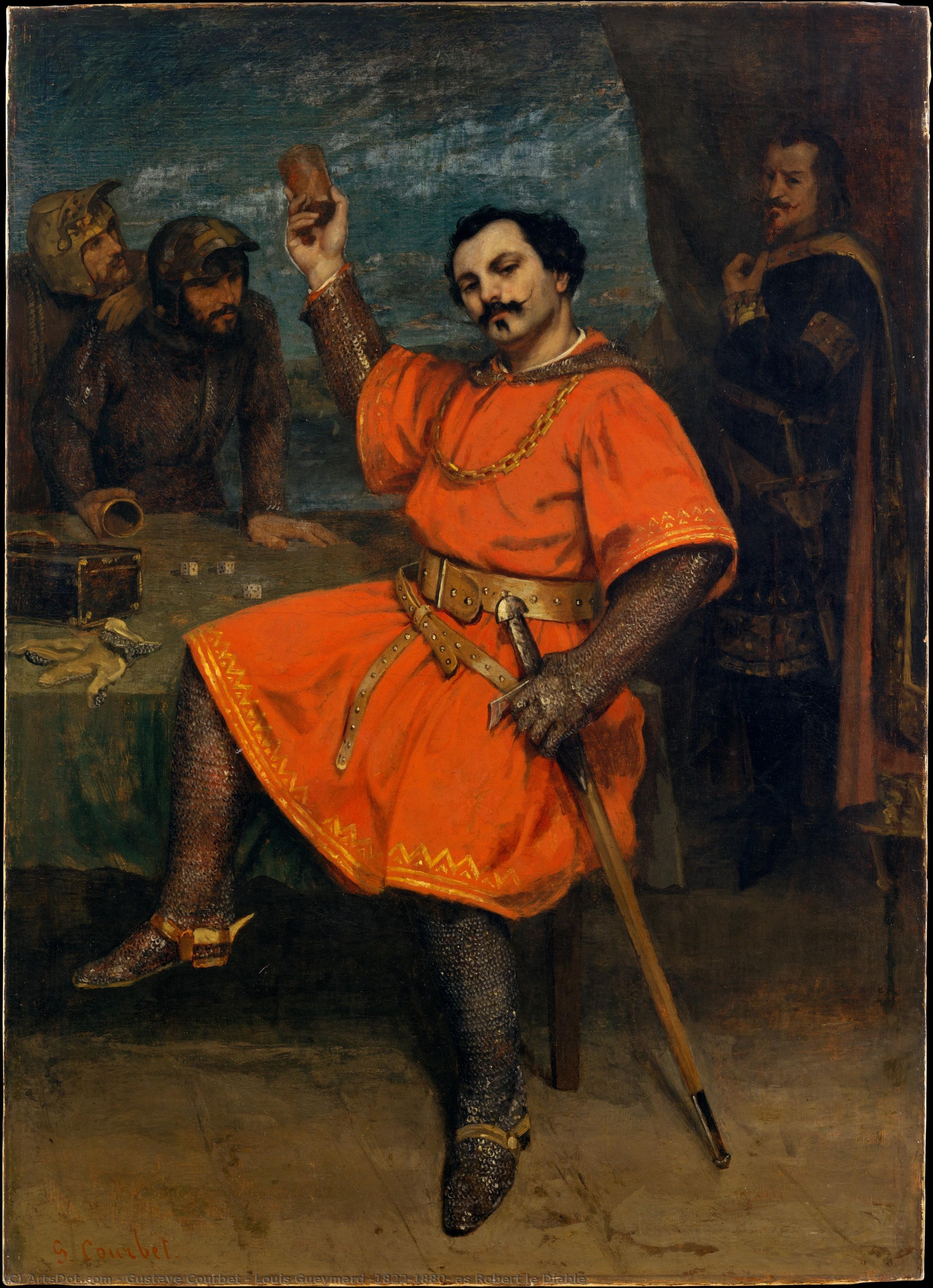
Gustave Courbet's 1857 masterpiece, *Louis Gueymard as Robert le Diable*, is far more than a portrait; it’s a bold statement about modern life filtered through the lens of Romantic drama. This large-scale oil on canvas (149 x 107 cm), now residing at The Metropolitan Museum of Art in New York, captures tenor Louis Gueymard embodying the titular role from Giacomo Meyerbeer's popular opera. Courbet doesn’t simply illustrate a scene; he *embodies* it, creating a powerfully immersive experience for the viewer.
The Drama Unfolds: Subject and Context
The painting depicts a pivotal moment from *Robert le Diable*. Robert, surrounded by shadowy figures – servants of the devil and his malevolent father, Bertram – is engaged in a dice game. This isn’t merely a game of chance; it visually represents the aria "L’or est une chimère" ("Gold is but an illusion"), where Robert contemplates the deceptive allure of wealth and power. Courbet's choice to depict a contemporary opera scene was revolutionary for its time. While his contemporaries favored historical or mythological subjects, he boldly embraced the present, finding drama and significance in modern culture. He cleverly blends this modernity with a medieval aesthetic, creating a timeless quality that resonates even today.
Realism Meets Theatricality: Style & Technique
Courbet’s signature Realist style is immediately apparent. He renders Gueymard and his surroundings with meticulous detail – the texture of fabrics, the glint of metal, the cavernous darkness. However, this isn't a dry, objective representation. Courbet infuses the scene with a theatrical intensity through dramatic lighting and carefully considered composition. The use of oil paint allows for rich layering and vibrant color, particularly in Gueymard’s costume which draws the eye.
Notice how the light doesn’t illuminate evenly, but rather focuses on key elements – Robert's face and hands – heightening the emotional impact. His brushwork is visible, adding a tactile quality to the painting that emphasizes its materiality.
Symbolism in Shadow & Light
The symbolism within *Robert le Diable* is layered and compelling. The dice game itself represents temptation and risk. Robert’s raised hand isn't merely a gesture; it suggests defiance, perhaps even a desperate attempt to control his fate. The shadowy figures surrounding him embody the forces of darkness and corruption.
The cavernous setting, with its rough-hewn walls, reinforces the sense of confinement and moral ambiguity. Even the opulent attire worn by Robert hints at the superficiality of worldly possessions.
A Lasting Legacy: Emotional Impact & Relevance
*Louis Gueymard as Robert le Diable* is a powerful exploration of human desire, temptation, and the struggle between good and evil. Courbet’s ability to capture both the physical likeness of his subject *and* the emotional weight of the scene makes this painting truly exceptional. It remains relevant today not only as a testament to Courbet's artistic skill but also as a reflection of enduring human themes.
Exploring Related Works
- Gustave Courbet: *Louis Gueymard (1822–1880) as Robert le Diable* – A deeper dive into the original work.
- Edgar Degas: *The Ballet from 'Robert le Diable'* – Explore other artistic interpretations inspired by Meyerbeer’s opera.
- Edgar Degas: *Ballet Scene from Robert la Diable (detail)* – A focused look at Degas's captivating depiction of the ballet within the opera.
This painting is a striking addition to any collection, offering both aesthetic beauty and intellectual depth. Its dramatic composition and rich symbolism make it a conversation starter, while its historical significance ensures its enduring value for art lovers, collectors, and interior designers alike.