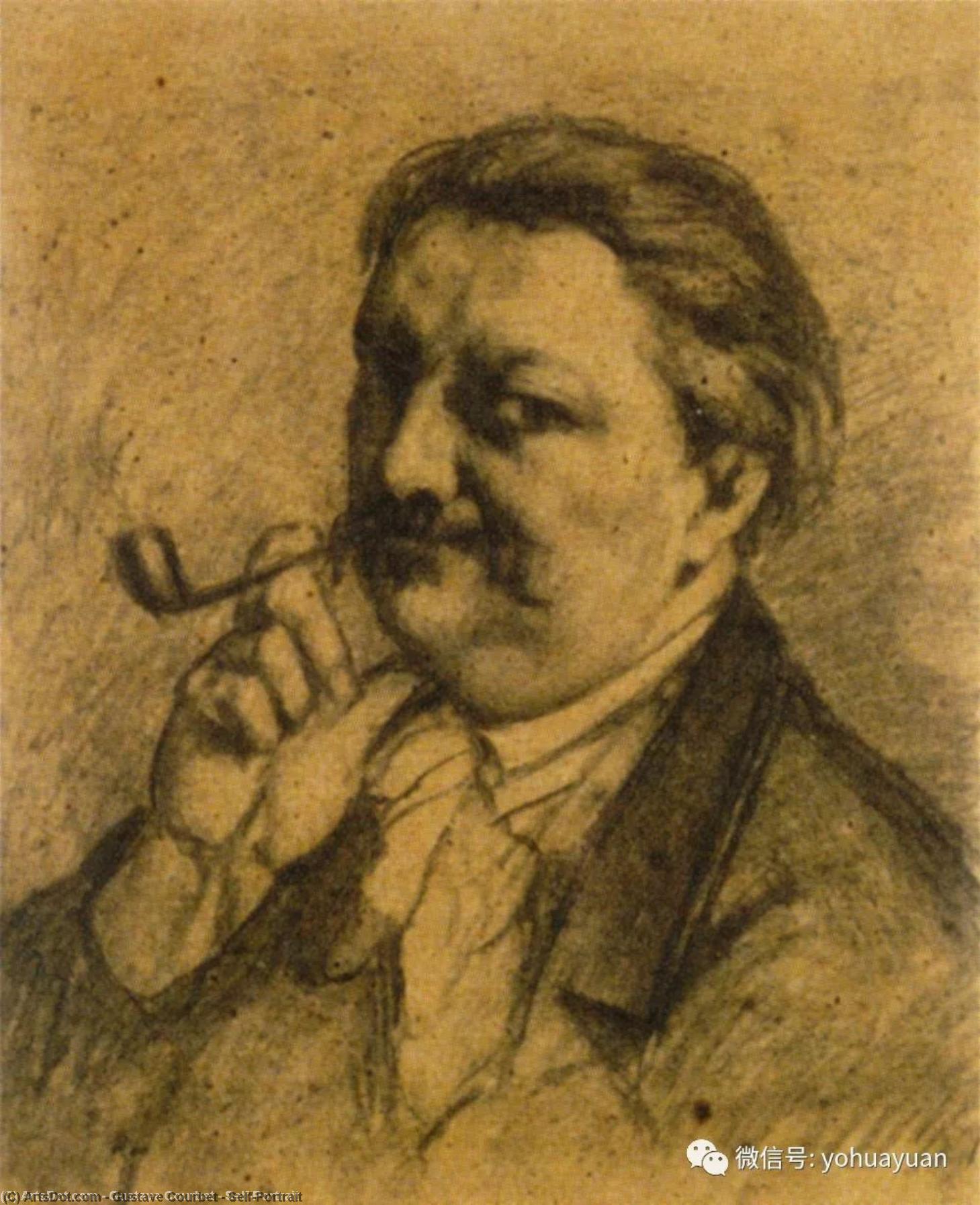
Self-Portrait
Gustave Courbet, a pioneering French painter, left an indelible mark on the art world with his bold and unapologetic style. His Self-Portrait, created in 1871, is a testament to his commitment to realism and his ability to capture the essence of his subjects.
The Artist's Vision
Courbet was known for his rejection of traditional academic conventions and his embrace of everyday life as subject matter. This self-portrait reflects his dedication to depicting reality without idealization or romanticism. The painting, executed in charcoal, measures 81 x 65 cm and is housed at the Musée du Louvre in Paris, France.
Composition and Technique
The composition of the self-portrait is strikingly simple yet powerful. Courbet presents himself with a beard and mustache, wearing glasses and holding a pipe in his mouth. His attire includes a tie, which he has placed around his neck. The use of charcoal allows for a nuanced exploration of light and shadow, adding depth to the portrait.
Artistic Significance
Courbet's self-portrait is significant not only because it showcases his artistic skill but also because it reflects his personal journey. In 1871, Courbet was involved with the Paris Commune, which led to his imprisonment and eventual exile in Switzerland. This painting, created during a tumultuous period in his life, captures his resilience and determination.
Contextualizing the Artist
To fully appreciate Courbet's work, it is essential to understand his place within the broader art historical context. He was a key figure in the Realism movement, influencing later artists such as the Impressionists and Cubists. His commitment to depicting reality paved the way for future generations of artists.
Relevance Today
Today, Courbet's self-portrait remains a powerful example of artistic integrity and the importance of capturing life as it is. It serves as a reminder that art can be both a reflection of the artist’s inner world and a commentary on the external reality.
By examining this self-portrait, we gain insight into the life and artistic vision of Gustave Courbet, a true pioneer in the world of art.