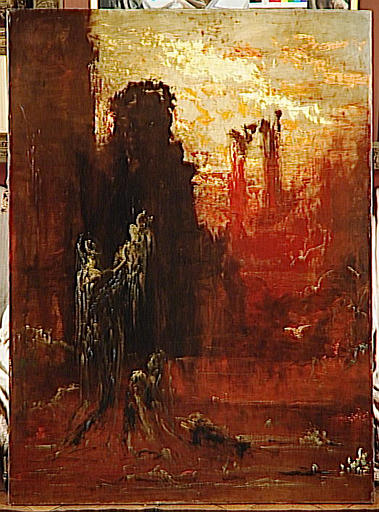
Moreau’s mesmerizing Symbolist masterpiece depicts Moses rescued from the Nile by his mother—a poignant tableau brimming with biblical grandeur and infused with intricate detail. Gustave Moreau's evocative painting captures a moment of divine intervention, inviting viewers to explore its rich symbolism and contemplate timeless themes.
19世紀フランス象徴主義を代表するギュスターヴ・モロー(1826-1898)。「サロメ」に象徴される神話や聖書の物語を、豪華絢爛な色彩と幻想的な世界観で表現。マティスやルオーらに影響を与えた巨匠の作品を Musée Gustave Moreau で堪能してください。
A Vision of Redemption: Exploring Gustave Moreau’s “Moïse sauvé des eaux”
Moreau's "Moïse sauvé des eaux," or Moses Saved from the Waters, stands as a cornerstone of Symbolist art—a testament to an artistic rebellion against the dominant trends of its era and a profound meditation on faith, myth, and human emotion. Painted around 1890, this monumental oil on canvas resides within the Musée Gustave Moreau in Paris, offering visitors a glimpse into the mind of one of France’s most influential artists. It's more than just a depiction of biblical narrative; it’s an immersive experience designed to provoke contemplation and stir the soul.
The Style and Technique: A Dreamlike Atmosphere
Gustave Moreau rejected the objective realism championed by Impressionists like Monet and Renoir, opting instead for a style characterized by opulent ornamentation, fantastical imagery, and a deliberate blurring of boundaries between reality and imagination. He employed meticulous brushwork—often layering thin glazes over thicker impasto—to achieve a velvety surface texture that contributes to the painting’s ethereal glow. The artist skillfully utilized color palettes dominated by muted reds, blues, and golds, creating an atmosphere reminiscent of Byzantine mosaics and medieval illuminated manuscripts. This technique wasn't merely about visual beauty; it served as a conduit for conveying spiritual ideas and psychological states—a hallmark of Symbolist aesthetics.
Historical Context: Challenging Victorian Morality
Moreau’s artistic vision emerged during the Victorian period, a time marked by strict social conventions and moral conservatism. However, Moreau actively resisted these pressures, embracing esoteric influences from Nietzschean philosophy and Kabbalah to explore themes of duality, sacrifice, and transcendence. “Moïse sauvé des eaux” reflects this intellectual ferment, presenting Moses’ deliverance not as a straightforward triumph over adversity but as a complex process fraught with symbolic significance. The painting deliberately eschews didacticism—telling no explicit moral lesson—allowing viewers to grapple with profound questions about faith and human experience.
Symbolic Layers: Birds, Light, and the Divine Feminine
The composition of “Moïse sauvé des eaux” is replete with symbols designed to enrich its narrative and elevate it beyond mere storytelling. Notably, two birds—one perched atop a pillar and another descending from the heavens—represent divine messengers and embody concepts of resurrection and spiritual ascension. Their placement strategically draws attention to the central figures, reinforcing the painting’s overarching theme of salvation. Furthermore, Moreau subtly incorporates elements suggestive of feminine divinity—a luminous halo surrounding Moses' mother—underscoring the importance of maternal compassion and nurturing in achieving spiritual enlightenment. The pervasive use of light—particularly diffused golden light—creates a sense of otherworldly grandeur and symbolizes divine grace illuminating the darkness of despair.
Emotional Impact: A Profound Reflection on Belief
Ultimately, “Moïse sauvé des eaux” succeeds in capturing the visceral experience of faith—the yearning for deliverance from suffering and the conviction that beauty and transcendence reside beyond the confines of earthly existence. Moreau’s masterful manipulation of color, texture, and symbolism compels viewers to confront existential questions about mortality and redemption. It's a painting that lingers in the memory long after viewing, prompting introspection and fostering a sense of wonder—a timeless masterpiece that continues to inspire artists and collectors alike.