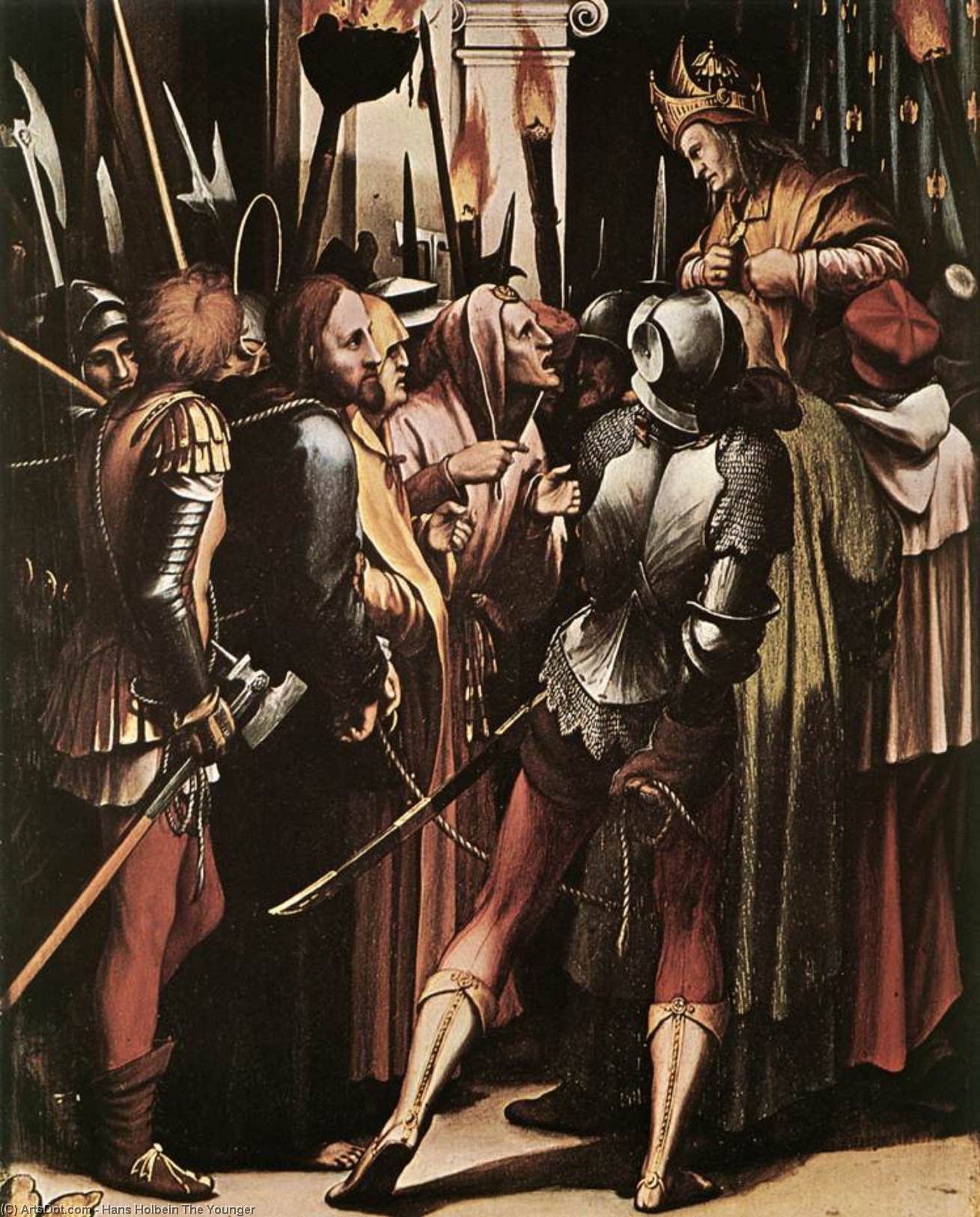
Explore Hans Holbein’s "Passion" – a dramatic oil painting of Christ’s deposition. Witness meticulous detail, rich colors & early Netherlandish style in this captivating artwork.
ハンス・ホルバイン
ハンス・ホルバイン
16世紀のドイツ人画家、ハンス・ホルバイン。ヘンリー8世やエラスムスの肖像画で知られ、写実的かつ心理描写豊かな作品はルネサンス期の傑作。
「大使たち」に象徴される緻密な描写と革新的な構図が後世の芸術家へ多大な影響を与えました。
A Scene of Profound Loss: Exploring Hans Holbein the Younger’s “Passion (detail -)”
This captivating detail offers a glimpse into a powerful and emotionally charged work by Hans Holbein the Younger, likely depicting a segment of the *Deposition from the Cross* or a related scene of Christ's Passion. The painting is a testament to Holbein’s mastery of realism and his ability to imbue religious narratives with profound human drama.
Subject & Narrative
The artwork centers on the solemn act of preparing Christ’s body for burial. A group of figures – soldiers, attendants, perhaps even those complicit in His fate – surround the lifeless form, carefully removing garments. The scene is not one of violent struggle, but rather a subdued and almost clinical disrobing, heightening the sense of loss and finality. The air is thick with grief, authority, and a subtle undercurrent of betrayal. It’s a moment suspended between agony and acceptance, inviting contemplation on themes of sacrifice and mortality.
Style & Technique: A Northern Renaissance Masterpiece
Holbein's style firmly places this work within the *Northern Renaissance* tradition. The meticulous detail is striking – from the textures of rough fabrics to the polished sheen of armor, and the nuanced expressions on each face. Glazing techniques are expertly employed, building up layers of color to create depth, luminosity, and a remarkable sense of realism. The composition, while somewhat flattened in perspective, draws the viewer directly into the scene’s immediacy. Lines are precise, defining forms and contributing to the overall sculptural quality of the figures.
Historical Context & Artistic Influences
Hans Holbein the Younger (1497-1543) was a pivotal figure in 16th-century art, serving as court painter to King Henry VIII. His work reflects both the artistic currents of his time – influenced by Italian Renaissance ideals – and the distinct characteristics of Northern European painting: an emphasis on detail, realism, and symbolic meaning. This piece likely dates from a period when Holbein was navigating the religious upheaval of the Reformation, potentially influencing the somber tone and introspective quality of the work. The influence of Early Netherlandish masters like Jan van Eyck is evident in the meticulous rendering of textures and surfaces.
Symbolism & Meaning
Every element within the painting likely carries symbolic weight. The clothing, armor, and gestures of the figures would have been readily understood by contemporary viewers as allusions to biblical narratives and theological concepts. The very act of removing Christ’s garments could symbolize His humiliation and stripping away of earthly power. Further research into specific details – such as the types of fabrics or the emblems on the armor – would undoubtedly reveal deeper layers of meaning.
Emotional Impact & Aesthetic Appeal
The painting evokes a powerful emotional response, prompting reflection on themes of suffering, loss, and faith. The dramatic lighting, with its stark contrasts between light and shadow, intensifies the scene’s emotional impact, focusing attention on key figures and emphasizing their expressions of grief or stoicism. The pyramidal composition – with Christ's body forming the base – creates a sense of stability amidst the turmoil, while also drawing the eye towards the central figure of sacrifice. This artwork is not merely a depiction of an historical event; it’s a deeply moving meditation on the human condition.
For Collectors & Designers
A high-quality reproduction of this detail would serve as a striking focal point in any interior space, adding depth, sophistication, and a touch of historical gravitas. Its rich color palette and masterful composition make it suitable for both traditional and contemporary settings. The artwork’s profound emotional resonance will undoubtedly spark conversation and inspire contemplation. It is an investment not only in beauty but also in a piece of art history.