Explore the captivating world of Hendrick Terbrugghen, a leading Dutch Golden Age painter influenced by Caravaggio. Discover his dramatic use of light, spiritual depth & lasting legacy. Learn more at ArtsDot.
Hendrick Terbrugghen: A Beacon of Caravaggism in Utrecht
Hendrick Jansz Terbrugghen stands as one of the most celebrated painters of the Dutch Golden Age, a luminary whose artistic vision captivated audiences and cemented his place within art history. Born in 1588 in Overijssel, Netherlands, Terbrugghen’s formative years were steeped in aristocratic patronage and exposed him to the intellectual currents shaping Europe at the time – influences that would profoundly shape his distinctive style and enduring legacy. His father, Jan Egbertsz Terbrugghen, served as secretary to Prince William III of Orange, fostering an environment conducive to artistic pursuits and providing invaluable insight into the complexities of courtly life. This early exposure undoubtedly ignited Terbrugghen’s passion for painting and propelled him toward a career dedicated to capturing the dramatic beauty of Caravaggio's revolutionary approach.
- Early Influences: Terbrugghen’s artistic education began under Abraham Bloemaert, a Mannerist painter whose stylistic sensibilities laid the groundwork for his own explorations into chiaroscuro – the masterful manipulation of light and shadow—a technique central to Caravaggio's oeuvre.
- The Utrecht Caravaggisti: Recognizing the transformative potential of Caravaggio’s dramatic style, Terbrugghen joined forces with a group of fellow artists known as the Utrecht Caravaggisti. This collective championed Caravaggio’s innovative use of tenebrism, creating paintings characterized by stark contrasts between light and darkness that aimed to evoke intense emotion and heighten visual impact.
A Dramatic Embrace of Caravaggio's Technique
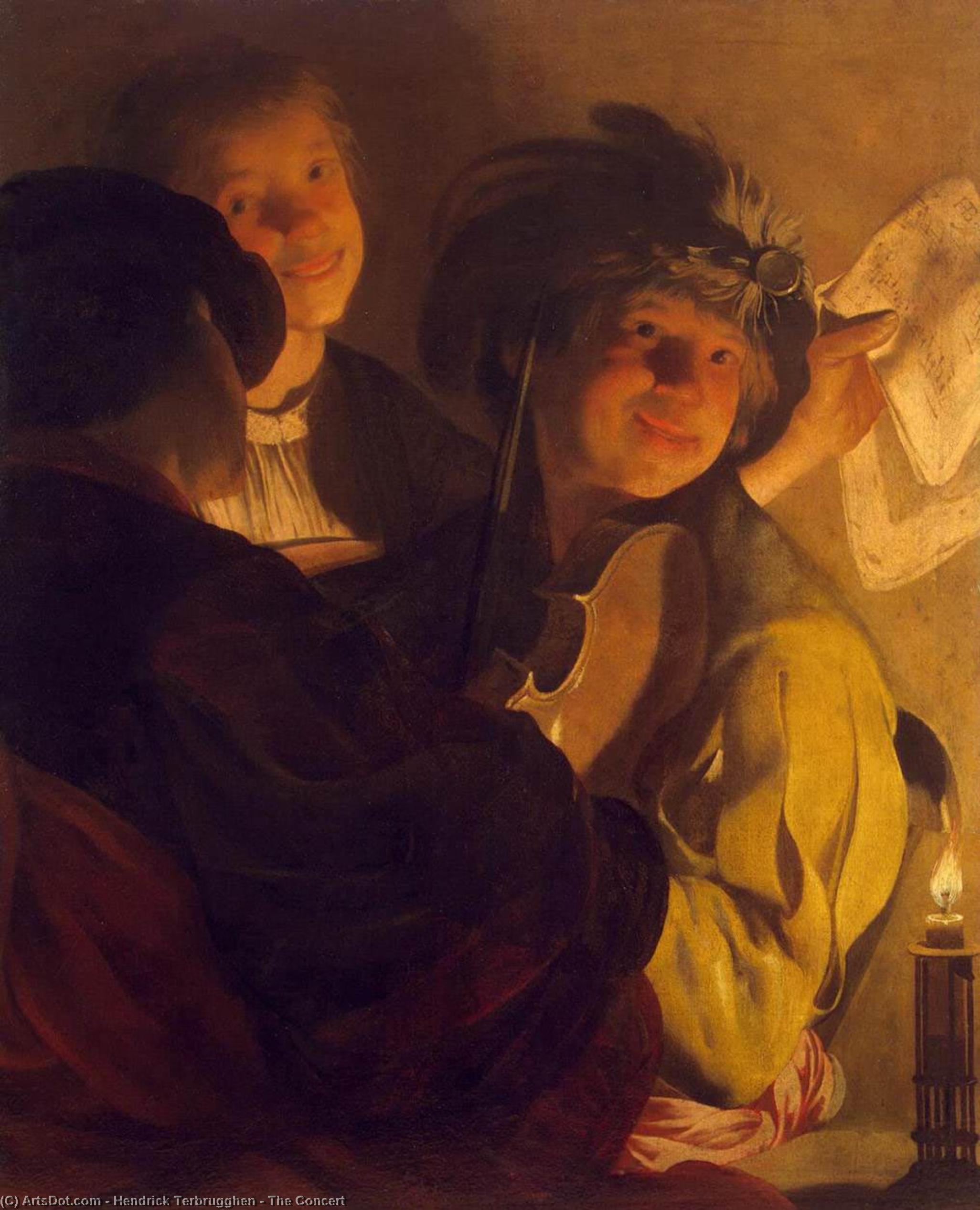
Terbrugghen’s artistic output exemplifies the Utrecht Caravaggisti’s commitment to Caravaggio’s groundbreaking methods. He meticulously studied Caravaggio’s paintings, absorbing his compositional strategies and mastering the art of rendering light with unparalleled realism. This dedication resulted in canvases imbued with a palpable sense of immediacy and psychological depth—a hallmark of Caravaggio's style that distinguishes Terbrugghen’s work from more conventional artistic traditions. The artist skillfully employed tenebrism to sculpt forms against illuminated backgrounds, creating dramatic visual narratives that commanded attention and stirred the imagination. Consider “The Concert,” where Terbrugghen captures a moment of musical performance with breathtaking precision, utilizing light to illuminate the violinist's face and highlighting the expressive gestures of his fellow musicians.
Notable Works & Enduring Symbolism
Among Terbrugghen’s most iconic creations are “The Singing Lute Player,” an autograph replica housed in The Kremer Collection in Amsterdam, and "Th," a monumental depiction of Saint Jerome wrestling with the Devil—a testament to his profound engagement with religious iconography. These paintings demonstrate Terbrugghen's ability to convey complex spiritual themes through masterful visual storytelling. The dramatic lighting employed in both works underscores the artist’s conviction that light serves as a conduit for divine illumination and symbolizes hope amidst darkness. Furthermore, Terbrugghen’s meticulous attention to detail—evident in the rendering of lute strings and Jerome’s tormented expression—reflects his unwavering commitment to capturing the human condition with unflinching honesty.
Legacy & Artistic Significance
Hendrick Terbrugghen's influence extends far beyond his own lifetime, securing his position as a pivotal figure in Dutch art history. His pioneering embrace of Caravaggio’s technique established him as a champion of tenebrism and profoundly impacted the stylistic trajectory of subsequent generations of painters. Today, Terbrugghen’s paintings continue to inspire admiration for their expressive power and technical brilliance—serving as enduring reminders of the artistic fervor that characterized the Dutch Golden Age and demonstrating the transformative potential of mastering Caravaggio's revolutionary approach. His work stands as a testament to the artist's ability to convey profound emotion through masterful visual storytelling, ensuring his legacy lives on in reproductions and scholarly studies alike.