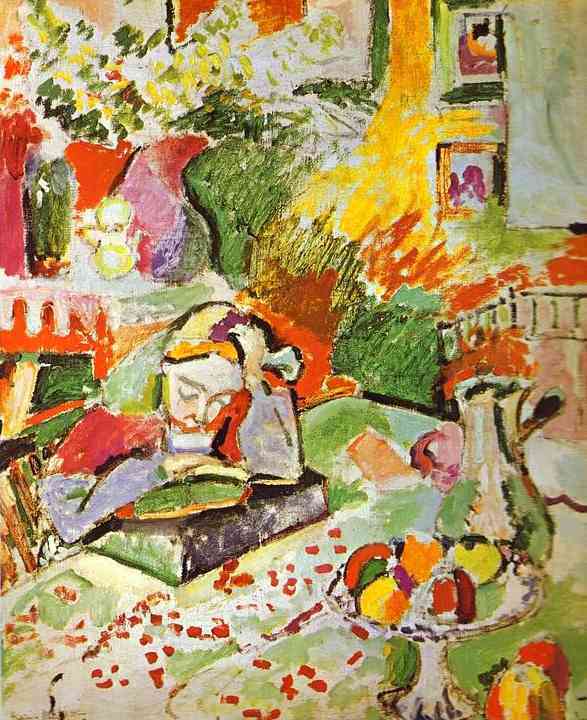
Interior with a Girl Reading – A Symphony of Color and Calm
Henri Matisse’s “Interior with a Girl Reading,” painted in 1905, stands as an emblem of Fauvist art—a movement that irrevocably altered the course of painting history. More than just a depiction of domestic tranquility, this artwork is a deliberate exploration of color theory and emotional expression, reflecting Matisse's groundbreaking approach to artistic representation.
- Subject Matter: The scene portrays a simple interior—a room bathed in diffused light featuring a young woman seated on a bench absorbed in reading. Scattered around her are apples – a deliberate choice intended to heighten visual interest and contribute to the overall composition.
- Style & Technique: Matisse championed Fauvism, rejecting Impressionistic realism in favor of unrestrained color palettes. Bold hues—primarily reds, yellows, and blues—are applied with thick brushstrokes, prioritizing sensation over accurate depiction. The artist eschewed blending colors, opting instead for juxtaposing them to create vibrant contrasts that stimulate the eye.
The painting’s historical context is crucial to understanding its significance. Emerging in Paris during a period of artistic ferment, Fauvism challenged established conventions and provoked considerable controversy. Matisse and his fellow artists sought to liberate color from its subservience to form, arguing that it possessed intrinsic expressive power.
Color as Emotion – Matisse’s Revolutionary Palette
Matisse's masterful use of color isn’t merely decorative; it serves as a conduit for conveying emotion. The dominant reds and yellows evoke warmth and vitality, mirroring the woman’s engagement with her book—a symbol of intellect and contemplation. Simultaneously, the blues contribute to a sense of serenity and depth, grounding the scene in an atmosphere of quiet repose.
- Color Theory: Matisse meticulously studied color theory, experimenting with complementary hues to maximize visual impact. The juxtaposition of red against yellow creates a dynamic tension that draws attention to key elements within the composition.
- Brushwork & Texture: Thick impasto—the application of paint in thick layers—creates palpable texture and enhances the painting’s expressive quality. This technique allows Matisse to capture the materiality of surfaces and imbues the artwork with a tactile dimension.
"Interior with a Girl Reading" transcends mere representation; it embodies Matisse's conviction that art should communicate feeling directly. It remains an inspiring testament to the transformative potential of color and a cornerstone of Fauvist legacy—a movement that continues to influence artists today.
Symbolism & Interpretation
Beyond its formal qualities, the artwork is laden with symbolic resonance. The apples symbolize knowledge and beauty – mirroring the woman’s pursuit of intellectual enrichment. Their placement around her emphasizes the importance of contemplation and invites viewers to consider the role of stillness in fostering creativity and understanding.
- Decorative Elements: The vase and potted plant contribute to the room's ambiance, reinforcing the theme of natural beauty alongside human intellect.
- Emotional Impact: Ultimately, “Interior with a Girl Reading” evokes feelings of peace, introspection, and appreciation for simple pleasures—a timeless message conveyed through Matisse’s unparalleled artistic vision.