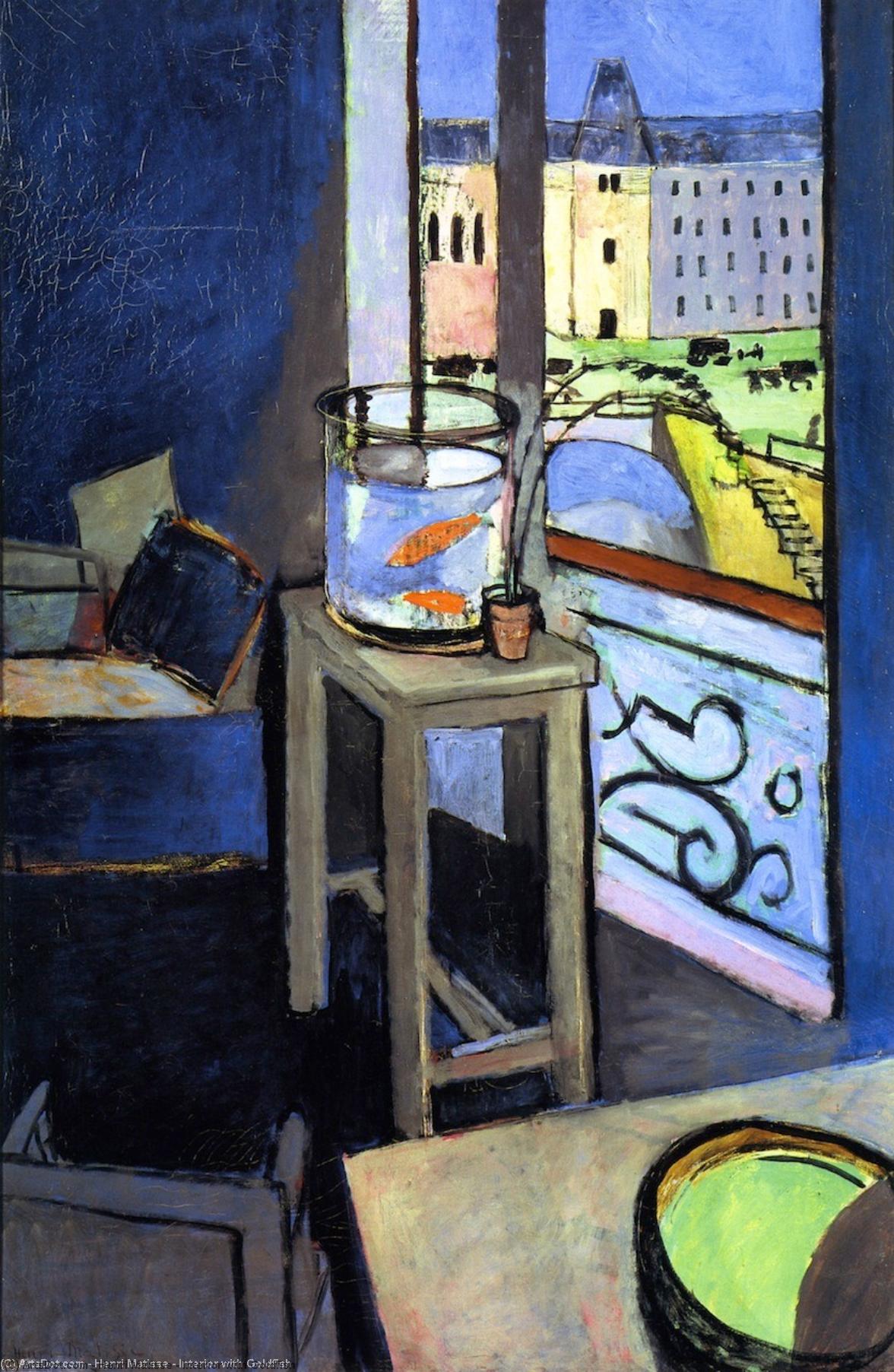
Matisse's 'Interior with Goldfish' (1914) captures serene domesticity with vibrant color & simplified forms. Explore the masterpiece at Musée Pompidou.
マティス
(1869 - 1954)
美しい色彩とシンプルな線で知られる印象派の画家、エドゥアール・マネやゴッホの影響を受け、大胆な表現主義を追求したフランスの画家。特に初期の作品は、豊かな色彩と自由な筆致が特徴的です。彼の代表作は「ギルド」などがあり、現代美術に大きな影響を与えました。
パリの象徴的なポンピドゥー・センターで、モダン&コンテンポラリーアートを体験!革新的な建築空間の中で、ピカソやマティスなどの傑作を発見しましょう。多彩な展示が楽しめる活気あふれる文化の拠点です。
Subject Matter: A Serene Domestic Scene
"Interior with Goldfish," painted by Henri Matisse in 1914, depicts a tranquil domestic interior scene. The focal point is a fishbowl containing two goldfish, gracefully swimming within its glass enclosure. Accompanying the fishbowl is a vase, adding to the still-life composition. Three chairs are strategically placed around the room—one near the left side and two closer to the right—creating a sense of spatial depth. A figure stands in the far right corner, subtly introducing human presence into this otherwise serene setting. The overall subject matter evokes feelings of peace, contemplation, and the simple joys of everyday life.
Artistic Style: Fauvism and Decorative Elements
Matisse's artistic style is firmly rooted in Fauvism, a movement characterized by bold, non-naturalistic colors and energetic brushstrokes. This painting exemplifies these traits with its vibrant hues and fluid lines. However, "Interior with Goldfish" also showcases Matisse’s evolving interest in decorative patterns and simplified forms. The flattened perspective and the arrangement of objects contribute to a sense of elegance and visual harmony. The use of color is not representational but expressive, aiming to evoke emotion rather than mimic reality.
Historical Context: Pre-War Tranquility
Created in 1914, just before the outbreak of World War I, "Interior with Goldfish" captures a moment of pre-war tranquility and domesticity. Matisse was exploring themes of serenity and escape from the anxieties of modern life through his art. The painting reflects a desire for harmony and beauty amidst a rapidly changing world. It is part of a series of works where Matisse used goldfish as a recurring motif, symbolizing contemplation and peacefulness. This period in Matisse's career saw him moving away from some of the more aggressive aspects of Fauvism towards a more refined and decorative style.
Symbolism and Emotional Impact
The goldfish themselves hold symbolic weight within the painting. They represent tranquility, harmony, and the beauty of nature contained within a domestic space. The vibrant colors—particularly the blues, greens, and yellows—evoke feelings of calmness and joy. The composition as a whole creates a sense of visual balance and serenity, inviting viewers to share in the peaceful atmosphere of the scene. Matisse’s masterful use of color and form transforms an ordinary interior into a work of art that resonates with emotional depth and aesthetic appeal. The painting's enduring popularity lies in its ability to evoke feelings of relaxation and appreciation for simple pleasures.