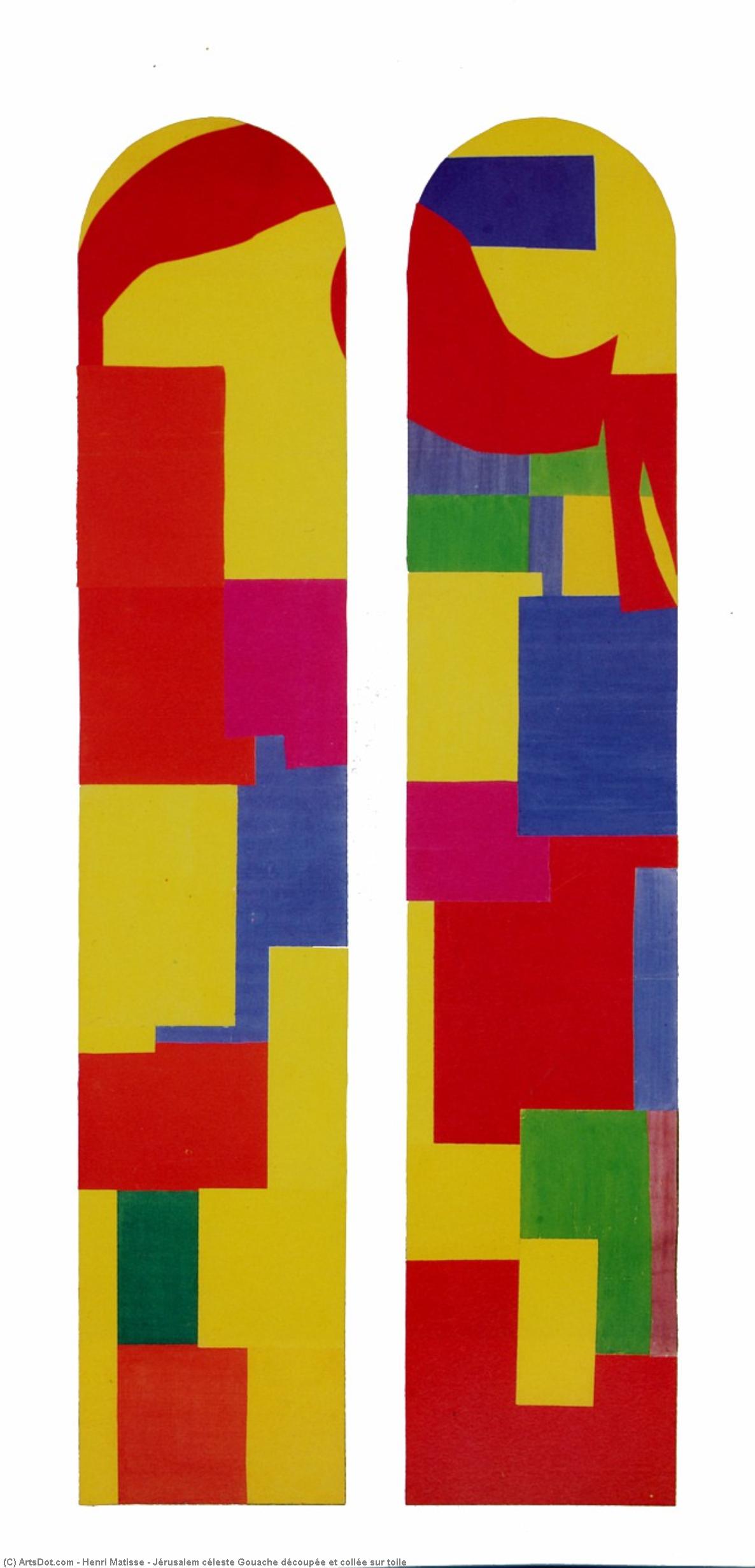
Explore Henri Matisse's masterpiece Jérusalem Céleste Gouache découpée et collée sur toile – a Fauvist collage celebrating color and geometric forms.
マティス
(1869 - 1954)
美しい色彩とシンプルな線で知られる印象派の画家、エドゥアール・マネやゴッホの影響を受け、大胆な表現主義を追求したフランスの画家。特に初期の作品は、豊かな色彩と自由な筆致が特徴的です。彼の代表作は「ギルド」などがあり、現代美術に大きな影響を与えました。
A Symphony of Color and Geometry: Henri Matisse’s Celestial Jerusalem
Henri Matisse, a titan amongst modern artists, stands as an undisputed champion of innovation—a visionary who irrevocably altered the landscape of painting with his audacious embrace of color and masterful draughtsmanship. His contribution to Fauvism, a movement that vehemently rejected academic conventions in favor of expressive hues and bold visual impact, cemented his place in art history and continues to inspire awe centuries later. Jérusalem Céleste Gouache Découpée Et Collée Sur Toile—a monumental collage executed in 1948—represents the zenith of Matisse’s artistic prowess and embodies the very spirit of Fauvist experimentation.
Style and Technique: The Alchemy of Paper Cutouts
What distinguishes Jérusalem Céleste from countless other paintings is its groundbreaking technique – Gouache découpée et collée sur toile. This method, pioneered by Matisse himself, involved meticulously crafting shapes from painted paper, a process akin to architectural maquettes. These paper fragments were then painstakingly glued onto a canvas surface, resulting in a vibrant composition that defied traditional representation. Rather than striving for photographic realism, Matisse prioritized the emotional resonance of color and form—a deliberate rejection of artistic dogma that championed visual sensation above all else. This technique allowed him to explore complex geometric patterns and achieve an unparalleled luminosity, capturing the ethereal beauty of his envisioned chapel window.
Decoding Symbolism: Spirals and Opposites
The central motif of Jérusalem Céleste is undeniably captivating: two interlocking spirals dominating the canvas. These spirals aren’t merely decorative elements; they are imbued with profound symbolic significance—representing the duality inherent in existence itself. Matisse brilliantly juxtaposes these spiraling forms against a backdrop of triangles, circles, and squares – each geometric shape carrying its own weighty connotation. The spiral symbolizes the cyclical nature of life and death, mirroring the biblical narrative of creation and redemption. The triangles represent stability and ascension, while circles embody unity and wholeness. These shapes collectively contribute to an overarching meditation on harmony and discord—a visual dialogue that invites contemplation and encourages viewers to consider their own interpretations.
Historical Context: Fauvism’s Bold Assertion
Matisse's Jérusalem Céleste emerged during the fervent crucible of Fauvist artistic fervor, a movement born from a rebellion against Impressionistic conventions. Artists like Matisse sought to liberate painting from the constraints of naturalistic depiction, prioritizing color as its primary expressive tool. Influenced by Byzantine mosaics and African tribal art, Fauvism championed intense chromatic vibrancy—often jarringly juxtaposed—to convey emotion and provoke visceral responses. Jérusalem Céleste exemplifies this ethos perfectly, mirroring the broader artistic ambition to transcend mere imitation and forge a new path toward visual truth. It stands as a testament to Matisse’s unwavering conviction that color could communicate ideas and feelings with unparalleled potency.
Emotional Resonance: Capturing Divine Light
Ultimately, Jérusalem Céleste transcends its formal elements—its technique and symbolism—to evoke a palpable sense of wonder and spiritual contemplation. The luminous yellows and reds dominate the palette, radiating an otherworldly glow that captures the essence of divine illumination. Matisse’s masterful draughtsmanship ensures that every detail contributes to this emotive impact—from the subtle variations in texture to the precise positioning of geometric shapes. Viewing Jérusalem Céleste is akin to embarking on a visual pilgrimage—a journey into the realm of imagination and artistic brilliance. It remains an enduring emblem of Fauvist innovation and Matisse’s profound ability to translate spiritual aspiration into breathtaking aesthetic achievement.