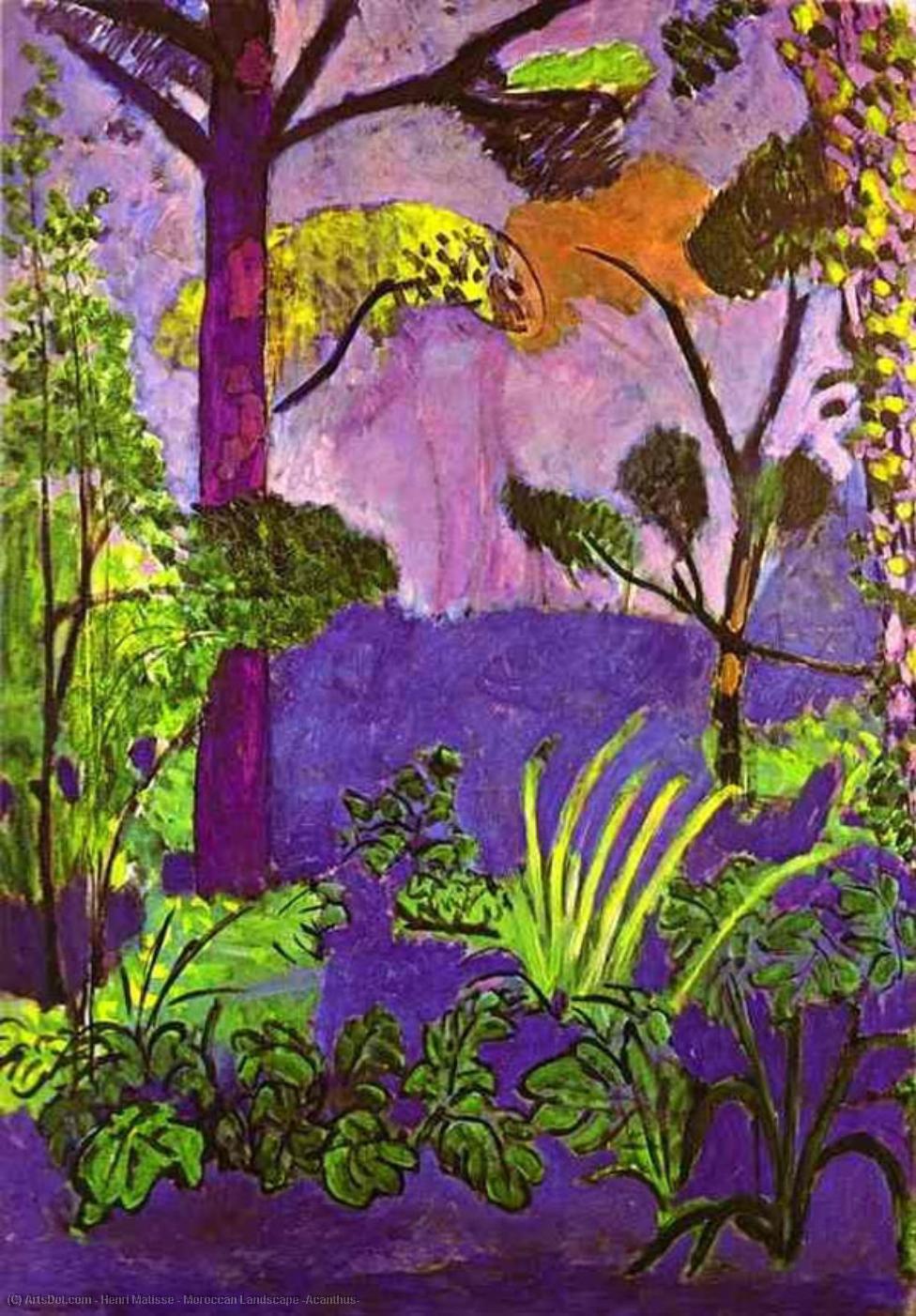
Experience Henri Matisse’s vibrant Moroccan Landscape (Acanthus), a dazzling explosion of purple, green, yellow, and orange hues depicting a lush forest scene. This iconic work captures Matisse's signature style and color palette – discover or own this masterpiece.
A Symphony in Purple and Gold: Exploring Matisse's *Moroccan Landscape (Acanthus)*
Henri Matisse’s *Moroccan Landscape (Acanthus)*, a vibrant tableau of color and form, offers an immediate immersion into the artist’s revolutionary approach to painting. Executed with his signature bold strokes and masterful manipulation of hue, this work exemplifies the height of Matisse's mature style – a deliberate rejection of traditional representational techniques in favor of pure visual sensation. The scene, seemingly plucked from a sun-drenched Moroccan garden, is less concerned with photographic accuracy than with conveying an emotional response to light, color, and texture. It’s a landscape distilled to its essence, a testament to Matisse's belief that art should be about feeling rather than simply depicting the world.
The Language of Color: Technique and Style
Matisse developed his distinctive style through years of experimentation, heavily influenced by Post-Impressionism but ultimately forging his own path. *Moroccan Landscape* showcases this brilliantly. Notice the flattened perspective, a deliberate choice that prioritizes color relationships over spatial depth. The application of paint is loose and gestural – thick impasto in some areas contrasted with thinner washes in others – creating a dynamic surface that seems to shimmer with light. The use of complementary colors—the vibrant oranges and yellows against deep purples and greens—intensifies the visual impact, drawing the eye across the canvas and generating a palpable sense of energy. This technique, honed through countless studies, allowed Matisse to capture not just what he *saw*, but what he *felt* about what he saw.
Historical Context: A Radical Shift in Artistic Vision
Painted during a period of immense artistic change – the early 20th century – *Moroccan Landscape* reflects the broader shift away from academic realism. The Impressionists had already challenged traditional notions of representation, focusing on fleeting moments and subjective perception. Matisse built upon this foundation, pushing further into abstraction while retaining a strong connection to nature. This work aligns with the Fauvist movement, characterized by its intense use of color and expressive brushwork, though Matisse’s approach is more controlled and refined than some of his contemporaries. The title itself, *Acanthus*, subtly references the decorative foliage favored in classical architecture, hinting at a timeless quality within Matisse's vibrant composition.
Symbolism and Emotional Resonance
While seemingly simple, *Moroccan Landscape* is rich with symbolic potential. The abundance of flowers and plants – rendered in a dazzling array of colors – evokes themes of fertility, beauty, and the ephemeral nature of life. The dappled sunlight filtering through the trees creates an atmosphere of tranquility and serenity, inviting contemplation. The overall effect is deeply emotional; it’s not merely a depiction of a garden but an evocation of joy, warmth, and the restorative power of nature. This piece embodies Matisse's core philosophy: to create art that transcends mere representation and speaks directly to the viewer's soul.