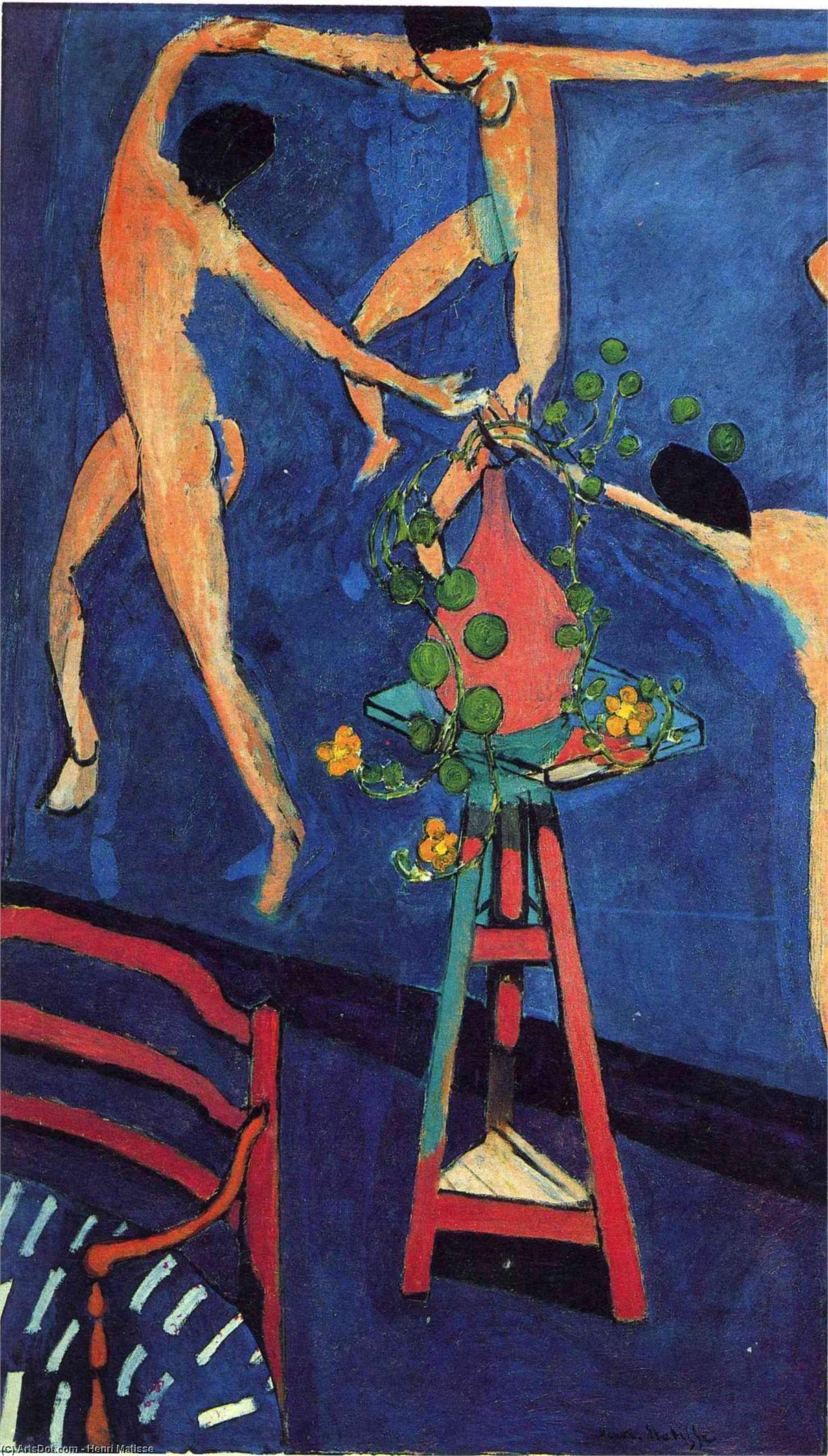
Henri Matisse’s “Nasturtiums with ‘Dance’ (II)” is a cornerstone of Fauvism, celebrated for its audacious color palette and expressive brushwork—a captivating piece showcased at the Pushkin Museum in Moscow. Created in 1912, it embodies the movement's revolutionary approach to artistic expression, reflecting Matisse’s profound influence on modern art.
マティス
(1869 - 1954)
美しい色彩とシンプルな線で知られる印象派の画家、エドゥアール・マネやゴッホの影響を受け、大胆な表現主義を追求したフランスの画家。特に初期の作品は、豊かな色彩と自由な筆致が特徴的です。彼の代表作は「ギルド」などがあり、現代美術に大きな影響を与えました。
Nasturtiums with “The Dance” (II): A Symphony of Color and Movement
Henri Matisse’s “Nasturtiums with ‘Dance’ (II)” stands as a testament to the transformative power of Fauvist painting—a bold declaration that color alone could convey emotion and narrative. Created in 1912, this oil on canvas masterpiece resides within the prestigious Pushkin Museum in Moscow, Russia, cementing its place amongst the most celebrated artworks of the early twentieth century. More than just a botanical depiction, it’s an exploration of dynamism and harmony achieved through masterful chromatic manipulation.
Composition and Style: Embracing Fauvist Principles
The painting immediately captivates with its central focus on two nude women intertwined in graceful poses—one gently supporting the other's arm as they appear to dance or perform a collaborative act. Surrounding these figures are carefully positioned elements: a vase overflowing with vibrant nasturtiums, a simple chair providing grounding stability, and a potted plant reinforcing the theme of organic beauty. Matisse deliberately eschews traditional perspective, opting for a flattened plane that prioritizes visual impact over realistic representation—a hallmark characteristic of Fauvist style. This stylistic choice wasn’t merely aesthetic; it reflected a broader artistic impulse to liberate painting from academic constraints and express emotion directly through color.
Artistic Elements: Decoding Matisse's Palette
Matisse’s audacious use of color is undeniably the artwork’s dominant force. Dominating the background are hues of deep teal and emerald green, creating an immersive environment that contrasts sharply with the fiery orange blossoms of the nasturtiums. These blooms serve as focal points, radiating warmth and vibrancy against the cooler tones. Thick brushstrokes—visible throughout the canvas—capture the energy of movement, mirroring the implied dance between the women. The artist’s technique emphasizes texture and surface quality, inviting viewers to experience the painting on a visceral level.
Historical Context: Fauvism's Revolutionary Vision
“Nasturtiums with ‘Dance’ (II)” emerged during the burgeoning Fauvist movement—a reaction against Impressionism’s focus on capturing fleeting moments of light and atmosphere. Artists like Matisse sought to prioritize expressive color over accurate depiction, believing that color could convey emotion and psychological states more effectively than conventional realism. This artistic rebellion stemmed from a desire to liberate art from academic dogma and embrace a new aesthetic language rooted in intuition and feeling—a legacy that continues to inspire artists today.
Symbolism: Beyond the Floral Arrangement
The choice of nasturtiums – known for their bright orange flowers and edible leaves – carries symbolic weight. They represent resilience, vitality, and an unapologetic celebration of natural beauty. Simultaneously, the dance itself symbolizes connection, harmony, and perhaps even a yearning for transcendence. Matisse’s masterful composition elevates these elements beyond mere botanical representation, transforming them into emblems of human emotion and artistic aspiration.
Emotional Impact: Capturing Joyful Energy
Ultimately, “Nasturtiums with ‘Dance’ (II)” succeeds in conveying an overwhelming sense of joyful energy—a feeling that resonates deeply within the viewer. Matisse's bold color palette and expressive brushwork evoke a palpable dynamism, mirroring the movement implied by the figures and flowers. It is a painting that invites contemplation while simultaneously stimulating the senses, reminding us of the transformative power of art to communicate emotion and inspire wonder.