A Symphony of Form and Color: Exploring Matisse’s ‘The Ballet Dancer, Harmony in Grey’
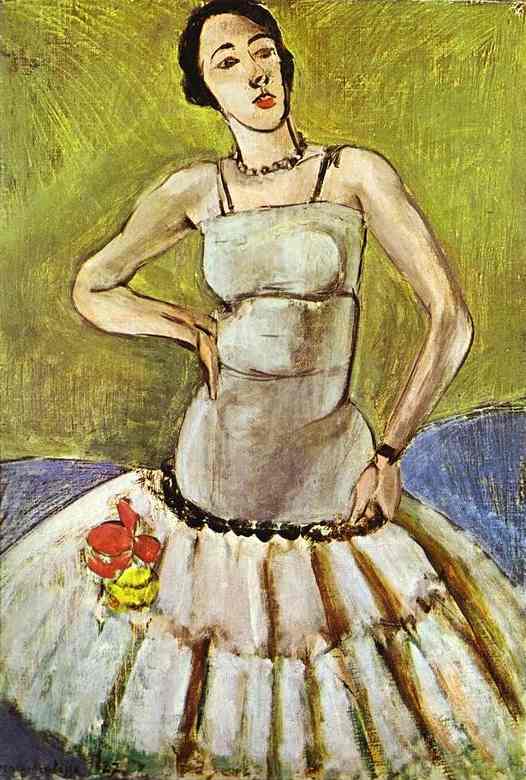
Henri Matisse's 1927 oil on canvas, *The Ballet Dancer, Harmony in Grey*, is a captivating example of the artist’s enduring fascination with the human figure and his mastery of color. This work transcends a simple portrait; it’s an exploration of form, balance, and the emotive power of restrained hues. While often associated with the vibrant palettes of Fauvism, this piece demonstrates Matisse's ability to achieve profound impact through a more subtle, harmonious approach.
Subject and Composition
The painting depicts a ballet dancer posed *en attitude*, her hands gracefully resting on her hips. She is rendered in simplified forms, emphasizing the elegant line of her body against a warm yellow background. The composition is strikingly balanced – the dancer’s pose creates a dynamic tension that is counterpointed by the stillness of the backdrop. Two apples are subtly incorporated into the scene; one near the lower left corner and another towards the upper right, adding an intriguing still life element and visual weight to the overall arrangement. This deliberate placement invites contemplation on themes of beauty, temptation, and perhaps even fragility.
Style and Technique: Beyond Fauvism
Though Matisse was a pioneer of Fauvism – known for its bold, non-naturalistic colors – *The Ballet Dancer, Harmony in Grey* showcases his evolving style. While the yellow background hints at his characteristic use of vibrant color, the overall palette is more subdued and considered. The brushstrokes are soft and fluid, creating a sense of movement and atmosphere rather than precise detail. Matisse prioritizes capturing the *essence* of the dancer – her poise, grace, and inner life – over strict anatomical accuracy. This approach reflects his lifelong pursuit of simplification and expressive form.
Historical Context: A Post-War Aesthetic
Created in the aftermath of World War I, this painting reflects a broader artistic shift towards introspection and a search for new forms of expression. The war had shattered traditional values, prompting artists to explore alternative ways of representing reality. Matisse’s work during this period demonstrates a move away from purely decorative concerns toward a more profound engagement with human emotion and the underlying structure of form. He was increasingly interested in creating works that offered a sense of calm and harmony amidst a turbulent world.
Symbolism and Interpretation
The symbolism within *The Ballet Dancer, Harmony in Grey* is open to interpretation. The dancer herself represents grace, discipline, and the pursuit of artistic perfection. The apples, traditionally symbols of knowledge, temptation, or even mortality, add layers of meaning to the composition. Their placement suggests a subtle interplay between beauty and transience.
The “harmony in grey” alluded to in the title isn’t about literal shades of grey but rather a carefully orchestrated balance of tones that creates a sense of visual unity.
Emotional Impact and Legacy
This painting evokes a feeling of quiet contemplation and serene beauty. The dancer's poised figure exudes confidence and grace, while the harmonious color palette creates a soothing atmosphere. *The Ballet Dancer, Harmony in Grey* is not merely a visual representation; it’s an emotional experience that invites viewers to connect with the subject on a deeper level.
Matisse’s influence on modern art is immeasurable. His innovative use of color and form paved the way for countless artists, and his work continues to inspire generations of painters, designers, and art lovers today. This piece exemplifies his ability to distill complex emotions into simple yet powerful forms, making it a timeless masterpiece.
Collecting & Interior Design
- A stunning statement piece for modern or contemporary interiors.
- The muted color palette complements a variety of décor styles, from minimalist to eclectic.
- Its elegant composition adds sophistication and grace to any space.
- High-quality reproductions capture the nuances of Matisse’s brushwork and color harmony.
- Ideal for art collectors seeking a representative work from Matisse's later period.