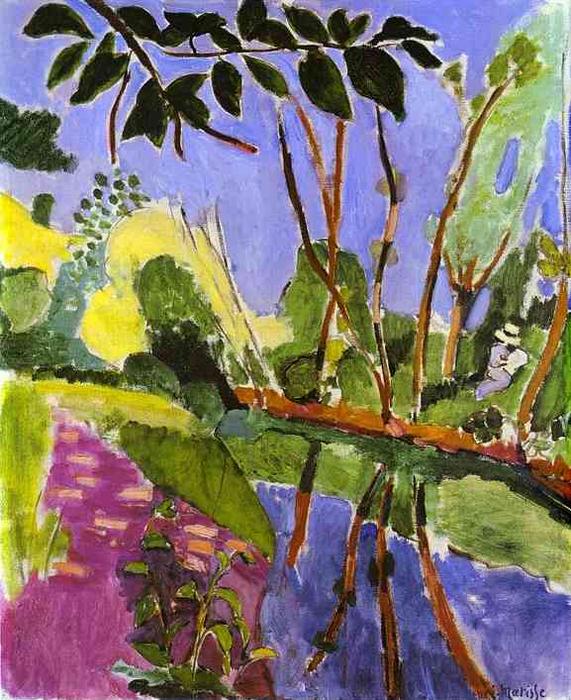
A Symphony of Color: Exploring Henri Matisse’s “The Riverbank”
“The Riverbank,” painted in 1907 by Henri Matisse, isn't merely a depiction of a tranquil riverside scene; it embodies the very essence of Fauvist artistic expression—a bold rejection of Impressionism’s subtle gradations and an embrace of pure color as its primary vehicle for conveying emotion. Created during Matisse’s formative years as a painter, this artwork represents a pivotal moment in his artistic evolution, marking a decisive departure from academic conventions and firmly establishing him as one of the pioneers of modern art.
- Subject Matter: The painting captures a simple yet profound observation – a stretch of riverbank bathed in sunlight. Lush foliage dominates the composition, punctuated by vibrant blossoms and punctuated by figures—likely Matisse himself—adding a human element to the natural landscape.
- Style & Technique: Matisse’s Fauvist style is instantly recognizable through its audacious use of color. Unlike Impressionists who sought to capture fleeting moments of light, Matisse deliberately flattened perspective and prioritized color intensity over realistic representation. Thick brushstrokes—a hallmark of his technique—create a textured surface that pulsates with vibrancy, conveying an immediacy and dynamism rarely seen in earlier art movements.
The Historical Context: Painted at the cusp of the 20th century, “The Riverbank” emerged from a period of significant artistic experimentation. Impressionism had begun to wane, paving the way for new approaches that prioritized subjective experience and emotional resonance. Matisse’s contemporaries were grappling with anxieties surrounding industrialization and societal change, mirroring the turbulent spirit of the era. Yet, within this context of uncertainty, Matisse sought solace in the beauty of nature—a deliberate counterpoint to the pressures of urban life.
- Symbolism: Color itself operates as a powerful symbol in “The Riverbank.” The dominant hues – greens and blues – evoke feelings of serenity and renewal, reflecting Matisse’s fascination with botanical studies. However, splashes of red and yellow inject energy into the scene, hinting at underlying passions and vitality. These colors aren't merely decorative; they contribute to the painting’s emotional impact.
- Emotional Impact: Viewing “The Riverbank” is akin to stepping into a sunlit meadow—a sensory experience designed to uplift and inspire. Matisse’s masterful manipulation of color creates an atmosphere of joyous exuberance, inviting contemplation and fostering a connection with the natural world. It speaks to a desire for beauty and harmony amidst the complexities of existence.
Conclusion: Henri Matisse's “The Riverbank” stands as a testament to the transformative power of artistic vision. More than just a picturesque landscape, it represents a bold declaration of color’s expressive potential—a legacy that continues to resonate with artists and collectors alike. A reproduction of this masterpiece offers an opportunity to bring its radiant beauty into any interior space, capturing not only the visual splendor of Matisse's genius but also the enduring spirit of Fauvist art.