A Surreal Dive into Color: Exploring Henri Matisse’s Untitled (2083)
Henri Matisse's “Untitled (2083)” isn’t merely a painting; it’s an invitation to wander into a meticulously crafted dreamscape. Executed sometime between 1947 and 1951, during his prolific period in Nice—a city that profoundly shaped his artistic vision—this artwork embodies the essence of Matisse's signature style: bold color palettes juxtaposed with simplified forms and rhythmic patterns. It’s a piece that speaks volumes about isolation, contemplation, and the artist’s unwavering belief in the transformative power of visual expression.
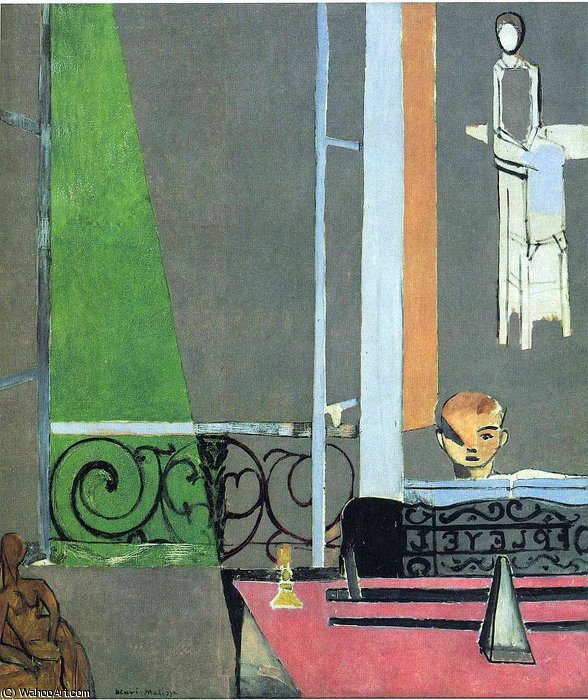
- Subject Matter & Composition: The scene depicts an interior space dominated by a seated figure—likely Matisse himself—positioned centrally against a backdrop of muted greens and browns. Alongside him is a draped mannequin, serving as an enigmatic counterpoint to human presence. Scattered objects – including what appear to be geometric shapes – contribute to the overall sense of disorientation without overwhelming the viewer’s gaze.
- Style & Technique: Influenced by Cubism but firmly rooted in Expressionism, “Untitled (2083)” showcases Matisse's masterful manipulation of color and texture. Thick brushstrokes create a palpable surface quality, conveying emotion rather than striving for photographic realism. The flattened perspective—characteristic of Cubist principles—further enhances the artwork’s dreamlike atmosphere.
- Color Palette & Symbolism: Dominating the canvas are shades of green, brown, and red – colors often associated with tranquility, earthiness, and passion respectively. However, Matisse doesn't employ these hues in a conventional manner; instead, he utilizes them to generate visual tension and subtly convey psychological states. The muted tones contribute to an unsettling mood, hinting at introspection and perhaps even melancholy.
- Historical Context: Created during the Second World War—a period marked by anxiety and uncertainty—the artwork reflects Matisse’s unwavering commitment to artistic freedom amidst oppressive circumstances. He continued to produce art despite the hardships of exile, demonstrating resilience and reaffirming his belief in the enduring beauty of visual language.
- Emotional Impact: “Untitled (2083)” transcends mere representation; it aims to evoke feeling. The angular lines and fragmented forms disrupt our perception of space, mirroring the complexities of human experience. Ultimately, the painting encourages viewers to engage with its unsettling stillness—to contemplate the figure’s gaze and consider the unspoken narratives embedded within its carefully constructed composition.
This reproduction captures the spirit of Matisse's artistic legacy – a celebration of color as a conduit for emotion and an exploration of form as a vehicle for psychological insight.