A Glimpse into Portuguese Naturalism
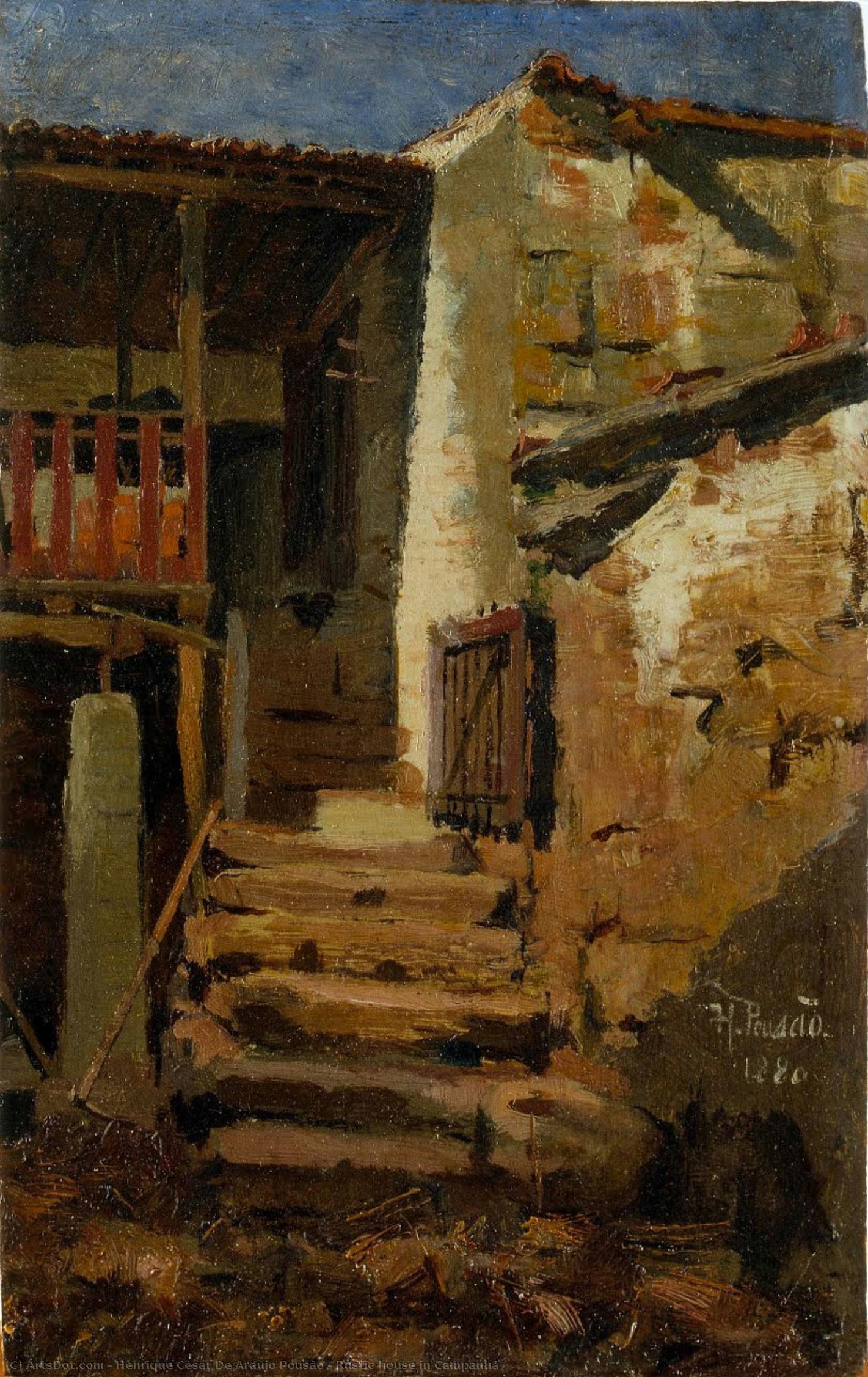
In the delicate strokes of Rustic house in Campanhã, we encounter a profound moment of stillness captured by the prodigious Portuguese master, Henrique César de Araújo Pousão. Painted around 1880, this intimate work serves as a window into a bygone era of rural tranquility. The scene unfolds before a charming stone structure, its weathered exterior and tiled roof whispering tales of endurance and simplicity. As the eye wanders through the composition, it discovers a lived-in landscape: a bench resting quietly in the corner, a dining table set for a communal moment, and the subtle presence of a figure that breathes life into the architecture. It is not merely a depiction of a building, but an invitation to inhabit a space where time seems to slow down.
The technical mastery of Pousão is evident in his ability to balance the weight of the stone masonry with the ephemeral quality of light. Influenced by the burgeoning Impressionist movements of Paris and the naturalist precision of masters like Manet and Pissarro, Pousão employs a sophisticated palette that respects the earthiness of the subject while seeking the brilliance of natural illumination. His unique approach—notably his balanced use of black alongside vibrant tones—allows for a depth of shadow that gives the house a sculptural, three-dimensional presence. The brushwork, though controlled, possesses an organic vitality that captures the texture of the tiles and the ruggedness of the stone, making the atmosphere feel almost tactile to the viewer.
Timeless Elegance for the Modern Collector
For the discerning collector or interior designer, this piece offers much more than mere decoration; it provides a soulful anchor for a curated space. The composition’s inherent warmth and its connection to the rustic landscape make it an ideal centerpiece for rooms that value organic textures and historical depth. Whether placed in a sun-drenched study or a sophisticated contemporary gallery, the painting acts as a bridge between the rugged beauty of the 19th-century Portuguese countryside and the refined aesthetics of modern living.
Investing in a high-quality reproduction of this work allows one to bring the quiet dignity of Pousão’s vision into the home. The emotional impact of the piece lies in its ability to evoke nostalgia and peace, offering a visual retreat from the frenetic pace of contemporary life. It is an artwork that does not shout for attention but rather rewards the patient observer with layers of light, shadow, and historical resonance, making it a timeless addition to any collection dedicated to the beauty of the naturalist tradition.