A Portrait Steeped in Elegance: Exploring Henry Raeburn’s ‘Mrs H.W. Lauzun’
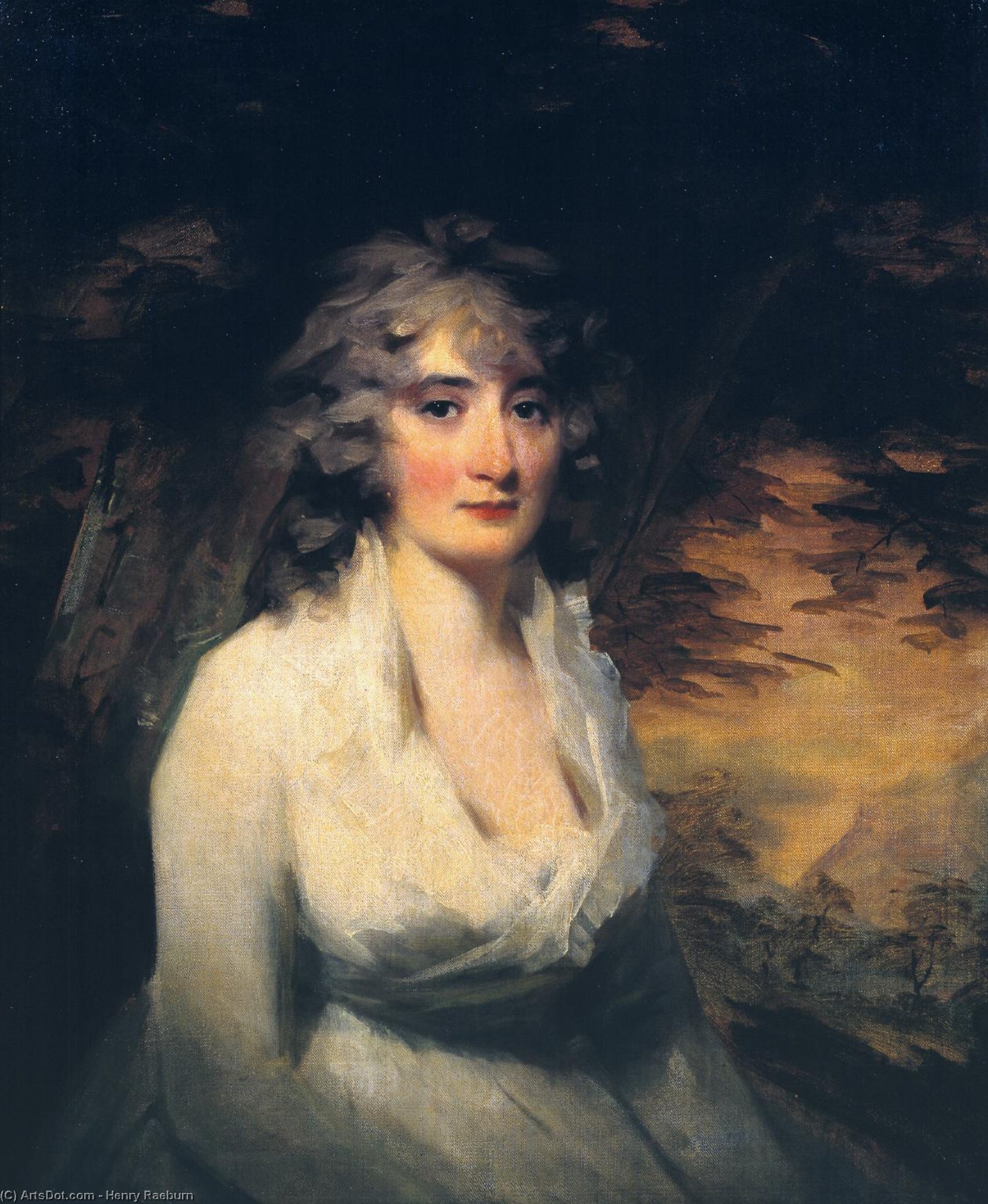
The Tate Gallery holds within its walls a treasure trove of artistic achievement, and amongst its celebrated canvases stands ‘Mrs H.W. Lauzun,’ painted by Sir Henry Raeburn in 1796. More than just a depiction of a woman—Lady Lauzun herself—the portrait embodies the spirit of Georgian Britain, reflecting an era defined by aristocratic grandeur and a profound appreciation for refined aesthetics. It’s a painting that invites contemplation, prompting us to consider not merely what we see but also what it communicates about its subject and the cultural milieu from which it emerged.
Raeburn's mastery lies in his ability to convey character through meticulous observation and skillful technique. He employed oil paint on canvas—a favored medium for portraiture at the time—allowing him to achieve a luminous surface texture that captures subtle nuances of light and shadow. The artist’s palette was restrained, dominated by muted golds and creams, colors deliberately chosen to illuminate Lady Lauzun's face and gown with an ethereal glow. This careful consideration of color contributes significantly to the painting’s overall mood—one of serenity and dignified composure.
The composition itself is thoughtfully balanced, adhering to classical principles of symmetry. Lady Lauzun occupies the central space, positioned squarely before a stylized tree – a motif frequently utilized in portraiture during this period to symbolize strength, resilience, and connection to nature. Her gaze directs firmly toward the viewer, establishing an intimate dialogue between subject and observer—a hallmark of Raeburn’s artistic style. The artist skillfully rendered her drapery, capturing the folds and textures with remarkable precision, demonstrating a dedication to realism that distinguishes his work from more decorative styles prevalent elsewhere.
Beyond its technical brilliance, ‘Mrs H.W. Lauzun’ resonates deeply with symbolic meaning. The tree represents Lady Lauzun's unwavering fortitude amidst societal pressures—a woman of considerable influence who navigated the complexities of aristocratic life with grace and determination. Furthermore, the white gown symbolizes purity and virtue – qualities highly valued within Georgian society. These subtle emblems elevate the portrait beyond mere likeness, transforming it into a statement about moral character and social standing.
Ultimately, ‘Mrs H.W. Lauzun’ succeeds in capturing not only Lady Lauzun's physical appearance but also her inner essence—a woman radiating confidence and dignity. It remains an enduring testament to Henry Raeburn’s artistic vision and his profound understanding of the human condition. Its quiet beauty continues to inspire art lovers today, reminding us that true artistry resides in conveying emotion and intellect with understated elegance.
- Artist: Sir Henry Raeburn
- Year Painted: 1796
- Medium: Oil on Canvas
- Location: Tate Gallery, London