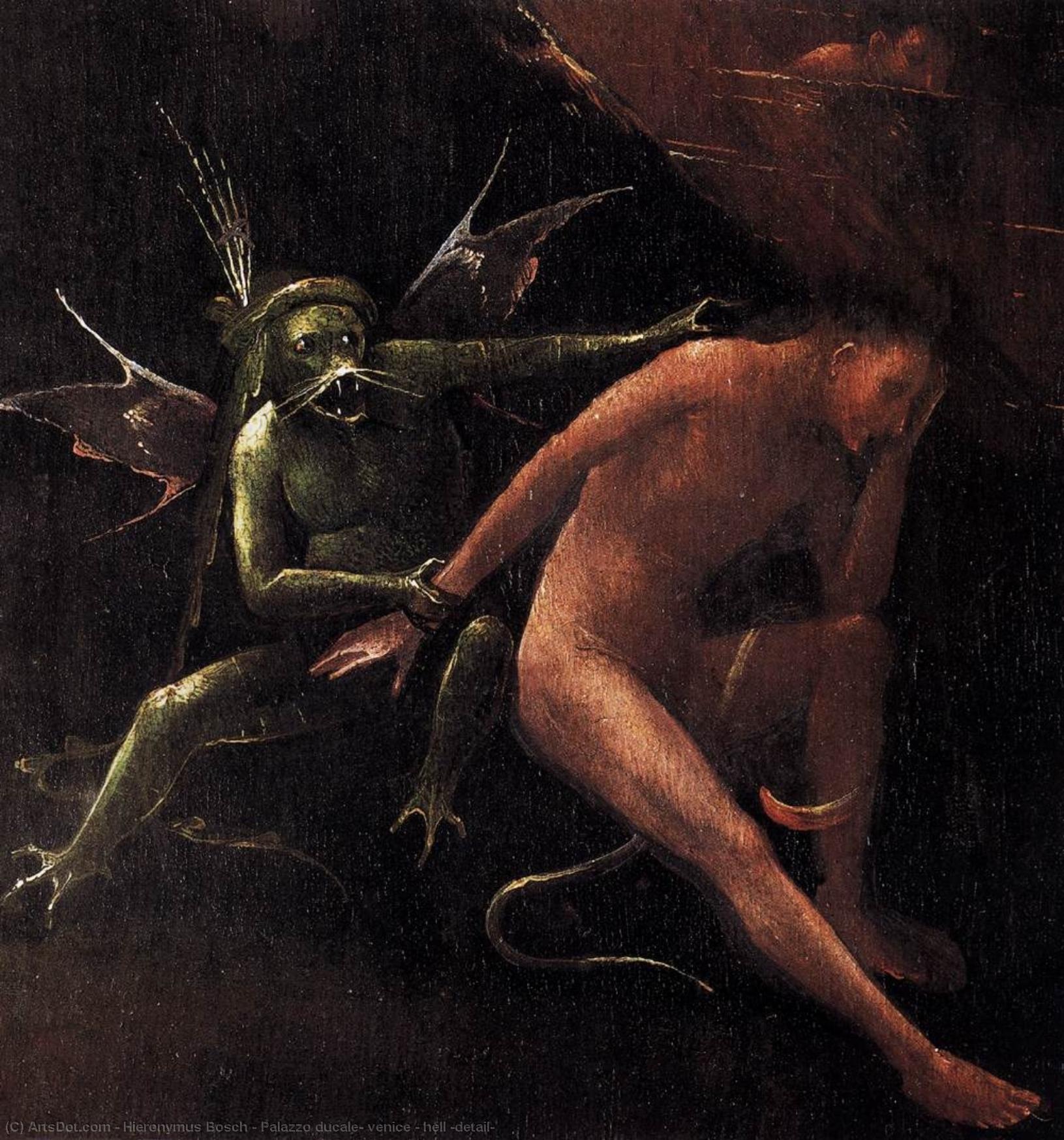
This artwork showcases Bosch's signature style: intricate detail combined with surreal symbolism reflecting the anxieties of his time. Admire its haunting beauty and discover similar masterpieces by Bosch on ArtsDot.
15世紀・16世紀のネーデル란드画家、ヒエロニムス・ボスの神秘的な世界。寓意画「地上の楽園」や「最後の審判」など、奇想天外な想像力と象徴性で中世末期の精神を表現。
Palazzo Ducale, Venice - Hell (Detail): A Descent into Surreal Terror
Hieronymus Bosch’s ‘Palazzo Ducale, Venice – Hell (Detail)’ stands as a chilling testament to the artist's unparalleled ability to conjure nightmares onto canvas. Painted sometime around 1500-04, this monochrome depiction—available exclusively at ArtsDot.com—captures a fragment of Bosch’s larger vision of purgatory and damnation, offering viewers an unsettling glimpse into his profoundly disturbing worldview. The painting isn't merely aesthetically striking; it’s laden with symbolic meaning, reflecting the anxieties of its time and continuing to resonate powerfully today.
The Artist’s Vision: Bosch and the Early Netherlandish School
Bosch (1450-1516), born in ’s-Hertogenbosch, Netherlands—a region grappling with religious upheaval—was a singular figure within the burgeoning Early Netherlandish painting school. Unlike many of his contemporaries who adhered to idealized depictions of saints and biblical narratives, Bosch relentlessly pursued a darker aesthetic, prioritizing psychological horror over pious reverence. His canvases pulsate with grotesque imagery – demons, hybrids, tortured souls – all rendered in meticulous detail using oil paint on oak wood—a technique characteristic of the era but executed with an unsettling precision that distinguishes Bosch from his peers. He rejected conventional artistic conventions, favoring instead a dreamlike logic and confronting viewers with uncomfortable truths about human nature and morality.
A Scene From Inferno: Composition and Symbolism
The focal point of ‘Hell (Detail)’ is undeniably disturbing: a demon—identified by its crown and horns—holds down a man in agonizing torment. The victim’s nakedness underscores his vulnerability, while his desperate struggle against the demon embodies the universal battle between good and evil. Surrounding him are figures engaged in various acts of suffering – grotesque animals, tormented souls – creating a claustrophobic tableau that reflects Bosch's preoccupation with sin and punishment. The artist skillfully employs perspective to heighten the sense of unease, drawing the viewer into the scene’s oppressive atmosphere. Notice the meticulous rendering of textures—the demon’s skin, the man’s flesh—further amplifying the painting’s visceral impact.
Renaissance Style Meets Surreal Horror
Despite its unsettling subject matter, ‘Hell (Detail)’ adheres to the stylistic conventions of the Renaissance period. Bosch's masterful use of chiaroscuro – dramatic contrasts between light and dark – creates a palpable sense of depth and realism within the fantastical setting. The artist’s attention to detail—the intricate patterns on the demon’s crown, the contorted expressions of the tormented figures—demonstrates his mastery of technique and elevates the painting beyond mere grotesque spectacle. This juxtaposition of Renaissance precision with surreal horror is precisely what makes Bosch's work so unforgettable.
Exploring Further: Context and Legacy
To delve deeper into Hieronymus Bosch’s artistic legacy, explore the Palazzo Ducale in Venice – a UNESCO World Heritage Site – where several other masterpieces reside. You can find more information about the museum and its collections at https://en.wikipedia.org/wiki/Doge's_Palace. Alternatively, discover similar artworks by Bosch on ArtsDot.com: ‘Paradise, Ascent of the Blessed’ and ‘Paradise, Terrestrial Paradise’. For a comprehensive understanding of Bosch’s life and oeuvre, visit the Hieronymus Bosch page on ArtsDot. Finally, immerse yourself in the broader artistic landscape of Venice during the Renaissance at https://www.wga.hu/html_m/b/bosch/6venice/index.html – a journey into Venetian history and art!