A Descent into Surreal Morality
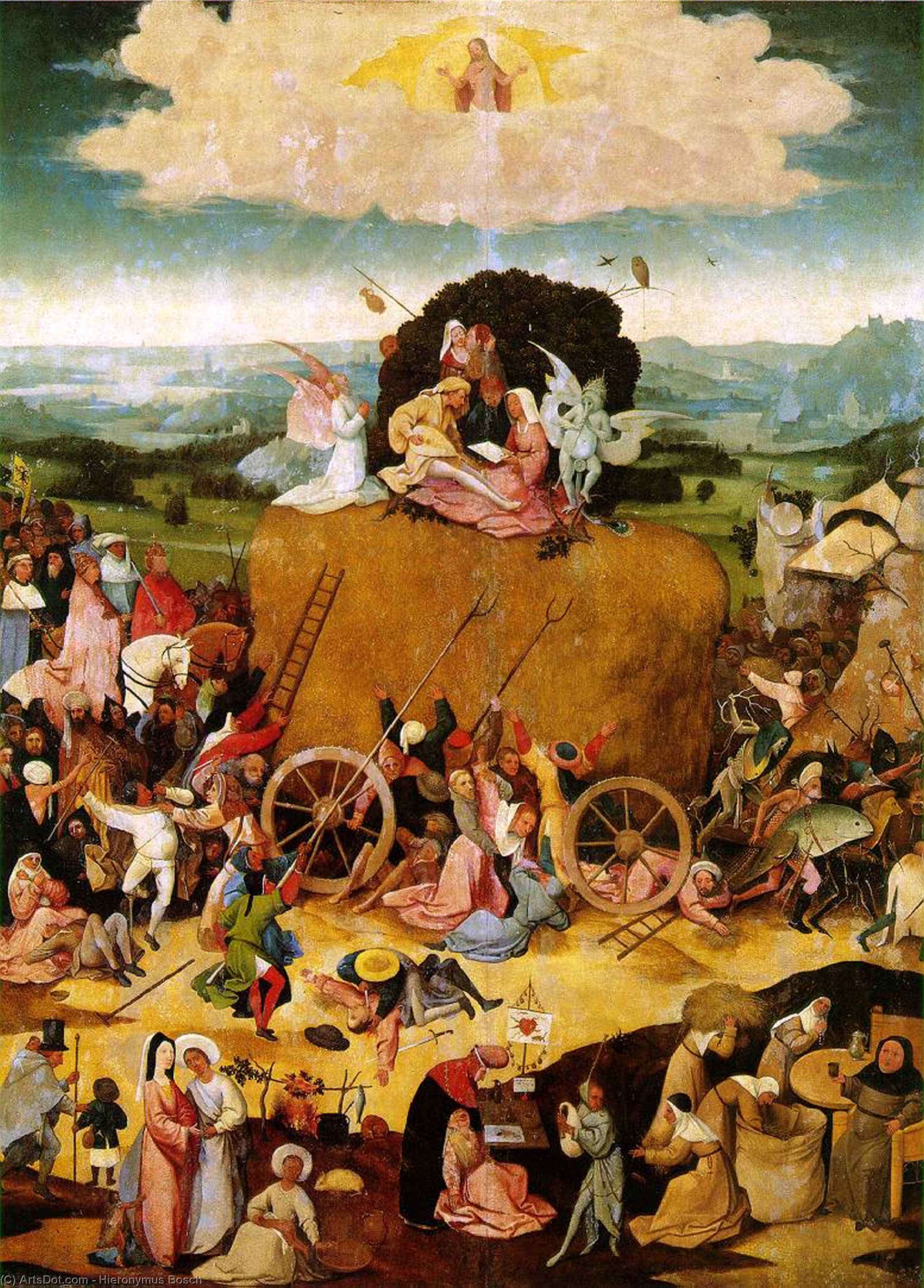
Hieronymus Bosch’s Triptych of Haywain (Central Panel) is far more than a mere depiction of pastoral life; it is a visceral, unsettling masterpiece that serves as a profound meditation on human folly and the seductive nature of sin. Housed in the prestigious Museo Nacional del Prado, this central panel captures a moment of chaotic transition, where the earthly and the divine collide in a spectacle of grotesque beauty. At its heart lies a massive wagon overflowing with hay—a symbol of fleeting prosperity and material abundance—being pulled through a landscape teeming with humanity. To gaze upon this work is to enter a realm where the boundaries between reality and nightmare blur, inviting the viewer to confront the darker impulses that reside within the human soul.
The composition is a whirlwind of activity, characterized by Bosch’s unparalleled ability to weave intricate narratives into a single, panoramic view. As one's eyes wander across the panel, they encounter a diverse assembly of figures from all walks of life, ranging from the noble and well-dressed to the humble and destitute. Each character is caught in a frantic struggle, reaching toward the hay as if it were the ultimate prize, embodying the vices of greed, lust, and gluttony. This relentless pursuit of earthly delights is juxtaposed against more ethereal elements, creating a tension that is both visually stimulating and spiritually haunting. The sheer density of detail ensures that every corner of the canvas offers a new discovery, making it an endlessly captivating subject for deep contemplation.
Mastery of Technique and Symbolic Depth
Executed with extraordinary precision in oil on panel, Bosch’s technique is a triumph of Northern Renaissance innovation. The artist employs a rich, luminous palette, where vibrant reds and warm yellows breathe life into the scene, imbuing the chaos with an unsettling vitality. His meticulous rendering of textures—the coarse straw of the hay, the heavy fabrics of the period attire, and the soft, rolling hills in the distance—creates a palpable sense of depth and illusionism. This layering of paint allows for a level of detail that is almost microscopic, demanding a slow, deliberate viewing experience that rewards the patient observer with glimpses of hidden iconography.
Beyond its technical brilliance, the painting functions as a complex visual poem steeped in religious allegory. The hay itself serves as a metaphor for the ephemeral nature of worldly goods, which men grasp at even as they drift toward spiritual ruin. Bosch utilizes a sophisticated language of symbols—animals, strange creatures, and peculiar gestures—to illustrate the consequences of abandoning moral righteousness. For the collector or interior designer, this piece offers more than just aesthetic grandeur; it provides a profound intellectual weight. A high-quality reproduction of this panel brings into a space not only a striking historical artifact but also a conversation piece that explores the eternal struggle between our highest aspirations and our most primal desires.
An Eternal Legacy for the Discerning Collector
Created around 1504, during a period of intense religious fervor in the Netherlands, this work remains as relevant today as it was five centuries ago. It captures the anxieties of an era grappling with mortality and divine judgment, yet its emotional impact transcends its historical context. The painting evokes a sense of awe, unease, and wonder, making it a powerful addition to any curated collection. Whether displayed in a grand gallery or a sophisticated private study, the Triptych of Haywain serves as a window into the enigmatic mind of Bosch, offering an unparalleled opportunity to own a fragment of art history’s most hauntingly beautiful vision.