A Study in Surreal Humor: Examining Hieronymus Bosch’s “Two Caricatured Heads”
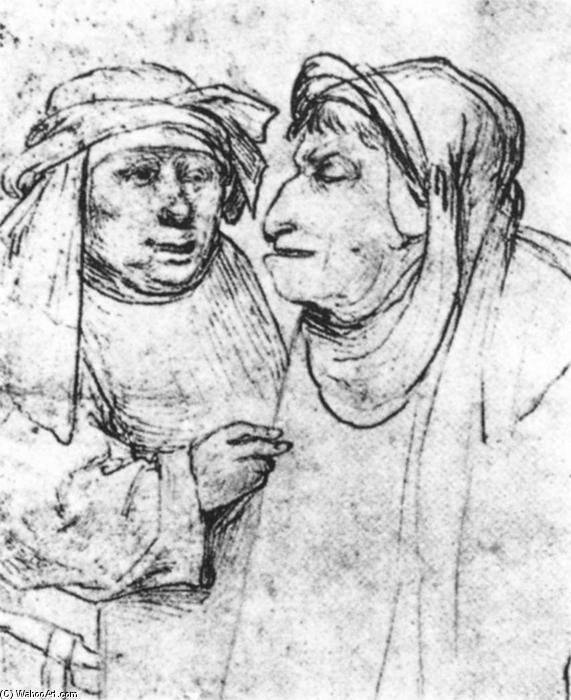
Hieronymus Bosch’s “Two Caricatured Heads,” created around 1530-1550, stands as a singular achievement within the Northern Renaissance—a testament to an artist who dared to explore the unsettling depths of human psychology and religious anxieties. More than just a portrait, it's a meticulously crafted sketch that embodies Bosch’s distinctive style: a blend of meticulous observation combined with fantastical distortion, resulting in an image that simultaneously delights and disturbs.
- Subject Matter & Composition: The artwork depicts two female heads positioned side by side within a starkly minimalist frame. This deliberate simplicity underscores the focus on facial expressions—specifically, exaggerated smiles conveying amusement or perhaps hinting at clandestine gossip. Bosch’s compositional choices prioritize symmetry, reinforcing the visual balance of the piece and directing the viewer's gaze directly to the central figures.
- Style & Technique: Bosch’s approach is undeniably caricature – a technique he employed extensively throughout his oeuvre. The artist skillfully utilizes hatching and cross-hatching to render shadows and texture, creating an illusion of depth that contrasts sharply with the monochrome palette. This painstaking attention to detail speaks volumes about Bosch's dedication to capturing nuanced psychological states.
- Color Palette & Line Work: Employing a masterful grayscale scheme, Bosch eliminates distracting color hues, amplifying the impact of his line work. The lines are crisp and precise, defining forms with remarkable accuracy while simultaneously conveying an underlying sense of unease. Hatching patterns contribute to textural richness, simulating rough surfaces and enhancing the visual drama.
- Symbolism & Emotional Impact: Beyond its humorous portrayal, “Two Caricatured Heads” resonates with deeper symbolic meanings. The headscarves—a motif recurrent in Bosch’s work—represent tradition and mystery, hinting at hidden narratives beneath the surface of appearances. Ultimately, the image evokes a feeling of playful transgression against accepted norms, prompting contemplation on human desires and anxieties.
- Historical Context: Produced during a period marked by religious upheaval and societal questioning, “Two Caricatured Heads” reflects Bosch’s preoccupation with moral corruption and the perils of earthly indulgence. His unsettling vision aligns perfectly with the broader artistic currents of his time—a rejection of idealized beauty in favor of confronting uncomfortable truths about human nature.
This remarkable sketch exemplifies Bosch's unparalleled ability to fuse observation with imagination, cementing his place as one of art history’s most unforgettable innovators. Its enduring fascination stems from its unsettling blend of humor and horror—a reminder that even the simplest visual representations can convey profound psychological complexities.