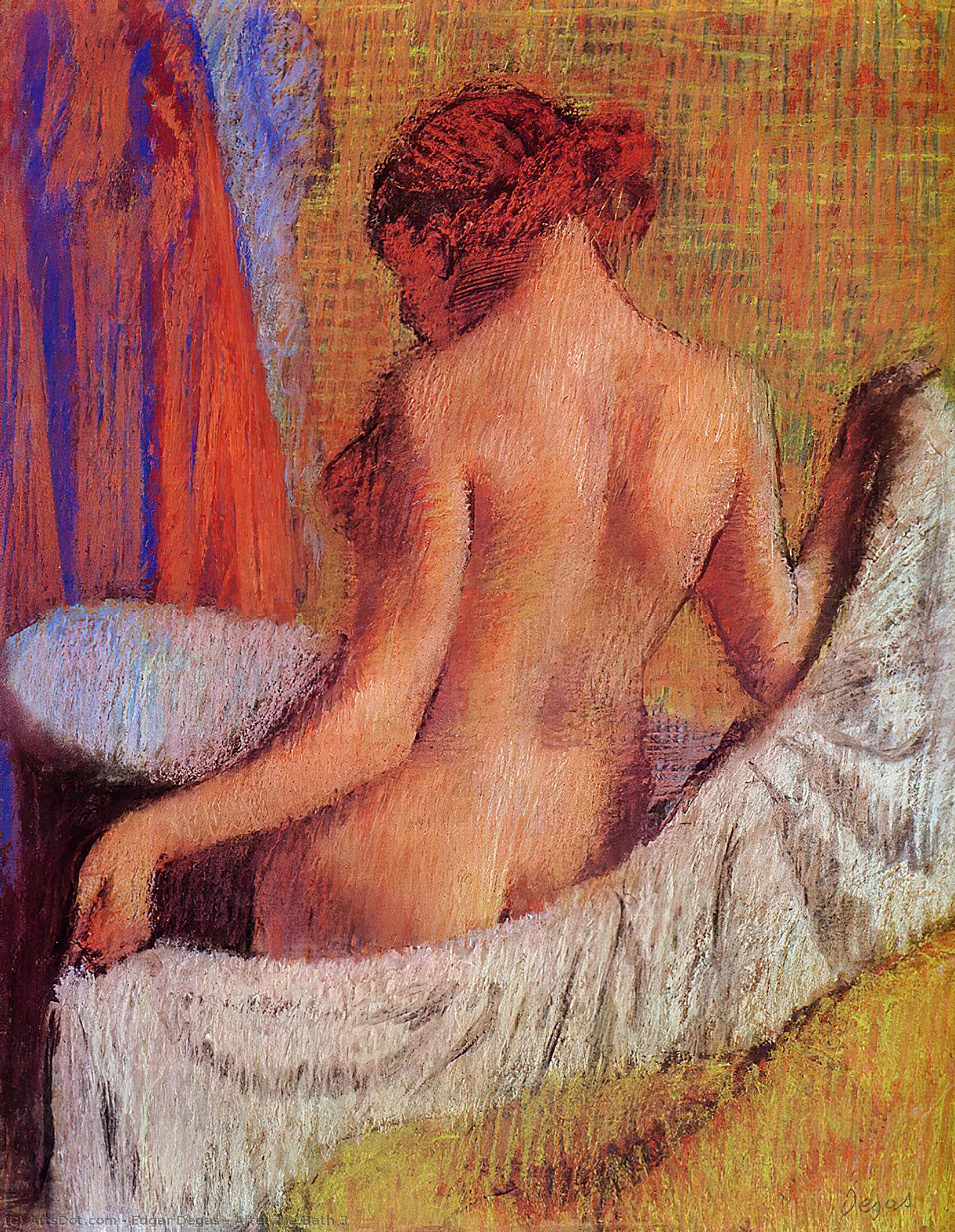
Captured in Degas’s masterful Impressionist style, ‘After the Bath III’ portrays a woman seated elegantly on a bed, bathed in warm light and adorned with a vibrant red ribbon—a timeless depiction of quiet contemplation by one of art history's greats. Explore this iconic masterpiece.
パリ
フランス
エドガー・ドガ
ヒレール・ Germain-エドガール・ドガ
19世紀を代表するフランスの画家、エドガー・ドガ。バレエダンサーやパリの日常風景を捉え、革新的な構図と卓越した描写力で印象主義に影響を与えました。『踊り子』『カフェ・ド・シャワール』など、現代生活の真実を描き出した傑作群。
印象派、写実主義
パブロ・ピカソ
ギュスターヴ・クールベ
1834年7月19日
1917年9月27日
ヒレール・ Germain-エドガール・ドガ
フランス人
タムブリンを持つ踊り子
フランス、パリ
入絵主義
1
エドガー・ドガは、レーベルを拒否しながらも、どの芸術運動と関連付けられることが多いですか?
A Moment Frozen in Time: Exploring Degas’s “After the Bath III”
Edgar Degas, a figure perpetually caught between Impressionism and Realism, remains one of the most influential artists of the late nineteenth century. His oeuvre transcends mere depiction; it captures the essence of human experience with remarkable sensitivity—a quality vividly realized in “After the Bath III,” painted in 1891-92. This captivating portrait isn’t simply a visual record of a woman preparing for repose; it's an invitation to contemplate the quiet dignity inherent in everyday life, a hallmark of Degas’s artistic vision.
Subject Matter and Composition: Capturing Intimacy
The painting centers around a woman seated on what appears to be a bed or couch—a deliberate choice that underscores the intimacy of the scene. Her back is turned towards the viewer, fostering a sense of vulnerability and inviting contemplation. Degas’s masterful composition draws attention to her posture, conveying both relaxation and subtle awareness. The careful positioning of the figure against the backdrop of a curtain contributes significantly to the artwork's atmosphere—a deliberate tactic designed to heighten privacy and seclusion. This understated approach aligns perfectly with Degas’s broader artistic philosophy: observing and portraying life as it unfolds organically.
Style and Technique: Impressionistic Realism Converges
Degas’s stylistic brilliance lies in his ability to fuse the tenets of Impressionism with a grounding in realism. Unlike many Impressionists who prioritized fleeting impressions of light and color, Degas meticulously rendered details—the folds of fabric, the texture of skin—demonstrating an unwavering commitment to accuracy. Yet, he achieves this precision without sacrificing artistic vision; instead, it serves as a vehicle for conveying emotion. The artist’s brushstrokes are loose yet controlled, creating a shimmering surface that captures the luminescence of the room and subtly illuminates the woman's complexion. This technique exemplifies Degas’s dedication to capturing not just what is seen but also how it feels.
Historical Context: Challenging Conventions
“After the Bath III” emerged during a period of significant artistic experimentation, mirroring the broader societal shifts occurring in France at the time. Impressionism challenged academic conventions regarding subject matter and technique—moving away from grand historical narratives towards scenes of domestic life and portraits of ordinary individuals. Degas’s depiction of female nudity wasn't merely aesthetically pleasing; it represented a bold assertion against prevailing moral standards, reflecting a growing interest in portraying women as complex beings with inner lives. The painting finds its home within the Rothschild Art Foundation in Baltimore, alongside other masterpieces from the era—a testament to Degas’s enduring legacy and his contribution to the artistic dialogue of his time.
Symbolism and Emotional Impact: A Reflection of Quiet Grace
Beyond its formal qualities, “After the Bath III” resonates with profound symbolic meaning. The woman's posture embodies serenity and acceptance—a quiet grace that speaks volumes about the human condition. The red ribbon adorning her hair serves as a visual anchor, drawing the eye upward and emphasizing femininity. More broadly, the painting invites viewers to consider themes of vulnerability, beauty, and the dignity of solitude. Degas’s ability to evoke emotion through subtle visual cues underscores his mastery as an artist—a legacy that continues to inspire admiration and contemplation decades after its creation.