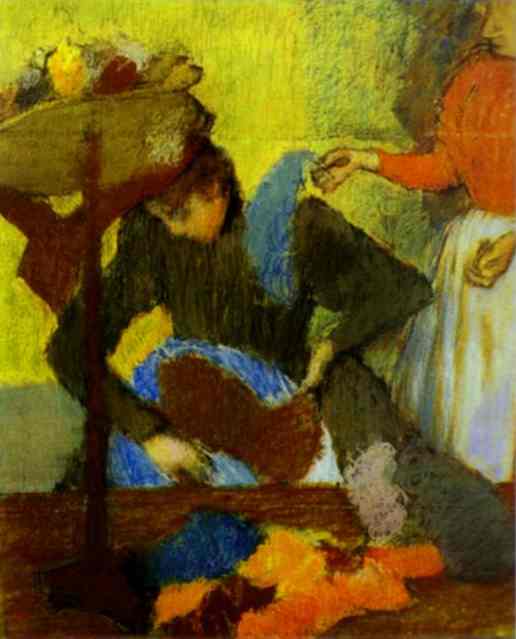
Explore Edgar Degas’ ‘At the Milliner’s’! A captivating Impressionist painting of a woman trying on hats. Discover its unique style & artistic depth at ArtsDot.com.
パリ
フランス
エドガー・ドガ
ヒレール・ Germain-エドガール・ドガ
19世紀を代表するフランスの画家、エドガー・ドガ。バレエダンサーやパリの日常風景を捉え、革新的な構図と卓越した描写力で印象主義に影響を与えました。『踊り子』『カフェ・ド・シャワール』など、現代生活の真実を描き出した傑作群。
印象派、写実主義
パブロ・ピカソ
ギュスターヴ・クールベ
1834年7月19日
1917年9月27日
ヒレール・ Germain-エドガール・ドガ
フランス人
タムブリンを持つ踊り子
フランス、パリ
入絵主義
1
エドガー・ドガは、レーベルを拒否しながらも、どの芸術運動と関連付けられることが多いですか?
A Glimpse into Parisian Elegance: Degas’s “At the Milliner’s”
Edgar Degas's "At the Milliner's" (1898) offers a captivating window into the fashionable world of late 19th-century Paris. More than just a depiction of a woman selecting a hat, this oil on canvas is a masterful study of modern life, psychological nuance, and fleeting moments. Degas eschewed grand historical narratives in favor of capturing the everyday – and the milliner’s shop, a vibrant hub of social activity and consumerism, proved an ideal subject. The painting doesn't focus on overt glamour but rather on the *experience* of choosing fashion, hinting at the subtle anxieties and self-consciousness inherent in such rituals.
Impressionist Realism: Style & Technique
While often categorized as an Impressionist, Degas preferred to be called a realist – a distinction that’s evident in his meticulous observation and commitment to portraying figures with anatomical accuracy. However, “At the Milliner's” showcases techniques characteristic of the evolving artistic landscape of the time. The composition is deliberately asymmetrical, cropping the figure and creating a sense of immediacy, almost as if we are observing an unposed moment. Degas’s brushwork is loose and expressive, particularly in rendering the textures of fabrics and the varied designs of the hats. He masterfully uses color to create depth and draw the eye, employing a palette that balances muted tones with flashes of vibrant hues. This isn't about capturing light as much as it is about capturing a feeling – a sense of quiet contemplation amidst the bustle of city life.
The Milliner’s Shop: A Symbol of Modernity
The millinery shop itself held symbolic weight in late 19th-century Paris. It represented not only access to fashionable trends but also the burgeoning consumer culture and the increasing importance of personal presentation. The array of hats, each a unique creation, speaks to the desire for individuality within societal constraints. Degas’s choice of subject matter reflects his fascination with modern life and his ability to find artistic merit in seemingly mundane scenes. The woman's posture and expression suggest a moment of self-assessment – is she choosing a hat to impress others, or to express her own identity? This ambiguity adds layers of psychological complexity to the work.
Emotional Resonance & Lasting Appeal
“At the Milliner’s” isn't a painting that shouts for attention; its power lies in its subtlety and emotional depth. The quiet intimacy of the scene, combined with Degas’s masterful rendering of human psychology, creates a lasting impression on the viewer. It evokes a sense of nostalgia for a bygone era while simultaneously offering timeless insights into the human condition. The painting's enduring appeal makes it a compelling addition to any collection and an inspiring piece for interior design – its muted palette and elegant composition lend themselves beautifully to both classic and contemporary settings.