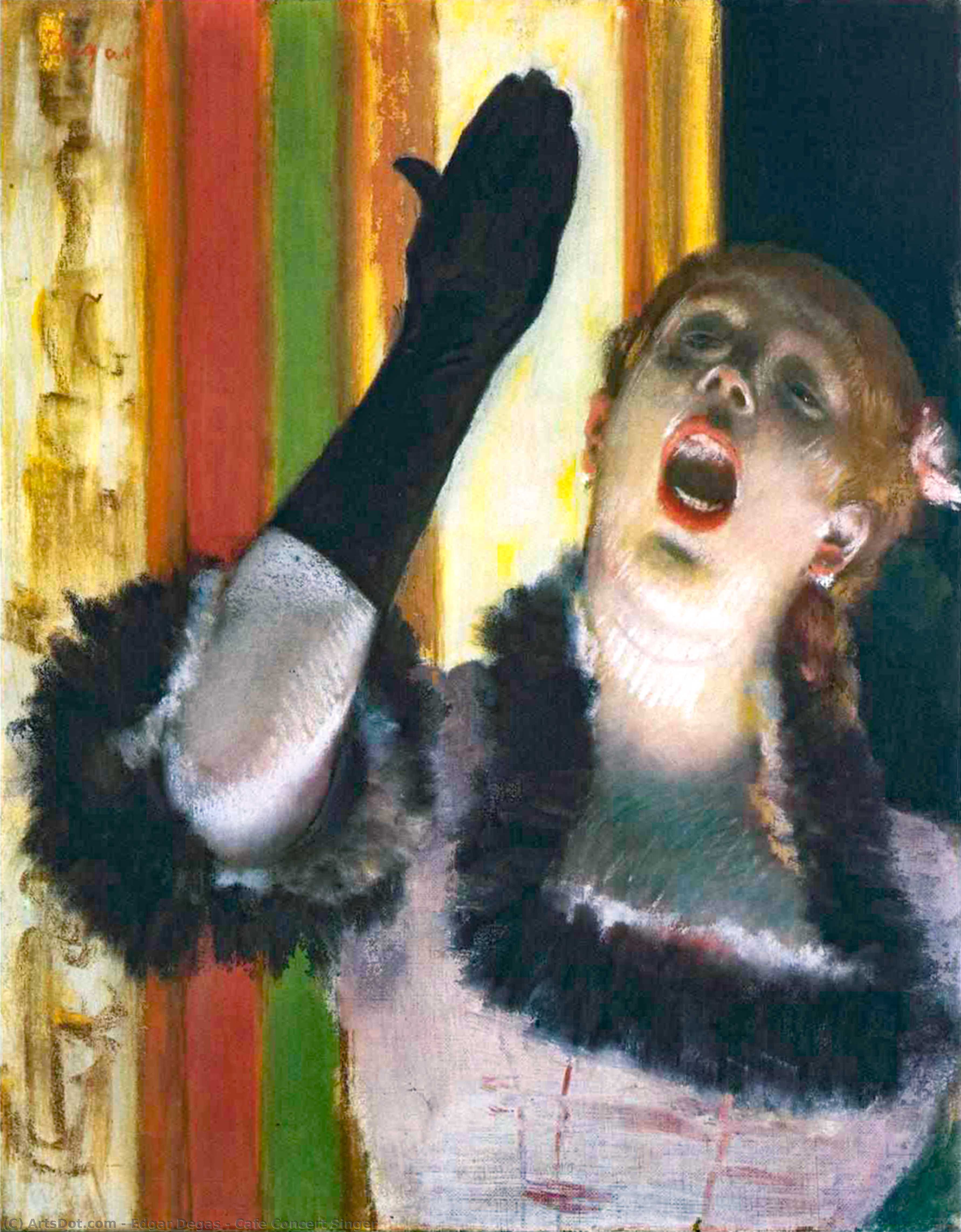
Cafe Concert Singer: A Moment Frozen in Pastel
Edgar Degas, a titan of French Impressionism despite his vehement rejection of the movement’s moniker, remains an artist whose work continues to fascinate and inspire. Cafe Concert Singer, completed in 1878, exemplifies this enduring appeal—a deceptively simple pastel drawing that encapsulates the dynamism of Parisian nightlife and the profound observation characteristic of Degas's artistic vision.
- Subject Matter: The painting depicts a woman performing at a cafe concert. She embodies the spirit of the era – a performer striving to captivate an audience amidst the bustling urban environment.
- Style and Technique: Degas’s masterful use of pastel on canvas is paramount. Unlike oil paints, pastels offer unparalleled luminosity and immediacy, allowing for subtle gradations of tone that capture fleeting expressions and atmospheric nuances. The artist meticulously renders textures—the corset fabric, the microphone stand—revealing a dedication to realism tempered by Impressionistic sensibilities.
- Composition: The composition is deliberately asymmetrical, drawing the viewer’s eye upward towards the singer's outstretched arm and microphone. This gesture conveys both physical exertion and emotional intensity, mirroring the performer’s desire to connect with her audience. A horizontal yellow stripe punctuates the background, providing visual depth and subtly reinforcing the theatrical setting.
- Historical Context: Cafe Concert Singer emerged during a period of significant social change in France—the Belle Époque—characterized by optimism, artistic experimentation, and burgeoning consumer culture. Degas’s fascination with dance extended beyond mere aesthetic appreciation; he sought to document the rituals and movements of modern life, reflecting a broader humanist impulse.
- Symbolism: The corset itself represents societal constraints imposed upon women during this time, subtly juxtaposed against the singer's defiant posture and vocal performance. It speaks to themes of aspiration, vulnerability, and the struggle for self-expression within restrictive social norms.
The painting’s impact transcends its visual beauty; it serves as a poignant reminder of a bygone era—a snapshot of Parisian culture infused with artistic brilliance. Its inclusion in the Fogg Art Museum collection underscores its significance as a cornerstone of Degas's oeuvre and a testament to his enduring legacy as one of Impressionism’s most astute chroniclers.
A reproduction of Cafe Concert Singer would bring a touch of understated elegance and intellectual depth into any interior space, capturing the spirit of artistic observation and conveying a powerful emotional resonance—a subtle echo of Degas's groundbreaking approach to portraying human experience.