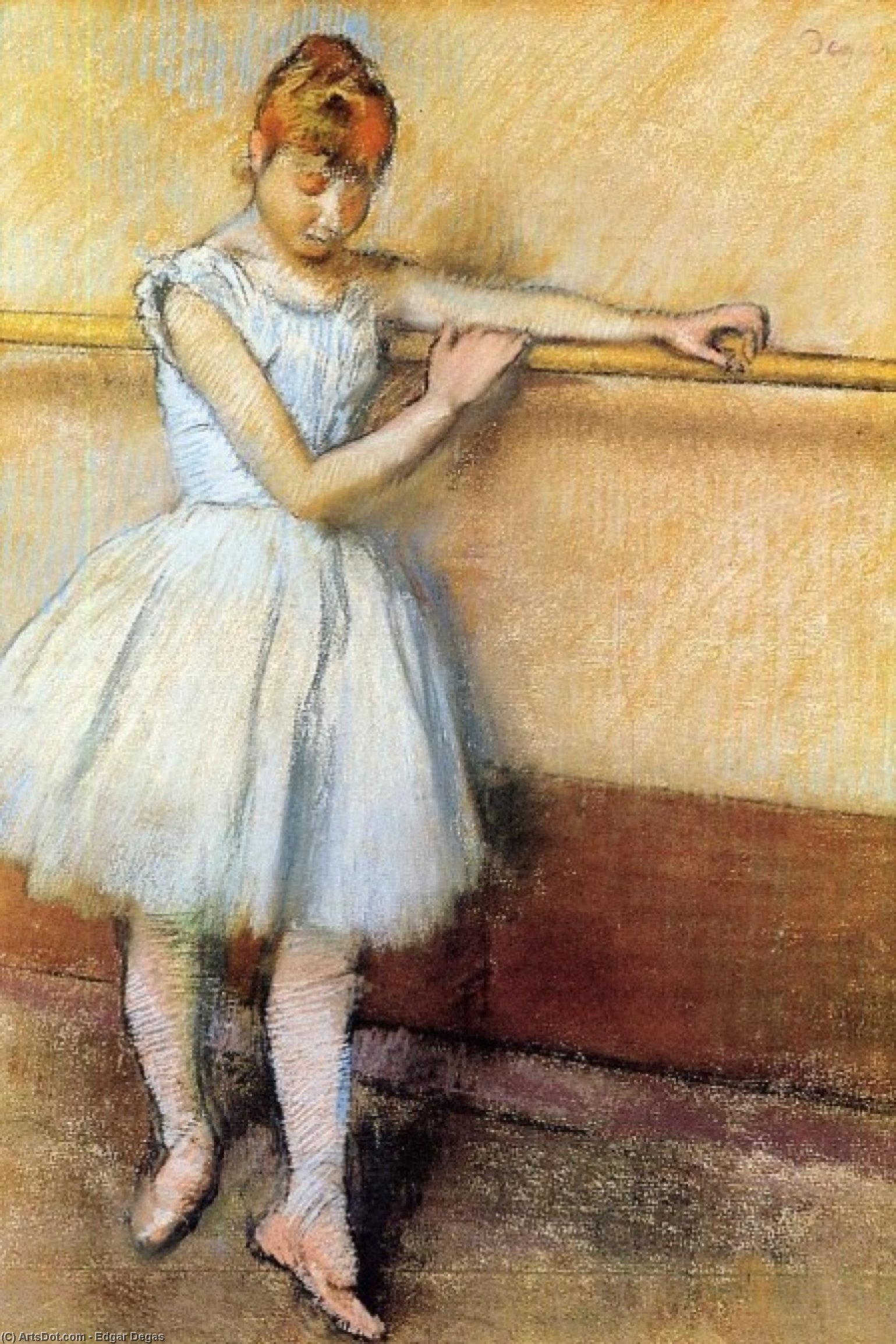
Captured in delicate pastel strokes by Edgar Degas during Impressionism’s golden age, Dancer at the Barre portrays a serene ballet dancer poised on the barre—a timeless testament to artistic observation and quiet grace. Explore this iconic masterpiece and bring its beauty into your home.
A Moment Frozen in Pastel Light
Edgar Degas, arguably one of the most influential figures in Impressionism, possessed an artistic vision that transcended mere visual representation. He wasn’t simply capturing what he saw; he was striving to distill the essence of movement and emotion into a single frame—a feat brilliantly achieved in “Dancer at the Barre,” painted in 1880.
The painting depicts a young girl poised on a barre, her hands firmly gripping it for support as she leans against the wall. This seemingly simple composition speaks volumes about Degas’s artistic sensibilities. He eschewed grand narratives and theatrical displays, opting instead for intimate glimpses into everyday life—specifically, the rigorous discipline of ballet training.
- Subject Matter: Ballet Practice – Degas meticulously observed dancers in studios, capturing not just their physical postures but also their quiet contemplation during breaks.
- Style: Impressionism – While he resisted categorization, “Dancer at the Barre” embodies the core tenets of Impressionism: fleeting moments of light and color, prioritizing sensory experience over precise detail.
- Technique: Pastel – Degas’s masterful use of pastel is central to the painting's aesthetic impact. The medium allows for subtle gradations of tone and texture, creating a luminous effect that mimics natural illumination. Unlike oil paint, pastel captures light with remarkable delicacy, conveying an atmosphere of stillness and vulnerability.
The historical context surrounding “Dancer at the Barre” illuminates Degas’s broader artistic concerns. Impressionism emerged as a reaction against academic painting's rigid conventions—a desire to liberate art from formal constraints and embrace spontaneity. Furthermore, Degas’s fascination with ballet reflected the burgeoning interest in modern dance forms during the Belle Époque, marking him as a pioneer of artistic innovation.
Beyond its technical brilliance, “Dancer at the Barre” resonates emotionally. The girl's posture exudes concentration and determination—a testament to the dedication required for mastering ballet. Simultaneously, there’s an undeniable sense of quiet beauty, capturing a fleeting moment of grace amidst physical exertion. This duality speaks to Degas’s profound understanding of human psychology and his ability to convey complex emotions through deceptively understated imagery.
Louisine Havemeyer, a prominent collector and supporter of feminist causes, recognized the painting's significance as more than just an aesthetically pleasing artwork; it represented a celebration of female artistry and perseverance. Today, reproductions of “Dancer at the Barre” continue to inspire artists and designers alike—serving as a reminder that true beauty lies in capturing authentic human experience.