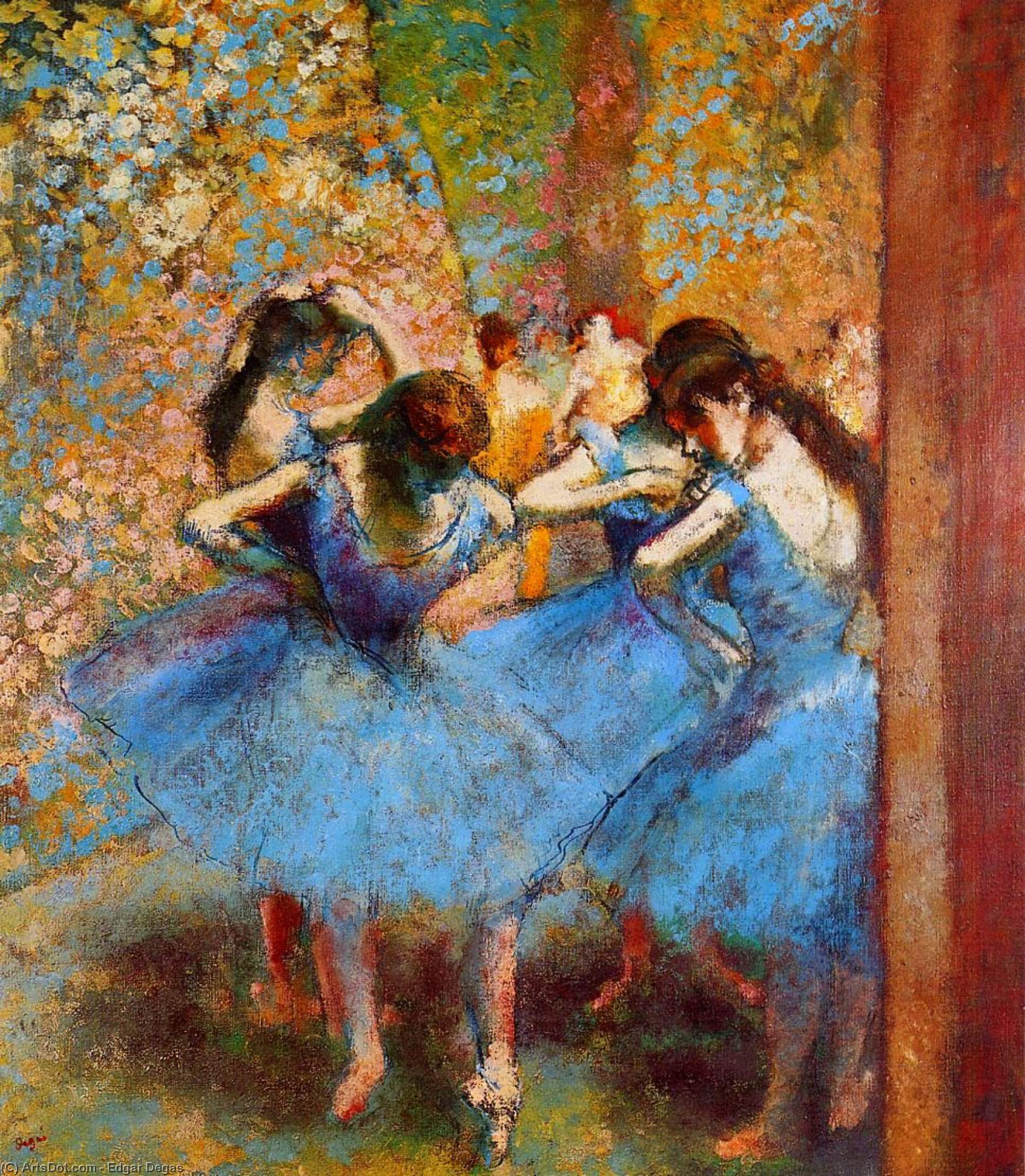
Dancers in Blue: A Captivating Impressionist Masterpiece
- Artist: Edgar Degas
- Birth Year: 1834
- Death Year: 1917
- Artwork Title: Dancers in Blue
- Year Created: 1895
- Medium: Oil on Canvas
- Dimensions: Unknown
- Location: Musée d'Orsay, Paris, France
An Exploration of Movement and Grace
Edgar Degas’s "Dancers in Blue" is a mesmerizing depiction of ballet dancers captured mid-performance. This oil on canvas painting, housed within the prestigious Musée d'Orsay in Paris, exemplifies Degas’s fascination with movement, light, and the fleeting moments of everyday life. The artwork showcases five ballerinas adorned in blue dresses, their postures conveying both strength and elegance. Degas masterfully utilizes loose brushstrokes to create a sense of dynamism, as if the dancers are perpetually caught in motion. The composition is carefully arranged, guiding the viewer's eye through the scene with a harmonious balance of figures positioned at varying depths.
Impressionism and Degas’ Unique Style
"Dancers in Blue" firmly resides within the Impressionist movement, characterized by its emphasis on capturing fleeting moments and the effects of light. However, Degas distinguished himself from other Impressionists like Monet and Renoir through his unique approach. While they often painted outdoors, Degas primarily worked in his studio, meticulously observing and recreating scenes from modern life. He was a skilled draftsman who brought classical techniques to contemporary subjects, earning him recognition as a "classical painter of modernity." The visible brushstrokes and the hazy atmosphere contribute to the painting's dreamlike quality, inviting viewers into a world of artistic expression.
Symbolism and Emotional Resonance
The color blue in “Dancers in Blue” is not merely aesthetic; it symbolizes elegance, grace, and perhaps even a sense of melancholy. The dancers themselves represent dedication, discipline, and the pursuit of perfection through art. Their interactions—a shared glance, a subtle shift in posture—hint at camaraderie and the unspoken language of performance. Degas’s ability to capture these nuanced emotions elevates the painting beyond a simple depiction of ballet; it becomes an exploration of human connection and artistic passion. The composition evokes feelings of lightness, fluidity, and a quiet contemplation of beauty.
Degas' Legacy and Further Exploration
“Dancers in Blue” stands as one of Degas’s most celebrated works, reflecting his lifelong fascination with the ballet world. It exemplifies his ability to transform ordinary scenes into extraordinary artistic expressions. For those interested in exploring more of Degas’s work, consider examining other notable pieces such as "Dancers at the Old Opera House," “Three Dancers. Yellow Skirts, Blue Blouses,” and “The Bath (Woman from Behind).” These works further demonstrate his mastery of capturing movement and human emotion through art. ArtsDot.com offers high-quality reproductions of Degas’s masterpieces, allowing enthusiasts to bring a touch of Impressionist elegance into their own homes.