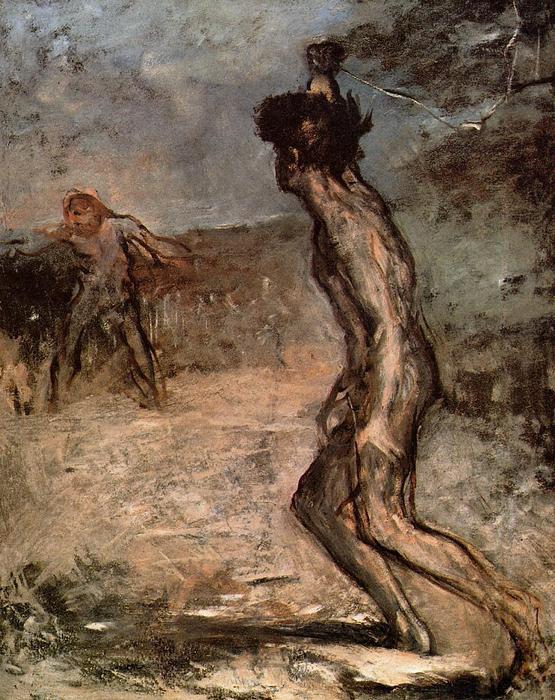
David and Goliath: A Ballet of Muscle and Memory
Edgar Degas, a name synonymous with Impressionism yet stubbornly resistant to categorization, presents us with “David and Goliath,” an artwork born from 1863 that transcends mere visual representation. More than just depicting a biblical narrative—the tale of David slaying Goliath—this painting delves into the artist’s profound fascination with capturing movement and human form in its rawest state.
- Subject Matter: The scene portrays a dramatic confrontation between David and Goliath, figures from the Hebrew Bible known for their epic battle. Degas eschews idealized depictions of heroism, opting instead for an unflinching portrayal of physicality and struggle.
- Style & Technique: Characteristic of Degas’s Impressionist approach, “David and Goliath” employs loose brushstrokes—a hallmark of his style—that prioritize capturing the immediacy of the moment over meticulous detail. The monochromatic palette—primarily shades of gray—amplifies the tension and emphasizes the central figures against a muted backdrop.
- Composition: Degas’s masterful composition draws the eye to the core conflict, placing David and Goliath in close proximity on a sandy beach. Surrounding them are horses, symbolizing chaos and unrestrained energy, further contributing to the painting's dynamic atmosphere. A chair positioned strategically adds depth and hints at an outdoor gathering or performance—perhaps reflecting the artist’s interest in capturing theatrical presentations.
Historical Context: Beyond Mythic Narrative
“David and Goliath” resides within the esteemed Fitzwilliam Museum collection, showcasing Degas's commitment to exploring classical themes through a distinctly modern lens. The museum’s expansive holdings span centuries of artistic achievement, offering visitors unparalleled opportunities for scholarly engagement.
Degas wasn’t simply retelling a familiar story; he was grappling with questions about representation and perception. He sought to convey not just what he saw but how he *felt* witnessing the confrontation—a feat accomplished through his masterful manipulation of color and brushstroke. The painting speaks volumes about the artist's preoccupation with portraying human movement, mirroring themes found throughout his oeuvre.
Symbolism: Muscle Memory and Artistic Vision
The nudity of David underscores vulnerability alongside strength – a deliberate choice that challenges conventional notions of heroism. It’s a visual metaphor for confronting one's fears and embracing imperfection. The horses represent unrestrained energy, mirroring the artist’s own restless spirit and his desire to capture fleeting moments of action.
Furthermore, Degas’s stylistic choices—the monochromatic palette and loose brushstrokes—serve as symbolic representations of artistic restraint and observation. They prioritize capturing essence over embellishment, reflecting a belief that true beauty lies in honesty and authenticity.
Emotional Impact: Capturing the Essence of Conflict
"David and Goliath" isn’t merely aesthetically pleasing; it evokes profound emotional resonance. The painting compels viewers to contemplate themes of courage, vulnerability, and the struggle for dominance—concepts explored extensively by Degas throughout his artistic career.
Its enduring appeal lies in its ability to capture not just a biblical narrative but also the visceral experience of witnessing conflict. For collectors seeking inspiration or interior designers aiming to infuse their spaces with artistic contemplation, a high-quality reproduction of “David and Goliath” offers a captivating glimpse into Degas’s genius—a testament to his unwavering dedication to portraying human form in motion and capturing the spirit of an era.