The Enigmatic Portrait of Madame de Rutte
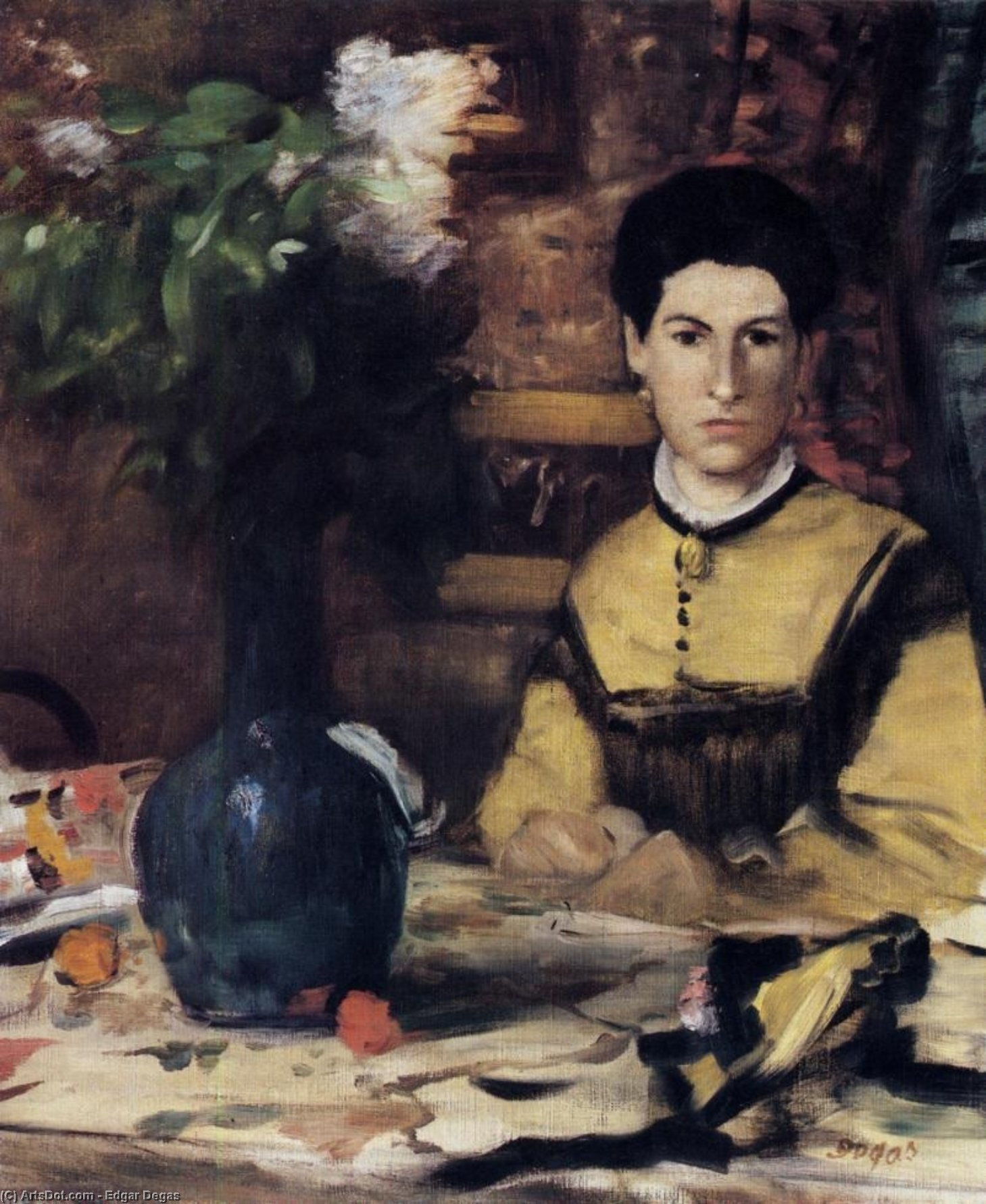
Edgar Degas’s “Madame de Rutte,” painted in 1875, isn't merely a portrait; it’s a carefully constructed tableau vivant—a snapshot of Parisian life imbued with an exquisite sense of quiet observation and subtle emotion. The painting immediately draws the eye to its subject, a woman seated at a table laden with the objects of her leisure: a vase overflowing with blossoms, a book open on the surface, and a pair of elegant birds perched nearby. Yet, it’s not simply what is *present* that captivates, but rather the way Degas renders the scene—a masterful blend of Impressionistic technique and a deeply considered composition.
Degas, a pivotal figure in the Impressionist movement, rejected the rigid conventions of academic painting, favoring instead a more spontaneous approach to capturing fleeting moments. He was fascinated by modern life, particularly the world of dance and the bourgeoisie—a subject he explored with remarkable insight. “Madame de Rutte” exemplifies this fascination; it’s not a formal portrait intended for public display, but rather an intimate glimpse into the private world of a woman enjoying her afternoon. The soft, diffused light, characteristic of Impressionism, washes over the scene, creating a hazy atmosphere that evokes a sense of tranquility and domesticity.
The Artist's Vision: Degas and the Modern Subject
Born Hilaire-Germain-Edgar De Gas in Paris in 1834, Degas’s artistic journey was marked by a deliberate rejection of traditional expectations. Initially trained in law, he pursued his passion for art with unwavering determination, studying at the École des Beaux-Arts and absorbing the influence of Jean-Auguste-Dominique Ingres—though ultimately forging his own distinctive style. Degas's genius lay not just in his technical skill but in his ability to capture the essence of his subjects, often portraying them with a remarkable degree of psychological depth. He was particularly drawn to the world of ballet dancers and women from all walks of life, finding beauty in their everyday routines and revealing their inner lives through subtle gestures and expressions.
“Madame de Rutte” is a prime example of Degas’s innovative approach. He employed a technique known as *contre-jour*, placing the subject in shadow while the background was brightly lit, creating an effect of depth and emphasizing the figure's form. The loose brushstrokes, typical of Impressionism, contribute to the painting’s sense of immediacy and spontaneity—as if Degas were capturing a fleeting moment frozen in time. Notice how he uses color not to represent reality exactly, but to evoke mood and atmosphere; the muted tones of the interior contrast with the vibrant hues of the flowers, creating a harmonious yet slightly melancholic effect.
Symbolism and Intimacy
Beyond its technical brilliance, “Madame de Rutte” is rich in symbolic detail. The books suggest an intellectual life, while the flowers represent beauty, pleasure, and perhaps even mortality—a poignant reminder of the ephemeral nature of time. The birds, often associated with freedom and grace, add a touch of lightness to the scene. The woman herself appears contemplative, her gaze directed downward as if lost in thought. It’s this subtle expression of inner life that elevates the portrait beyond a simple likeness; it invites us to imagine her story, her dreams, and her secrets.
Degas's choice of subject—a middle-class woman enjoying a quiet moment—reflects his interest in portraying the lives of ordinary people. He sought to capture not just their appearance but also their character and spirit. “Madame de Rutte” is a testament to Degas’s ability to find beauty and significance in the mundane, transforming an everyday scene into a work of art that continues to resonate with viewers today.
Bringing "Madame de Rutte" Home
ArtsDot offers meticulously crafted hand-painted reproductions of “Madame de Rutte,” allowing you to experience the artistry and emotion of this iconic painting in stunning detail. Each reproduction is created by skilled artists using traditional oil painting techniques, ensuring a faithful representation of Degas’s original vision. Whether displayed in your home or office, a ArtsDot reproduction of "Madame de Rutte" will serve as a timeless reminder of the beauty and complexity of Impressionist art.