A Moment of Contemplation: Unveiling Degas’ “Portrait of a Man”
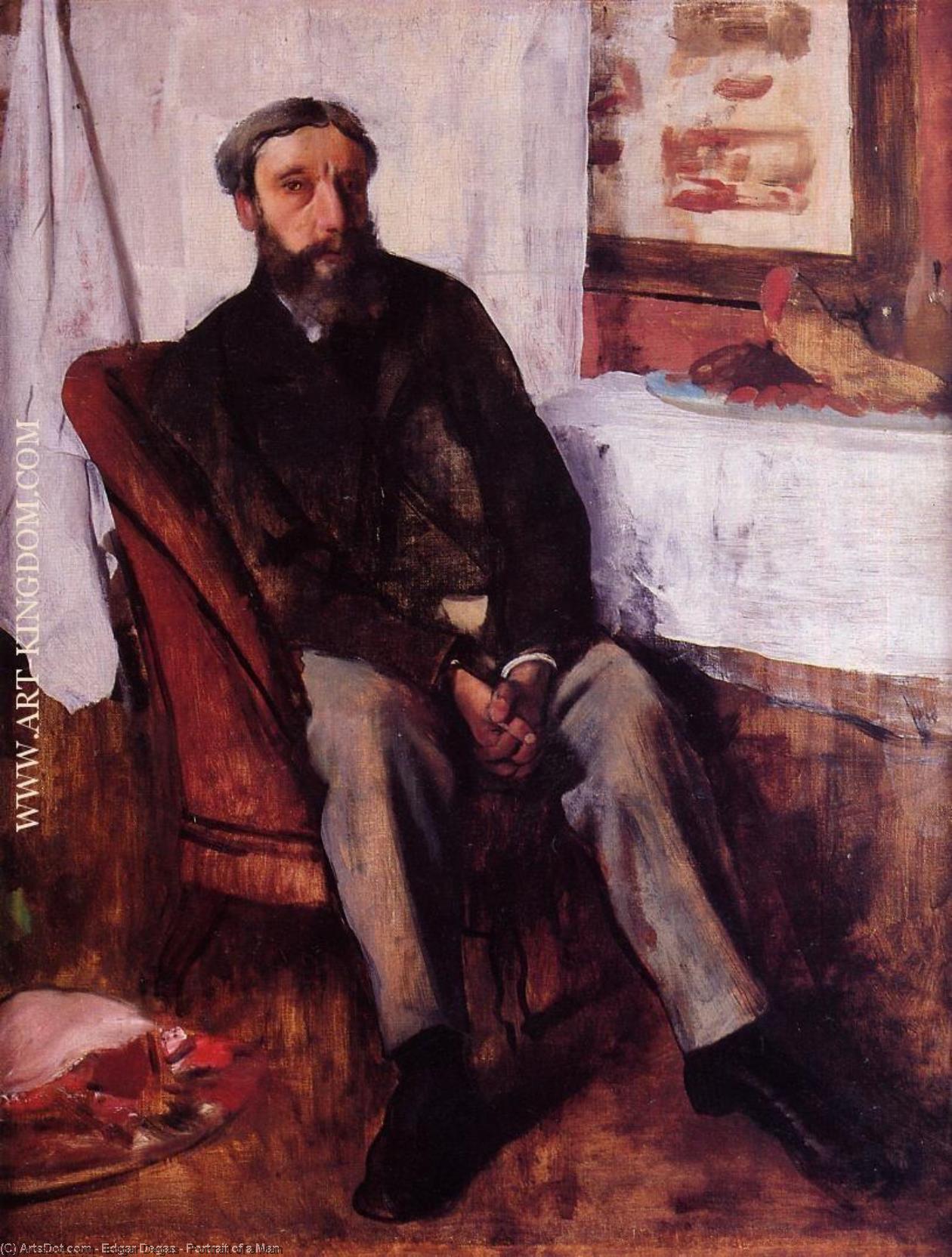
This 1866 oil on canvas by Edgar Degas, currently residing at the Brooklyn Museum, offers a compelling glimpse into the artist's early mastery of portraiture and his evolving artistic vision. More than just a likeness, this painting is a study in psychological nuance and quiet observation – characteristics that would come to define Degas’ unique approach to representing modern life.
Subject & Composition
The subject, an unidentified gentleman, is seated in a chair, his hands clasped together in a gesture suggesting thoughtfulness or perhaps restrained anxiety. He's formally dressed in a suit and tie, hinting at a man of some standing preparing for an event, yet the setting feels intimate rather than grand. The background reveals a dining table partially laden with objects – a bowl, cup, spoon, and vase – implying a domestic interior and suggesting a pause within a social occasion. Degas deliberately frames his subject within this environment, creating a narrative tension between public persona and private reflection.
Style & Technique: A Bridge Between Tradition and Modernity
While often categorized as an Impressionist, Degas resisted the label, identifying instead as a realist. This distinction is evident in “Portrait of a Man.” The painting isn’t concerned with capturing fleeting light effects *en plein air* (outdoors), but rather with a meticulous rendering of form and character.
Degas's brushwork is visible and expressive, yet controlled, demonstrating his academic training while foreshadowing the looser techniques he would later explore. The use of chiaroscuro – the dramatic contrast between light and shadow – adds depth and emphasizes the subject’s introspective mood. He expertly uses color to create a sense of atmosphere and subtly draw attention to key details.
Historical Context & Artistic Influences
Created during a period of significant social and artistic change in France, “Portrait of a Man” reflects the shifting focus from historical and mythological subjects towards depictions of contemporary life. Degas was influenced by Old Masters like Velázquez and Rembrandt – particularly their ability to convey psychological depth through portraiture. However, he rejected the idealized forms often found in academic painting, opting for a more honest and unvarnished representation of his subject.
This work stands as an example of how Degas blended traditional techniques with modern sensibilities.
Symbolism & Emotional Impact
The symbolism within the portrait is subtle but potent. The clasped hands suggest restraint or perhaps a hidden burden. The partially visible dining table hints at social obligations and the complexities of human relationships. The overall mood is one of quiet melancholy, inviting viewers to contemplate the inner life of the sitter.
Degas doesn’t offer easy answers; instead, he presents a moment frozen in time, leaving room for interpretation and emotional resonance.
For Collectors & Interior Designers
“Portrait of a Man” is an exceptional example of Degas's early work. Its muted color palette and introspective mood make it a versatile piece suitable for a variety of interior styles – from traditional to contemporary. A high-quality reproduction would add a touch of sophistication and intellectual depth to any space. The painting’s focus on human psychology also makes it a compelling conversation starter, inviting viewers to engage with art on a deeper level.
Further Exploration
- Consider exploring Degas' other portraits, such as “Portrait of Henri Michel-Levy” and "Portrait of Zacherie Zacharian", to observe the evolution of his style.
- Investigate works by artists who influenced Degas, like Velázquez and Rembrandt, to understand the historical context of his art.
- Delve into Degas’s fascination with ballet dancers through paintings like “The Ballet Class” to appreciate the breadth of his artistic vision.