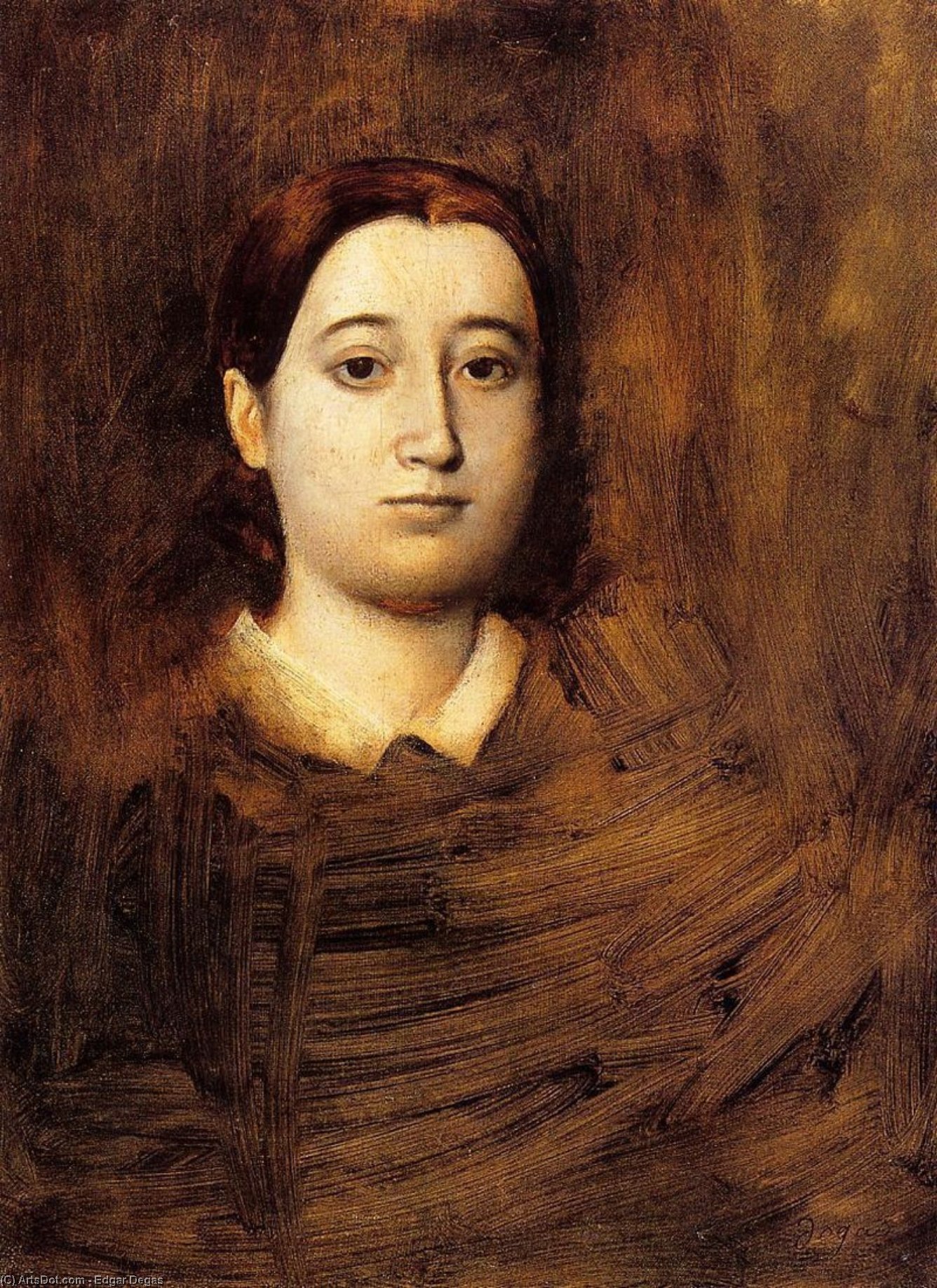
Portrait of Madame Edmondo Morbilli, nee Therese De Gas 1: A Study in Quietude
Edgar Degas’s “Portrait of Madame Edmondo Morbilli, nee Therese De Gas 1” is more than a simple likeness; it's a carefully constructed meditation on observation, emotion, and the subtle beauty found within everyday moments. Painted circa 1886-1889, this oil painting exemplifies Degas’s unique approach to Impressionism – one that prioritized capturing not just visual appearances but also the psychological state of his subjects. The sitter, Degas' sister Therese, is presented with a remarkable degree of intimacy, her gaze direct and seemingly unposed, inviting the viewer into a private space.
- Subject & Identity: The portrait depicts Therese de Gas (1840-1912), a figure deeply cherished by Degas. This personal connection profoundly influences the painting’s tone – it's not merely an artistic exercise but a testament to familial affection.
- Impressionistic Technique: Degas employs his signature technique of bold, broken brushstrokes layered upon one another to create a shimmering effect, particularly noticeable in the fabric of her dress and the play of light on her skin. This method wasn’t about photographic realism but rather an attempt to convey the *impression* of light and movement – a core tenet of the Impressionist movement.
The Artist's Vision: Degas and the Realist Aesthetic
Despite his association with the Impressionists, Degas maintained a distinct artistic philosophy rooted in realism. He meticulously studied anatomy, particularly the human figure, often sketching directly from life – observing dancers at the opera, which profoundly influenced his work. This dedication to accurate representation is evident here; Therese’s posture and facial expression are rendered with remarkable precision, yet softened by Degas' characteristic brushwork. His resistance to the label of "Impressionist" stemmed from a desire to portray the world as he *saw* it, unburdened by purely subjective interpretations of light.
Research confirms that Degas was particularly fond of his sister Therese, and this affection is palpable in the portrait. The Musée d'Orsay’s website details how Degas frequently depicted his family members, offering intimate glimpses into their lives through his art. (See: https://www.musee-orsay.fr/en/artworks/therese-de-gas-10893)
Symbolism and Emotional Resonance
The painting’s quiet elegance speaks volumes about the sitter's character – a sense of introspective calm is immediately apparent. The muted color palette, dominated by browns, creams, and subtle blues, contributes to this atmosphere of serenity. The slightly furrowed brow and direct gaze suggest a thoughtful mood, perhaps a moment of private reflection. Degas masterfully avoids sentimentality, instead offering a nuanced portrayal of human emotion that resonates with viewers across time.
Historical Context & Artistic Significance
"Portrait of Madame Edmondo Morbilli, nee Therese De Gas 1" stands as a pivotal work within Degas’s oeuvre, solidifying his position as one of the most innovative and influential artists of the late 19th century. It exemplifies the challenges and triumphs of Impressionism – a movement that sought to redefine painting by prioritizing subjective experience and capturing fleeting moments of light and color. This reproduction offers an unparalleled opportunity to own a piece of art history, bringing Degas’s masterful vision into your home or studio.