An Insight into Edgar Degas' Masterpiece
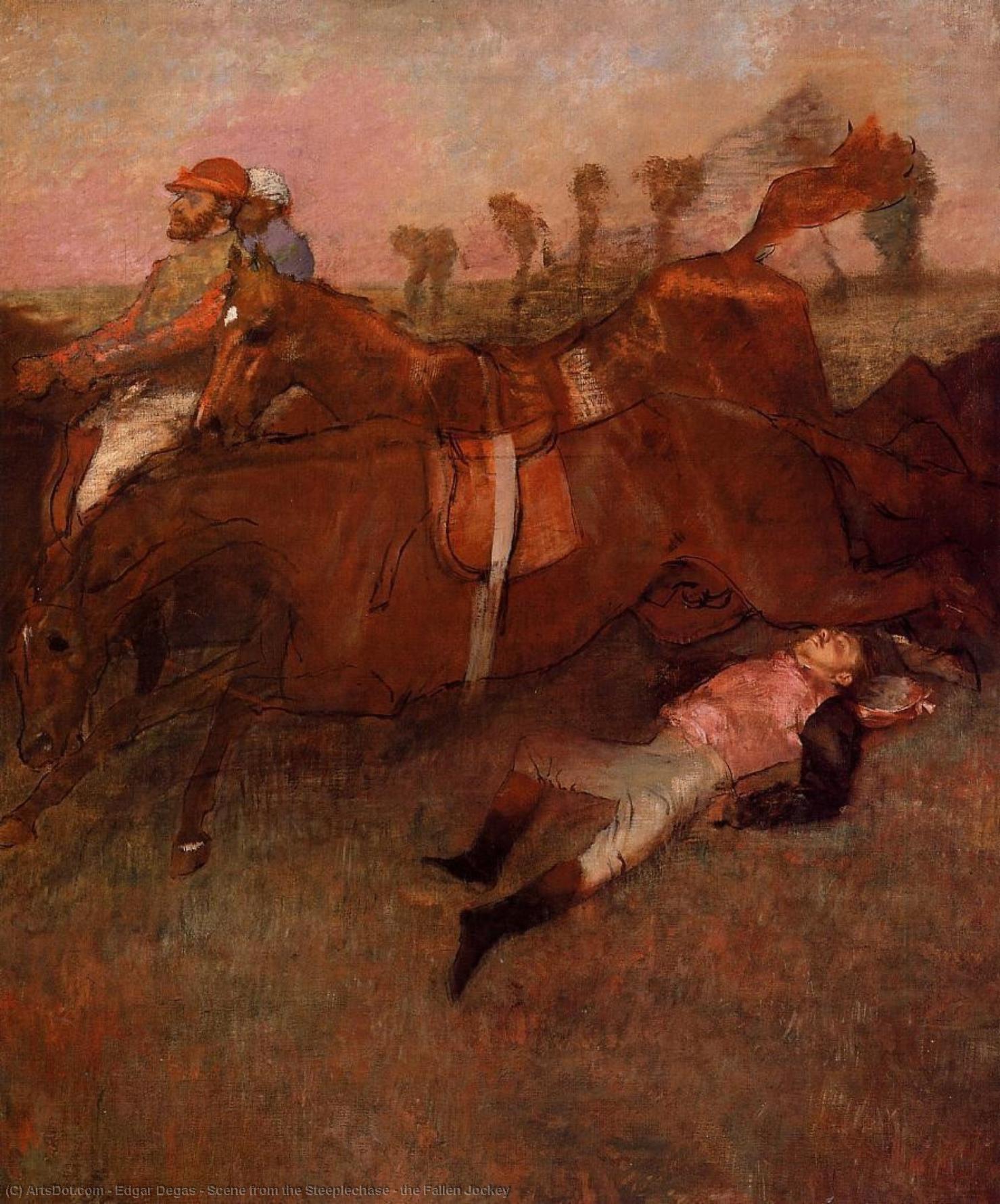
Edgar Degas, a renowned French Impressionist artist, created
Scene from the Steeplechase - the Fallen Jockey in 1866. This oil-on-canvas painting is a testament to Degas' skill in capturing dynamic movement and human emotion.
The Painting's Composition
The scene depicts a horse race with several jockeys riding horses. One of the jockeys has fallen off his horse, lying motionless on the ground in front of it. The other riders continue to ride their horses, creating a sense of urgency and tension. The background features trees, adding depth to the atmosphere of the race.
Artistic Significance
Degas reworked the painting multiple times, once in 1880-81 and again in 1897. This dedication to his craft showcases his commitment to perfection. The painting was exhibited at the 1866 Salon in Paris, a prestigious event that highlighted Degas' talent.
Historical Context
According to
Mary Cassatt's mother, Katherine Cassatt, Degas said of the painting: "It is one of those works which are sold after a man's death and artists buy them not caring whether they are finished or not." This statement reflects Degas' humility and his focus on artistic expression rather than commercial success.
Degas' Style
Degas was known for his pastel drawings and oil paintings, as well as his bronze sculptures, prints, and drawings. He is especially identified with the subject of dance, but he also painted racehorses and racing jockeys, as seen in
Scene from the Steeplechase - the Fallen Jockey. His portraits are notable for their psychological complexity and portrayal of human isolation.
Relevance to Modern Art
Degas' work continues to inspire artists today. His ability to capture movement and emotion has influenced generations of painters. The
National Gallery of Art in Washington, D.C., where the painting is currently on display, is a testament to his enduring legacy.
Conclusion
Scene from the Steeplechase - the Fallen Jockey by
Edgar Degas is a masterpiece of Impressionist art. Its dynamic composition and emotional depth make it a captivating piece that continues to inspire art enthusiasts.
Discover more about Edgar Degas and his works on ArtsDot.com. For a deeper understanding of the artist's life and style, visit
Edgar Degas's page on Wikipedia:
https://en.wikipedia.org/wiki/Edgar_Degas.