A Glimpse into Parisian Intimacy: Degas's Self Portrait
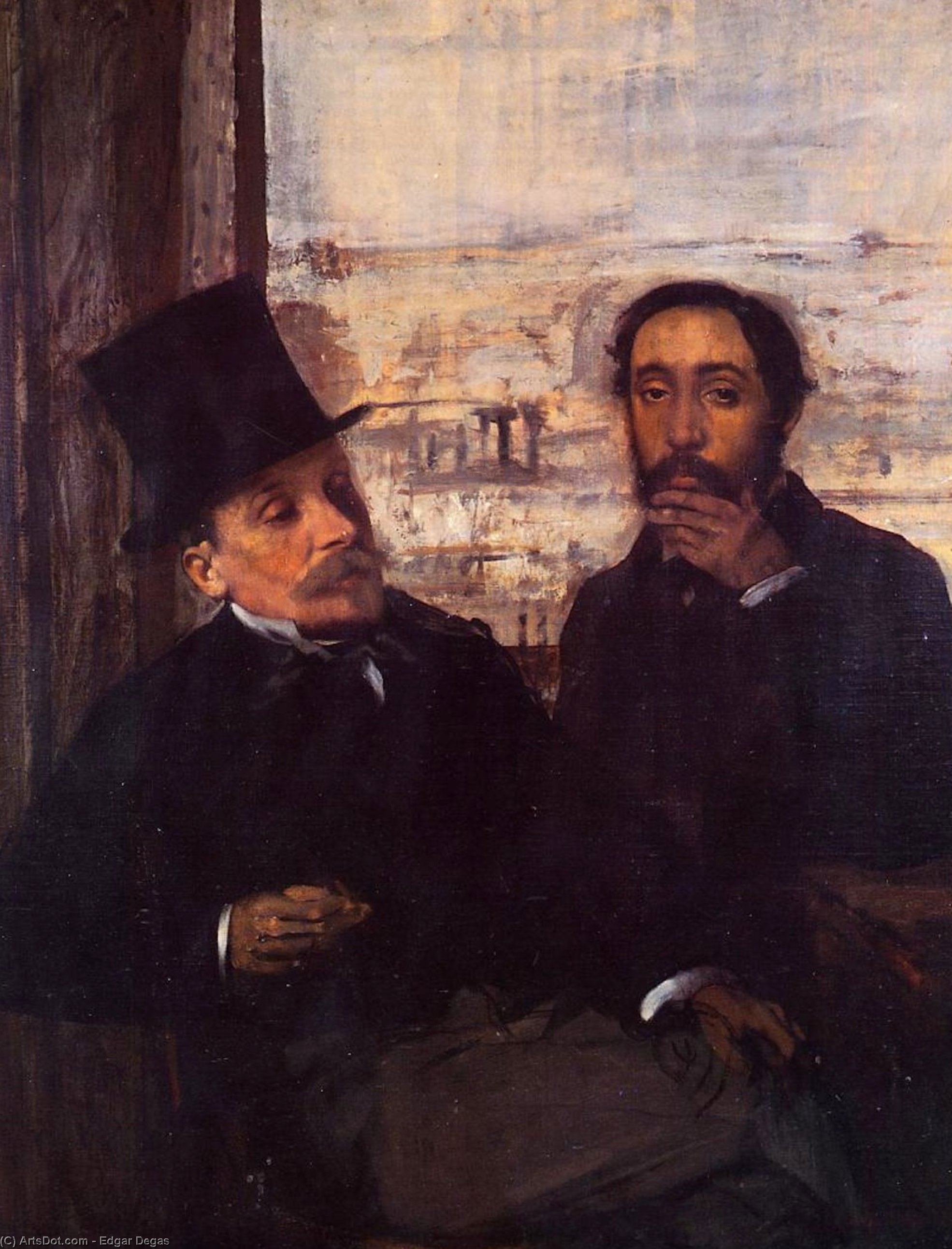
To stand before a self-portrait by Edgar Degas is not merely to observe an artist at rest; it is to peer directly into the meticulous, observant mind of one of history’s most fascinating painters. This 1865 depiction, Self Portrait with Evariste de Valernes, captures a moment suspended in time—a quiet confluence of conversation and contemplation within what appears to be an affluent Parisian interior. The scene is rich with the subtle textures of bourgeois life: the plush curve of a couch, the formality suggested by the top hat, and the intimate gesture of shared smoke. Degas masterfully places us as unseen witnesses to this exchange, inviting us into the very atmosphere of the room.
The Artistry of Observation: Technique and Subject
Degas’s technique here speaks volumes about his dedication to realism, a commitment that often set him apart from his Impressionist contemporaries. While the subject matter—two men engaged in discourse—feels immediate and almost snapshot-like, the execution reveals an academic rigor beneath the surface spontaneity. Notice the interplay of light across the figures; it is not the blinding glare of high noon, but the softer, more considered illumination of an indoor setting. The visible details, from the gentleman with the beard to the man smoking in the top hat, are rendered with palpable accuracy. These elements—the clock on the wall, the elegant vase—are not mere background dressing; they anchor the narrative, grounding the emotional exchange within a tangible, lived-in space.
Historical Echoes and Social Portraiture
Painted in 1865, this work emerges from a period of profound social transformation in Paris. Degas was deeply attuned to the nuances of modern life—the theater patrons, the dancers, and the sophisticated circles that defined Parisian society. This self-portrait functions as both an autobiography and a sociological study. It speaks to the era’s fascination with masculine camaraderie and intellectual exchange. The interaction between the two figures suggests a shared history or at least a mutual understanding, allowing the viewer to project their own narratives onto the quiet dialogue unfolding before us.
Emotional Resonance for the Modern Collector
For the collector or designer seeking art that breathes narrative life into a space, this piece offers profound depth. It is sophisticated without being overly dramatic; it whispers rather than shouts its meaning. Owning a reproduction of Self Portrait with Evariste de Valernes means bringing home not just paint on canvas, but a curated moment of refined Parisian leisure. It suggests an appreciation for conversation, for the quiet dignity found in shared company, and for the enduring power of human connection observed through the lens of masterful artistry.