A Moment Frozen in Motion: Degas's "Swaying Dancer (Dancer in Green)"
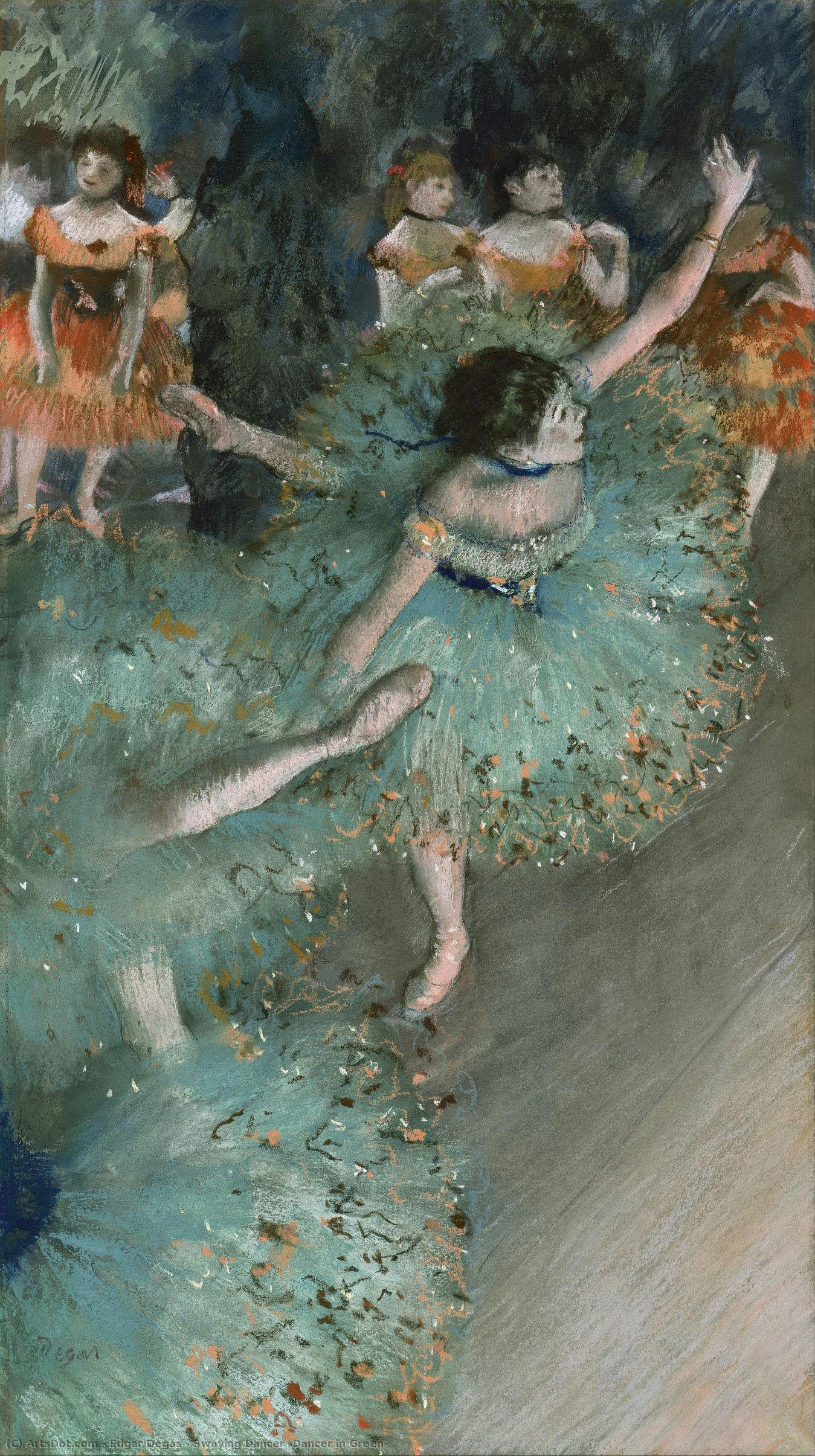
Hilaire-Germain-Edgar Degas’s “Swaying Dancer (Dancer in Green),” painted in 1879, is more than just a depiction of ballet; it’s a profound meditation on movement, observation, and the fleeting beauty of performance. This captivating work, measuring 36 x 64 cm, offers an intimate glimpse into Degas's lifelong fascination with the world of ballet, a subject that dominated his artistic output during this pivotal period. The painting captures a group of dancers in mid-performance as viewed from an upper box, a perspective that lends it a sense of detached observation, almost like a stage director surveying their troupe.
The Artist's Vision: Realism and Observation
Degas deliberately resisted the label of Impressionist, preferring to be considered a realist. This commitment is strikingly evident in “Swaying Dancer.” Unlike the often hazy, atmospheric effects favored by his contemporaries, Degas meticulously renders the figures with an almost photographic precision. He wasn’t interested in capturing a fleeting impression; instead, he sought to freeze a specific moment of intense physical exertion and grace. The artist's keen eye for detail is particularly noticeable in the rendering of the dancer's costume – the vibrant green fabric swirling around her as she executes a complex turn—and the subtle tension in her muscles.
Technique and Composition: A Study in Cropping and Perspective
- Brushwork: Degas employs short, broken brushstrokes to convey movement and texture, particularly evident in the fabric of the dancer’s dress.
- Composition: The composition is deliberately fragmented, with several dancers cropped out of the frame. This technique forces the viewer to actively participate in the scene, imagining the rest of the group and contributing to the overall narrative.
- Perspective: The elevated viewpoint creates a sense of detachment and emphasizes the dancer’s verticality, highlighting her strength and agility.
The background features a collection of ballerinas in orange, awaiting their turn, adding another layer of complexity to the scene – a tableau vivant, a living picture. This arrangement subtly underscores the hierarchical nature of ballet performance.
Symbolism and Emotional Impact: Capturing the Essence of Performance
“Swaying Dancer” transcends a simple representation of a ballet performance; it’s an exploration of the human condition through movement. The dancer's poised posture, her focused gaze, and the dynamic swirl of her dress evoke feelings of grace, strength, and vulnerability. Degas captures not just the physical act of dancing but also the mental discipline and emotional intensity required to perform. The painting speaks to the dedication and artistry inherent in ballet, transforming a fleeting moment into a timeless image.
A Timeless Masterpiece – A Perfect Reproduction
ArtsDot offers a meticulously crafted hand-painted reproduction of Degas’s “Swaying Dancer (Dancer in Green),” ensuring that you possess an authentic representation of this iconic artwork. Each reproduction is created using archival quality materials, guaranteeing lasting beauty and preserving the nuances of Degas's original technique. This piece would be a stunning addition to any art collection or a sophisticated focal point within your interior design scheme.