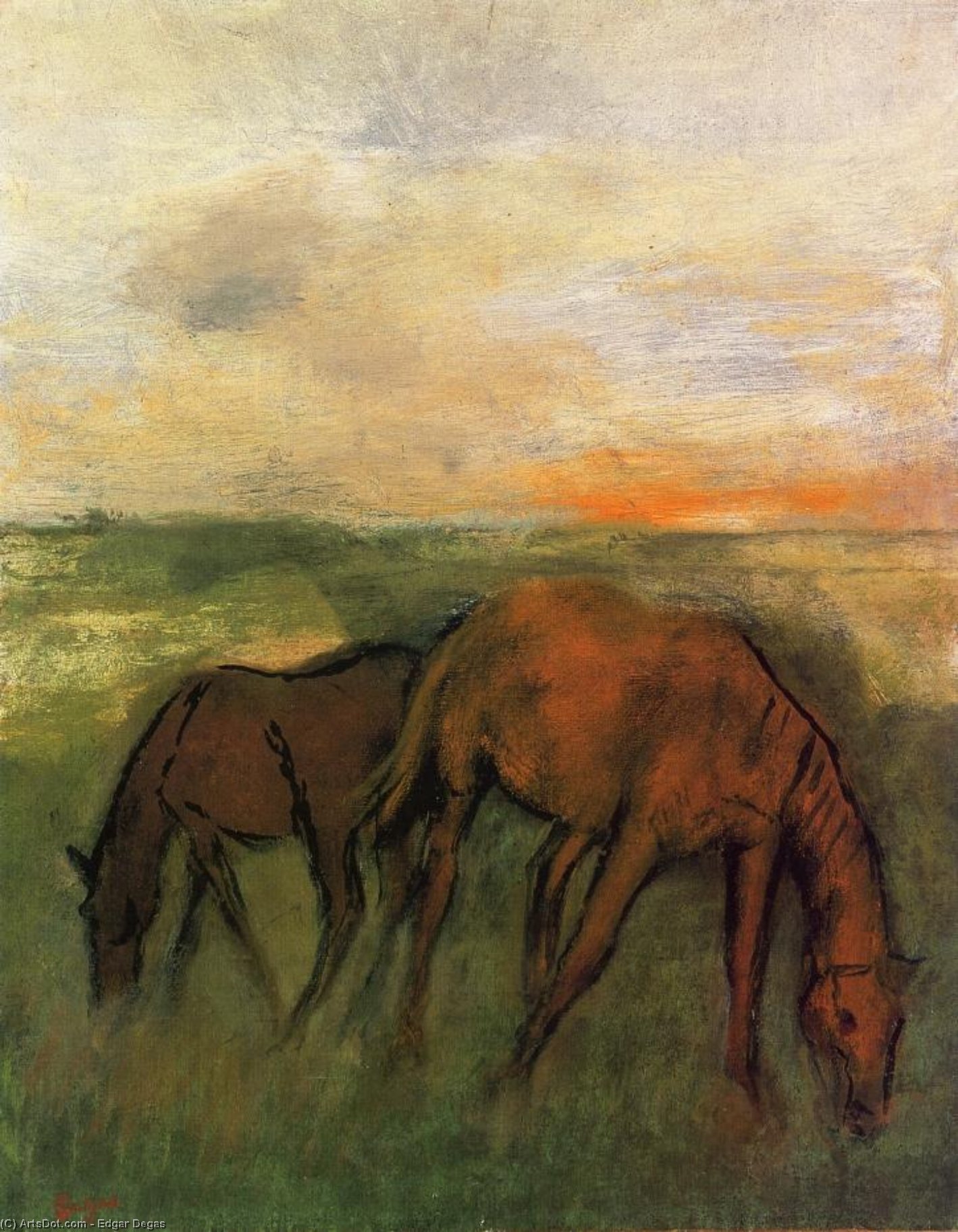
A Glimpse of Rural Harmony: Edgar Degas’s ‘Two Horses in a Pasture’
Edgar Degas, though famously associated with ballet dancers and Parisian life, possessed a deep affinity for the natural world – particularly horses. Created in 1871, *Two Horses in a Pasture* offers a serene escape into the French countryside, embodying the burgeoning spirit of Impressionism while hinting at Degas’s unique artistic trajectory. This oil on canvas (45 x 35 cm) isn't merely a depiction of animals; it’s an exploration of light, atmosphere, and the quiet beauty of everyday life.
Subject & Composition: A Moment of Pastoral Peace
The painting centers around two horses peacefully grazing in a lush pasture. Degas masterfully arranges the composition with one horse positioned slightly left of center, while its companion occupies the right side of the canvas. This arrangement creates a balanced yet dynamic visual flow. The inclusion of two figures in the background – one on the left and another near the center-right – subtly introduces human presence without disrupting the overall tranquility. These individuals aren’t focal points but rather elements that ground the scene, suggesting a harmonious coexistence between humanity and nature.
Impressionistic Technique & Artistic Style
Degas's technique in *Two Horses in a Pasture* is characterized by loose, expressive brushstrokes – hallmarks of the Impressionist movement. He doesn’t strive for photographic realism; instead, he prioritizes capturing the *impression* of light and atmosphere. The pastel tones and gentle blending create a soft, dreamy quality that invites viewers to immerse themselves in the scene. Notice how Degas uses color not to define form rigidly but to suggest texture and depth. This approach is particularly evident in the rendering of the grass and foliage, which appear vibrant yet subtly blurred. He skillfully avoids sharp outlines, favoring instead organic shapes that convey movement and naturalness—a deliberate departure from academic conventions.
Historical Context & Degas’s Evolving Style
Painted shortly after the Franco-Prussian War (1870-1871), *Two Horses in a Pasture* reflects a yearning for peace and stability amidst turbulent times. While Degas initially trained as a history painter, he increasingly turned his attention to contemporary subjects—a pivotal shift that cemented his reputation as one of the most innovative artists of his era. This painting demonstrates his ability to synthesize classical compositional principles with modern observation, capturing fleeting moments of beauty often overlooked by traditional painters. It’s important to recognize that Degas's artistic journey wasn’t solely defined by Impressionism; he maintained a profound respect for draughtsmanship and meticulous detail—qualities evident throughout his oeuvre.
Symbolism & Emotional Impact
Horses have long held symbolic significance across cultures, representing power, grace, and freedom – ideals particularly resonant in the aftermath of war. In *Two Horses in a Pasture*, Degas utilizes these associations to convey not just visual splendor but also an underlying sentiment of serenity and contemplation. The muted pastel hues contribute to this emotional resonance, fostering a sense of calm and inviting viewers to appreciate the simple pleasures of rural life. Consider how the painting’s composition—the balanced positioning of horses and figures—mirrors broader artistic trends of the period, emphasizing harmony and balance as responses to societal upheaval.
Collecting & Interior Design Considerations
A reproduction of *Two Horses in a Pasture* would be an exquisite addition to any discerning art collection or thoughtfully curated interior space. Its understated elegance and evocative depiction of nature align seamlessly with diverse décor styles—from bohemian chic to refined farmhouse aesthetics. The painting’s dimensions (45 x 35 cm) offer versatility in framing and gallery wall arrangements, allowing for impactful visual statements without overwhelming a room's ambiance.
Its Impressionistic style elevates the artwork beyond mere representation, transforming it into an embodiment of artistic innovation and aesthetic beauty—a timeless treasure for collectors and design enthusiasts alike.
- Style: Impressionism
- Medium: Oil on Canvas
- Dimensions: 45 x 35 cm
- Year: 1871