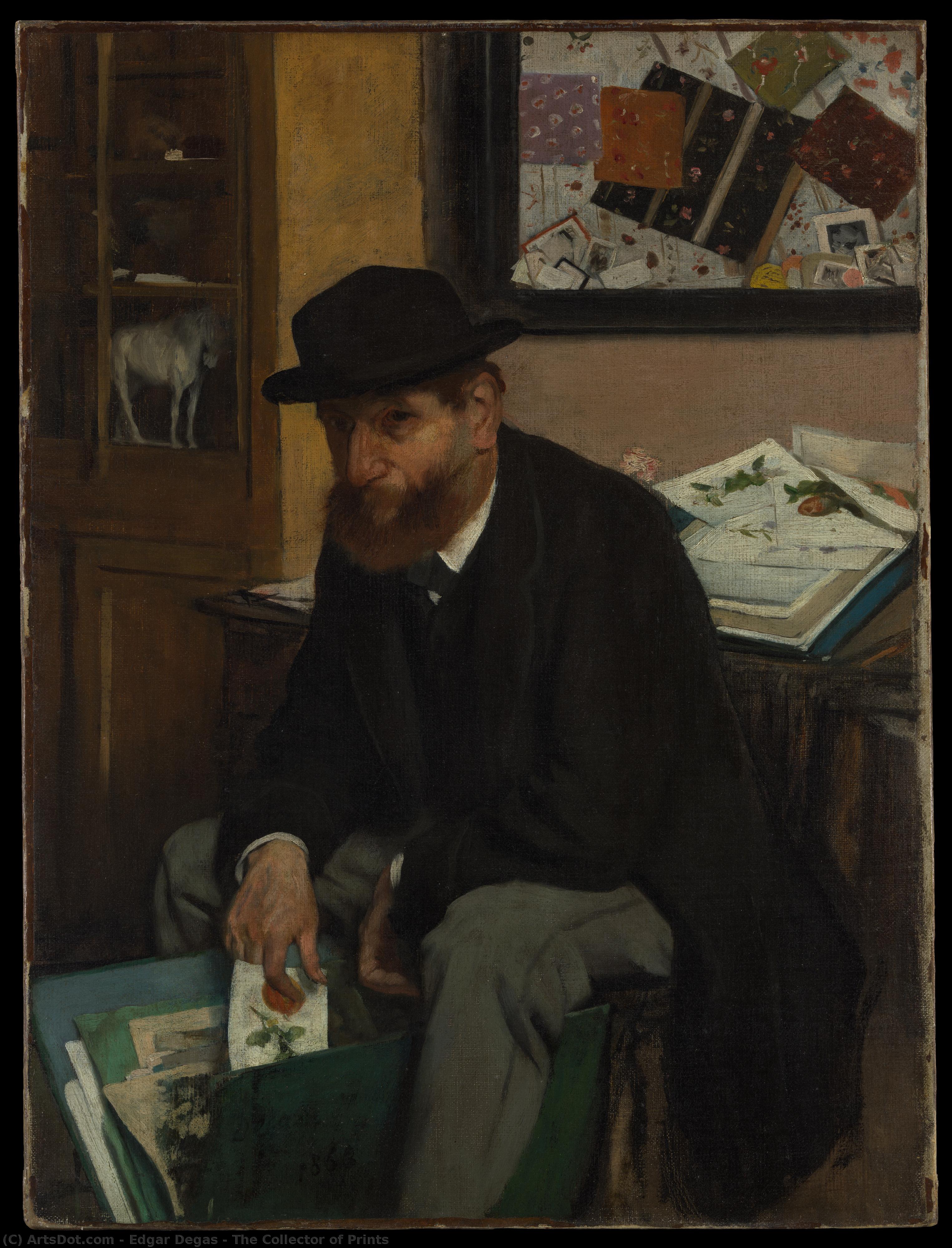
A solitary man meticulously examines vibrant lithographs in this masterful 1866 realist painting by Edgar Degas that captures the quiet obsession of collecting, inviting you to bring this piece of Impressionist history home.
パリ
フランス
エドガー・ドガ
ヒレール・ Germain-エドガール・ドガ
19世紀を代表するフランスの画家、エドガー・ドガ。バレエダンサーやパリの日常風景を捉え、革新的な構図と卓越した描写力で印象主義に影響を与えました。『踊り子』『カフェ・ド・シャワール』など、現代生活の真実を描き出した傑作群。
印象派、写実主義
パブロ・ピカソ
ギュスターヴ・クールベ
1834年7月19日
1917年9月27日
ヒレール・ Germain-エドガール・ドガ
フランス人
タムブリンを持つ踊り子
フランス、パリ
入絵主義
1
エドガー・ドガは、レーベルを拒否しながらも、どの芸術運動と関連付けられることが多いですか?
メトロポリタン美術館
(New York, United States of America)
5千年の芸術と文化を体験!メトロポリタン美術館で、古代エジプトの遺産からルネサンス絵画まで、世界中の至宝を発見。ニューヨークの象徴的な美術館へ。
(229文字)
A Window Into Obsession: Decoding Degas’s “The Collector of Prints”
In the quiet corners of art history, few works capture the intimate tension between passion and stillness as masterfully as Edgar Degas's 1866 masterpiece, The Collector of Prints. This is not merely a depiction of an artist’s studio or a scholar's study; it is a profound meditation on the nature of artistic pursuit itself. As we gaze upon this scene, we find ourselves transported to a moment of singular focus, where the outside world fades into insignificance, leaving only the tactile reality of paper, ink, and memory. The painting presents us with a solitary man seated upon a simple wooden bench, bathed in a soft, diffused light that seems to eman quite naturally from an unseen window, illuminating the meticulous task at hand: the examination of printed materials scattered across the floor like fallen leaves of knowledge.
The Art of Meticulous Observation
Degas's mastery of realism is palpable in every deliberate brushstroke, revealing a technique that bridges the gap between classical precision and the burgeoning spirit of Impressionism. While he would later become synonymous with the fleeting movement of dancers, here, in this earlier work, we see his dedication to capturing texture and weight. He employs short, controlled strokes to render the grain of the wooden bench, the heavy drape of the man's dark suit, and the delicate, ephemeral quality of the lithographs spread before him. The composition is a rich tapestry of textures; one can almost feel the crispness of the paper and the smoothness of the Tang dynasty porcelain tucked into the background. This attention to detail serves a greater purpose than mere decoration—it creates an atmosphere of immediacy, inviting the viewer to lean in and share in the collector's quiet intensity.
Symbolism and the Collector's Soul
Beyond its surface beauty, the painting is layered with symbolic resonance that speaks to the very essence of aesthetic appreciation. The subject matter—specifically the inclusion of colored lithographs by Pierre-Joseph Redouté alongside Japanese fabrics and ancient ceramics—reveals a collector whose identity is forged through his curated surroundings. These objects are not mere possessions; they are windows into different worlds, representing a desire to assemble a universe of beauty and refinement. The juxtaposition of scientific botanical prints with exotic Eastern treasures highlights the intersection of intellect and emotion. In this cluttered sanctuary, every item serves as a testament to the collector's devotion to the pursuit of perfection, mirroring Degas’s own lifelong struggle to capture the truth of his subjects through the lens of modern life.
An Enduring Inspiration for the Modern Space
For the discerning collector or interior designer, The Collector of Prints offers more than just historical value; it provides a profound emotional anchor for any curated space. The painting’s palette, characterized by deep, contemplative tones punctuated by the colorful patterns of the prints, lends a sense of sophisticated warmth and intellectual depth to a room. It is a piece that invites conversation, prompting reflections on heritage, obsession, and the quiet joys of discovery. Whether displayed in a sunlit library or a moody, contemporary study, this reproduction serves as a timeless reminder of the beauty found in focused devotion, making it an exquisite choice for those who seek to surround themselves with art that possesses both a narrative soul and a commanding presence.