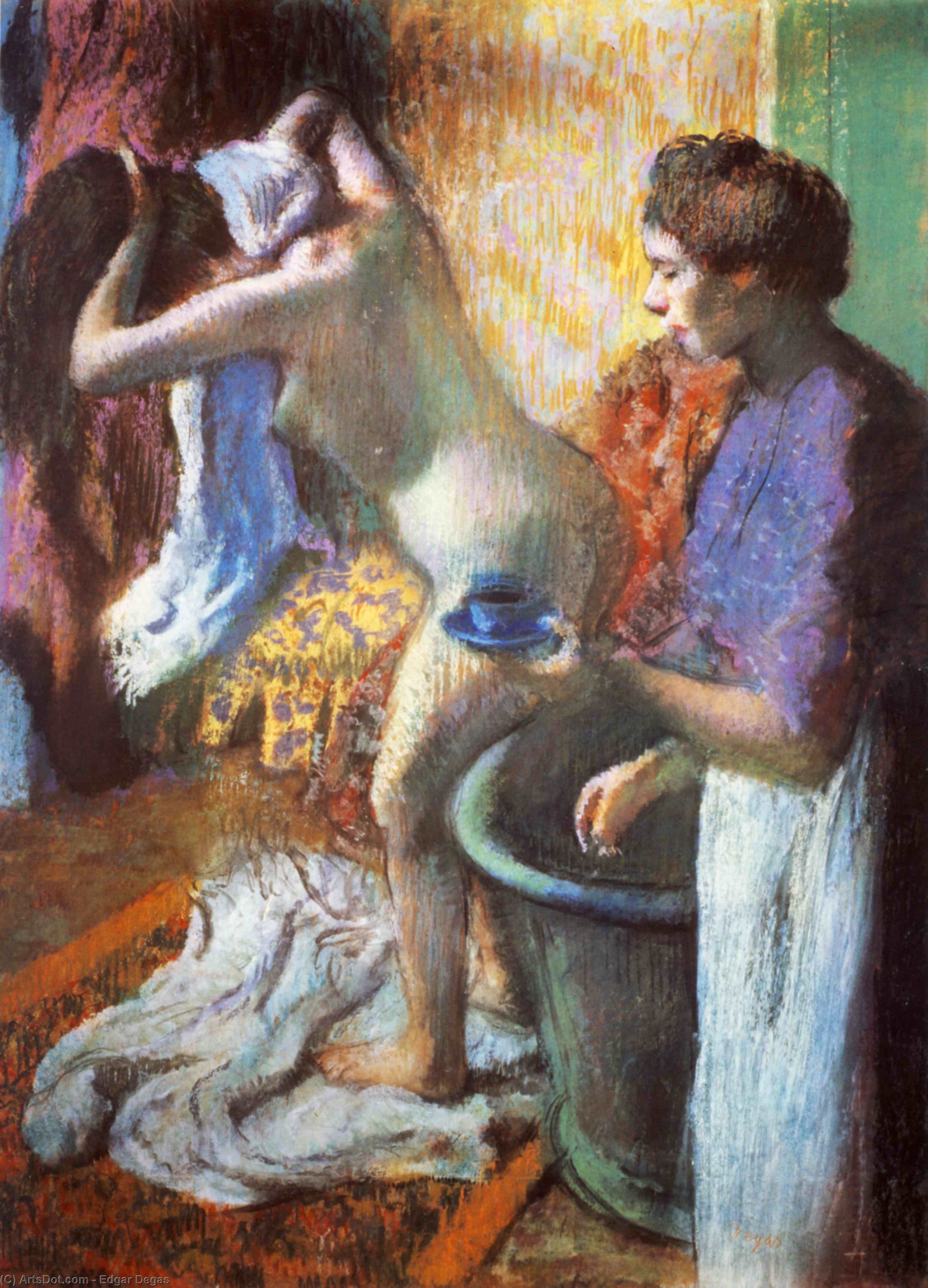
The Cup of Tea (Breakfast after Bathing): A Moment Frozen in Impressionist Light
Edgar Degas, a figure perpetually poised between realism and abstraction, remains one of the most beloved artists of the Belle Époque. His oeuvre transcends mere depiction; it captures fleeting impressions of everyday life with remarkable sensitivity—a characteristic brilliantly exemplified by “The Cup of Tea (Breakfast after Bathing),” completed in 1883.
Style and Technique: Degas’s masterful use of pastel on paper laid down on board distinguishes this work from many of his oil paintings. Pastel offers a unique textural quality, producing a soft, luminous surface that envelops the viewer in an atmosphere of tranquil contemplation. This technique aligns perfectly with Impressionism's core ethos—the pursuit of capturing transient effects of light and color—allowing Degas to convey not just what he saw but how it felt.
Composition and Figures: The painting’s composition is deceptively simple yet profoundly effective. Two women occupy the space, positioned against a muted backdrop that emphasizes their presence. On the left stands one woman, her back turned towards us, presenting a study in naturalistic musculature—a deliberate nod to classical sculpture and Degas's fascination with anatomical precision. To her right sits another woman, presumably having emerged from the bath, holding a cup of tea with an expression of quiet contemplation. The positioning of these figures contributes to a sense of intimacy and immediacy.
Historical Context: Created during the height of Impressionism’s artistic fervor, “The Cup of Tea” reflects the broader societal shift towards valuing domestic life and portraying it with newfound dignity. Degas's interest in capturing ordinary moments—particularly those involving women—challenged prevailing academic conventions that favored grand historical narratives or mythological subjects.
Symbolism and Emotional Impact: Beyond its aesthetic beauty, the painting resonates with deeper symbolic meanings. The ritual of bathing represents purification and renewal, while the simple act of drinking tea symbolizes companionship and comfort. Degas’s ability to distill these concepts into a single image speaks volumes about his artistic vision—a desire to elevate the mundane into something sublime.
Legacy: “The Cup of Tea” solidified Degas's reputation as a pioneer of Impressionism, demonstrating his unwavering commitment to portraying the human form with honesty and nuance. It remains a cornerstone of his extensive exploration of female nude studies—a testament to his enduring influence on subsequent generations of artists.