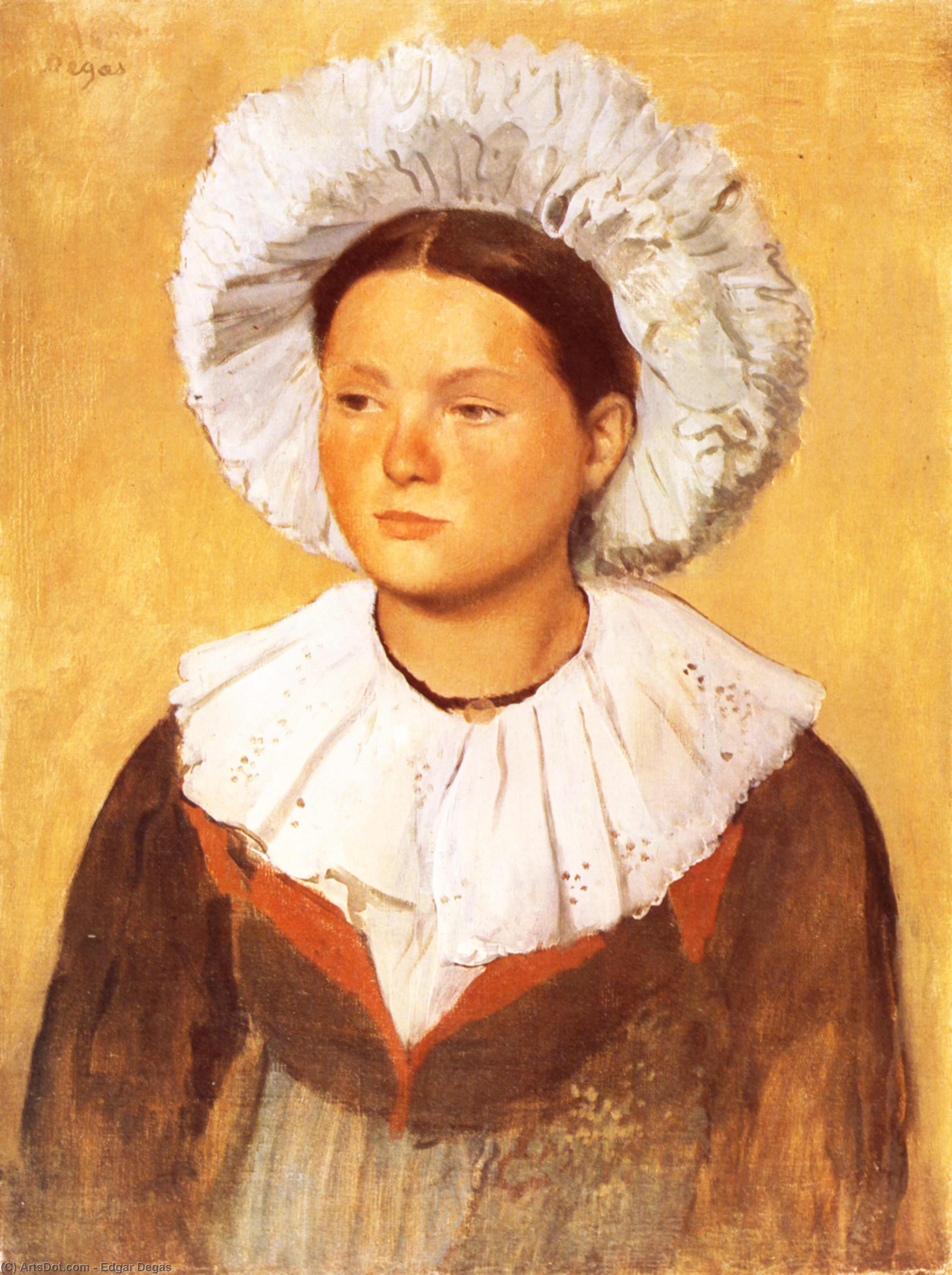
Edgar Degas’s ‘The Savoy Girl,’ painted in 1873, captures a displeased woman in a classic Impressionist style portrait, showcasing the artist's meticulous realism and capturing a moment of quiet observation. Discover this captivating artwork and bring it into your collection.
A Portrait of Disquiet: Edgar Degas’s *The Savoy Girl*
Edgar Degas's 1873 painting, *The Savoy Girl*, is more than just a portrait; it’s a carefully constructed tableau of restrained emotion and subtle observation – hallmarks of the artist’s unique approach to depicting modern life. This intimate scene, measuring 61 x 45 cm, captures a young woman, likely modeled by the actress Ellen Andrée, in a moment of palpable dissatisfaction. The subject, dressed in a fashionable white hat adorned with a ruffled edge and a delicate necklace, possesses an air of cool detachment as she gazes directly at the viewer. Degas’s masterful use of light and shadow – particularly evident in the modeling of her face and clothing – creates a sense of depth and realism that belies the painting's Impressionistic leanings.
Impressionism and the Realist Eye
While often associated with the Impressionists, Degas maintained a critical distance from their overtly subjective approach to color and light. He was deeply invested in capturing the essence of his subjects with an unflinching realism, focusing on the details of everyday life – particularly as it unfolded within the world of theater and Parisian society. *The Savoy Girl* exemplifies this commitment. Unlike the vibrant, often fleeting scenes favored by Monet or Renoir, Degas’s palette is muted, dominated by earthy tones and a subtle yellow background that emphasizes the subject's presence without overwhelming her. This restrained approach reflects his belief in the importance of accurate observation and meticulous rendering.
Technique and Composition
Degas employed a distinctive technique characterized by rapid brushstrokes and a focus on capturing movement and gesture. Notice how he uses broken color to create a sense of texture, particularly in the fabric of the woman’s dress and hat. The composition itself is carefully balanced, with the subject positioned slightly off-center, drawing the viewer's eye across the canvas. The inclusion of the chair in the background adds another layer of narrative – perhaps suggesting a moment of repose or contemplation. Degas’s use of charcoal for underdrawing, visible in areas like the face and hands, further contributes to the painting’s sense of immediacy and spontaneity.
Symbolism and Context
*The Savoy Girl* was painted during a period of significant social change in Paris. The Savoy Theatre, where Ellen Andrée performed, was a popular venue for audiences seeking entertainment and escape. Degas's portrayal of the actress reflects this cultural context, capturing not just her physical appearance but also her status as a performer – a figure both admired and perhaps slightly distanced from everyday life. The woman’s expression of displeasure or annoyance hints at the pressures and expectations faced by women in the late 19th century, adding a layer of psychological depth to the portrait.