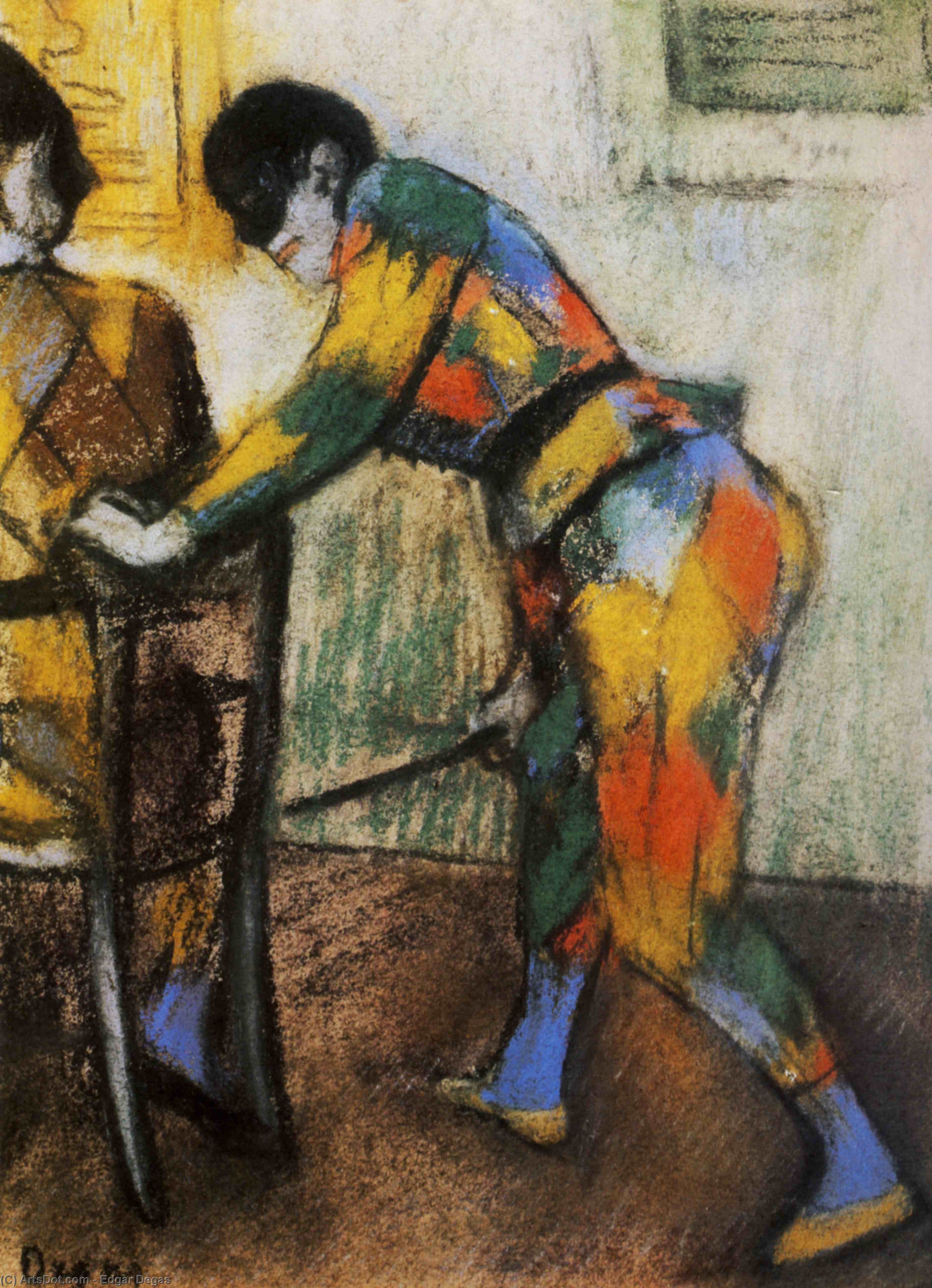
Delve into Edgar Degas’s Two Harlequins, a pastel masterpiece capturing the quiet intimacy of Parisian life during Impressionism. Witness Degas's masterful technique and psychological depth as you explore this iconic artwork – discover its beauty today.
パリ
フランス
エドガー・ドガ
ヒレール・ Germain-エドガール・ドガ
19世紀を代表するフランスの画家、エドガー・ドガ。バレエダンサーやパリの日常風景を捉え、革新的な構図と卓越した描写力で印象主義に影響を与えました。『踊り子』『カフェ・ド・シャワール』など、現代生活の真実を描き出した傑作群。
印象派、写実主義
パブロ・ピカソ
ギュスターヴ・クールベ
1834年7月19日
1917年9月27日
ヒレール・ Germain-エドガール・ドガ
フランス人
タムブリンを持つ踊り子
フランス、パリ
入絵主義
1
エドガー・ドガは、レーベルを拒否しながらも、どの芸術運動と関連付けられることが多いですか?
A Moment Frozen in Pastel: Decoding Degas’s Two Harlequins
Edgar Degas, a titan of French Impressionism, stands apart from his peers not merely for stylistic innovation but also for an unwavering dedication to capturing the quiet dramas unfolding within everyday life. His pastel drawing, “Two Harlequins,” completed in 1886, exemplifies this ethos perfectly—a deceptively simple composition brimming with psychological depth and masterful execution that continues to fascinate art historians and collectors alike.
The Subject Matter: Dance and Connection
“Two Harlequins” depicts two figures dressed in vibrant harlequin costumes, a motif recurrent throughout Degas’s oeuvre and deeply rooted in the theatrical traditions of his time. These costumes—typically adorned with bold geometric patterns and contrasting colors—were frequently worn by acrobats and performers, symbolizing both humor and vulnerability. The central relationship between the two men is subtly fraught; one reaches out towards the other's hand, suggesting a tentative connection or perhaps an unspoken desire for reassurance. This gesture speaks volumes about human interaction, capturing a fleeting moment of intimacy amidst the bustle of performance life.
Impressionistic Technique: Pastel’s Delicate Embrace
Degas deliberately shunned the label “Impressionist,” preferring to describe his approach as “realism.” However, "Two Harlequins" undeniably embodies Impressionistic principles through its masterful use of pastel on paper. Unlike oil paints, pastels offer unparalleled luminosity and softness—allowing Degas to achieve remarkable tonal gradations and subtle textural nuances. The artist’s delicate strokes capture the ephemeral quality of light and atmosphere, creating an illusion of immediacy that draws the viewer into the scene. Notice how the pastel hues blend seamlessly together, conveying a sense of warmth and tranquility despite the inherent tension within the figures' posture.
Historical Context: Parisian Theater and Artistic Observation
The painting emerged during a pivotal period in Parisian artistic history—the Belle Époque—characterized by optimism, technological advancement, and a burgeoning fascination with performance arts. Degas’s studio was situated near the Théâtre Garnier, allowing him to observe dancers firsthand and translate their movements onto canvas. This meticulous observation wasn't simply about documenting appearances; it was about delving beneath the surface to explore the psychological states of his subjects—their anxieties, aspirations, and unspoken emotions. “Two Harlequins” reflects this broader artistic preoccupation with portraying human experience with sensitivity and nuance.
Symbolism Beyond Costume: Gesture and Silence
Beyond the flamboyant costumes, "Two Harlequins" communicates profound symbolic meaning through gesture and posture. The outstretched hand represents vulnerability and openness—a willingness to engage in connection despite uncertainty. Simultaneously, the figures’ stillness conveys a sense of quiet contemplation, hinting at the unspoken complexities of human relationships. Degas's genius lies in his ability to convey emotion without resorting to explicit expression, inviting viewers to interpret the scene based on their own experiences and perceptions.
Emotional Impact: A Portrait of Human Connection
Ultimately, “Two Harlequins” transcends its formal elements to evoke a powerful emotional response. The pastel palette imbues the image with warmth and luminosity, creating an atmosphere that is both serene and subtly unsettling. The painting’s composition draws us into a private moment—a glimpse behind the curtain of performance life—where human connection is palpable yet elusive. It's a testament to Degas’s enduring legacy as an artist who captured not just what he saw but also what he felt, leaving viewers with a lingering impression of beauty and melancholy.