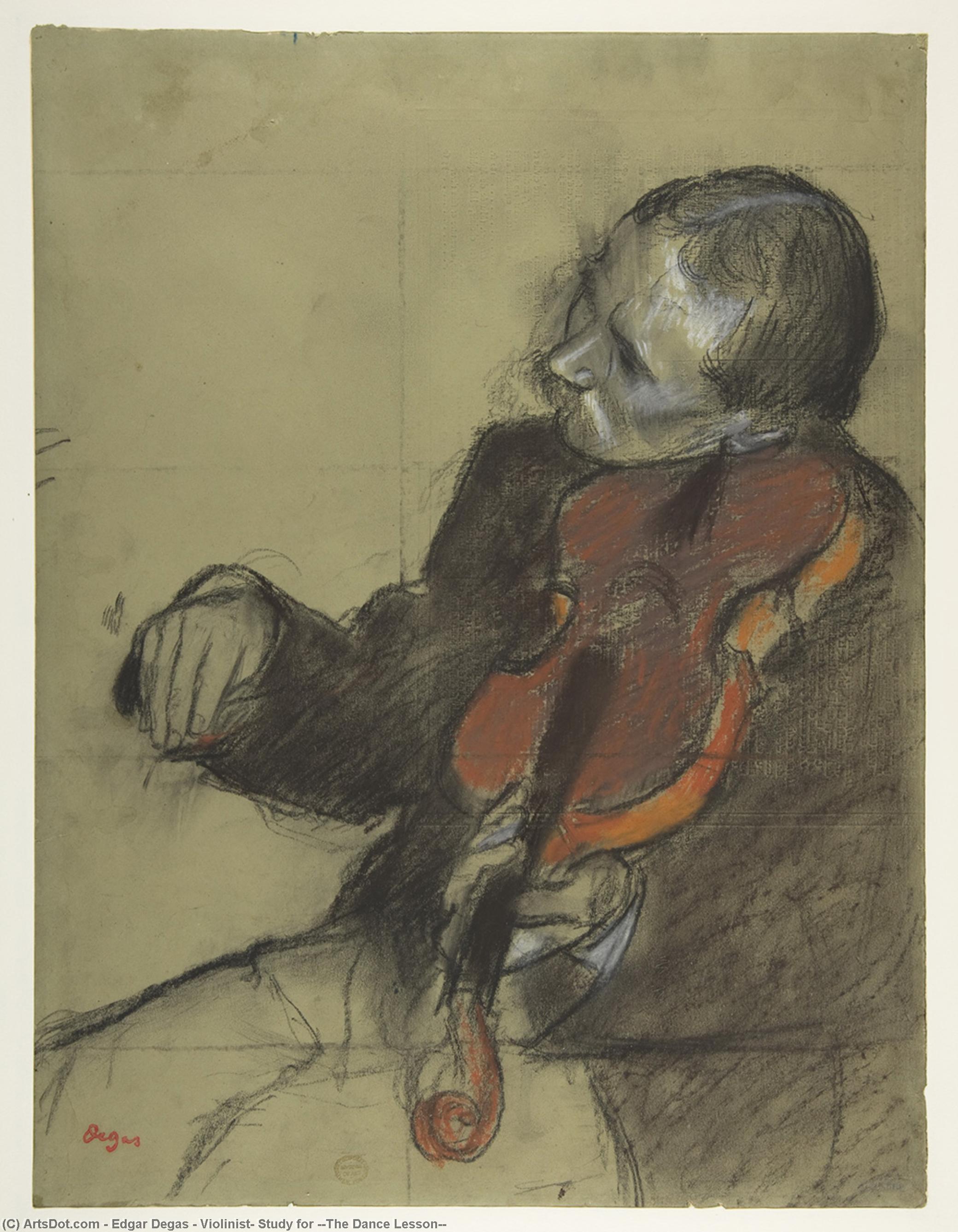
A Moment Captured: Degas’s “Violinist, Study for ‘The Dance Lesson’”
This captivating charcoal drawing offers a glimpse into the creative process of Edgar Degas, serving as a preparatory study for his larger work, “The Dance Lesson.” More than just a sketch, it's a powerful statement in its own right – an intimate portrait of focused artistry and quiet contemplation. The artwork beautifully exemplifies Degas’s unique ability to blend realism with expressive lines, capturing not merely *what* he saw, but *how* it felt to observe the musician at work.
Subject & Composition
The composition centers on a seated violinist, wholly absorbed in his playing. The horizontal format emphasizes this sense of stillness and concentration. Degas masterfully uses negative space to draw attention to the figure, creating an immediate connection between viewer and subject. It’s not a grand performance depicted, but a private moment – a study, a practice session, perhaps even a fleeting instance of respite.
Style & Technique
Degas, though often associated with Impressionism, considered himself a realist. This is evident in the drawing's grounding in observable reality. However, he transcends mere replication through his dynamic and expressive use of charcoal.
Loose, rapid strokes define form and gesture, conveying movement even within a static pose. The layering of charcoal creates a rich texture – a grainy surface that feels almost tactile. This technique isn’t about precise detail; it's about capturing the *essence* of the moment, the energy radiating from the musician as he plays.
Historical Context & Degas’s Artistic Vision
Born in Paris in 1834, Edgar Degas initially pursued academic training with aspirations of becoming a history painter. However, he increasingly turned his attention to modern life – scenes of Parisian cafes, laundries, and, notably, the world of ballet. He was fascinated by movement and gesture, constantly seeking ways to represent them authentically on canvas or paper. This study for “The Dance Lesson” reflects that ongoing exploration. Degas’s work bridges the gap between traditional artistic techniques and a modern sensibility, making him a pivotal figure in 19th-century art.
He wasn't interested in simply depicting beauty; he wanted to capture life as it was lived.
Symbolism & Emotional Impact
The violin itself is rich with symbolism – representing artistry, passion, and emotional expression. The seated posture of the musician suggests a moment of introspection or perhaps even fatigue after dedicated practice. There’s a subtle melancholy present in the drawing, a sense of quiet solitude that resonates deeply. The artwork invites viewers to contemplate not only the skill of the violinist but also the dedication and sacrifices inherent in artistic pursuit.
For Collectors & Interior Designers
This study offers a unique opportunity to own a piece connected to one of art history’s most influential figures. Its monochromatic palette – shades of grey and brown – lends itself beautifully to a variety of interior styles, from minimalist modern spaces to more traditional settings. The drawing's intimate scale makes it ideal for smaller rooms or as part of a curated gallery wall.
- Style Compatibility: Complements Modern, Traditional, and Eclectic interiors.
- Color Palette: Neutral tones offer versatile design options.
- Emotional Resonance: Adds depth and sophistication to any space.
A high-quality reproduction of “Violinist, Study for ‘The Dance Lesson’” is more than just a decorative element; it’s an investment in artistry, history, and enduring beauty.